AD5328 Series
2.5 V to 5.5 V Octal Voltage Output 12-Bit DACs in 16-Lead TSSOP
Manufacturer: Analog Devices
Catalog
2.5 V to 5.5 V Octal Voltage Output 12-Bit DACs in 16-Lead TSSOP
Key Features
• AD5308: 8 buffered 8-bit DACs in 16-lead TSSOPA version: ±1 LSB INL, B version: ±0.75 LSB INL
• AD5318: 8 buffered 10-bit DACs in 16-lead TSSOPA version: ±4 LSB INL, B version: ±3 LSB INL
• AD5328: 8 buffered 12-bit DACs in 16-lead TSSOPA version: ±16 LSB INL, B version: ±12 LSB INL
• Low power operation: 0.7 mA @ 3 V
• Power-down to 120 nA @ 3 V, 400 nA @ 5 V
• Double-buffered input logic
• Guaranteed monotonic by design over all codes
• Buffered/unbuffered/VDDreference input options
• Output range: 0 V to VREFor 0 V to 2 VREF
• Power-on reset to 0 V
• ProgrammabilityIndividual channel power-downSimultaneous update of outputs (LDAC)
• Low power, SPI-®, QSPI-™, MICROWIRE-™, and DSP-compatible 3-wire serial interface
Description
AI
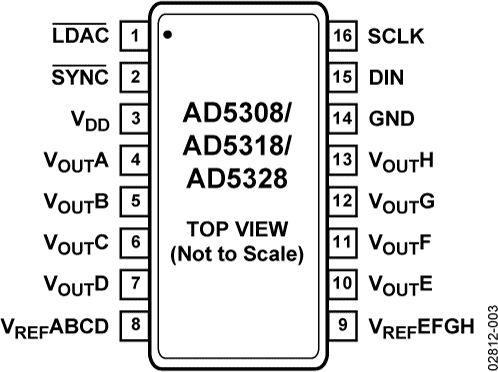
TheAD5308/AD5318/ AD5328 are octal 8-, 10-, and 12-bit buffered voltage output DACs in a 16-lead TSSOP. They operate from a single 2.5 V to 5.5 V supply, consuming 0.7 mA typical at 3 V. Their on-chip output amplifiers allow the outputs to swing rail-to-rail with a slew rate of 0.7 V/μs. The AD5308 / AD5318 / AD5328 use a versatile 3-wire serial interface that operates at clock rates up to 30 MHz and is compatible with standard SPI, QSPI, MICROWIRE, and DSP interface standards.The references for the eight DACs are derived from two reference pins (one per DAC quad). These reference inputs can be configured as buffered, unbuffered, or VDDinputs. The parts incorporate a power-on reset circuit, which ensures that the DAC outputs power up to 0 V and remain there until a valid write to the device takes place. The outputs of all DACs may be updated simultaneously using the asynchronousLDACinput. The parts contain a power-down feature that reduces the current consumption of the devices to 400 nA at 5 V (120 nA at 3 V). The eight channels of the DAC may be powered down individually.All three parts are offered in the same pinout, which allows users to select the resolution appropriate for their application without redesigning their circuit board.APPLICATIONSPortable battery-powered instrumentsDigital gain and offset adjustmentProgrammable voltage and current sourcesOptical networkingAutomatic test equipmentMobile communicationsProgrammable attenuatorsIndustrial process control