Catalog
Not Recommended for new designs
Key Features
• * 131 Powerful Instructions
• * Most Single Clock Cycle Execution
• * 32 x 8 General Purpose Working Registers
• * Fully Static Operation
• * Up to 20 MIPS Throughput at 20 MHz
• * On-Chip 2-Cycle Multiplier
• * 32 KB of In-System Self-Programmable Flash program memory
• * 1 KB EEPROM
• * 2 KB Internal SRAM
• * Write/Erase Cycles: 10,000 Flash/100,000 EEPROM
• * Data retention: 20 years at 85°C
• * In-System Programming by On-chip Boot Program
• * True Read-While-Write Operation
• * Programming Lock for Software Security
• * Capacitive Touch Buttons, Sliders and Wheels
• * 24 Self-Cap Channels and 144 Mutual Cap Channels
• * Two 8-bit Timer/Counters with Separate Prescaler and Compare Mode
• * Three 16-bit Timer/Counters with Separate Prescaler, Compare Mode, and Capture Mode
• * Real Time Counter with Separate Oscillator
• * Ten PWM Channels
• * 8-channel 10-bit ADC in TQFP and QFN/MLF package
• * Two Programmable Serial USARTs
• * Two Master/Slave SPI Serial Interfaces
• * Two Byte-Oriented Two-Wire Serial Interfaces (Philips I2C Compatible)
• * Programmable Watchdog Timer with Separate On-chip Oscillator
• * On-Chip Analog Comparator
• * Interrupt and Wake-Up on Pin Change
• * Power-On Reset and Programmable Brown-Out Detection
• * Internal 8 MHz Calibrated Oscillator
• * External and Internal Interrupt Sources
• * Six Sleep Modes: Idle, ADC Noise Reduction, Power-save, Power-down, Standby, and Extended Standby
• * Clock Failure Detection Mechanism and Switch to Internal 8 MHz RC Oscillator in case of Failure
• * Individual Serial Number to Represent a Unique ID
• * 27 Programmable I/O Lines
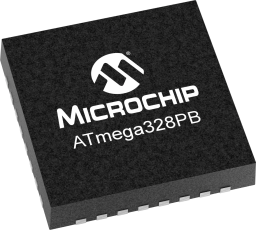
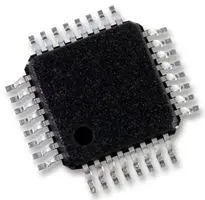
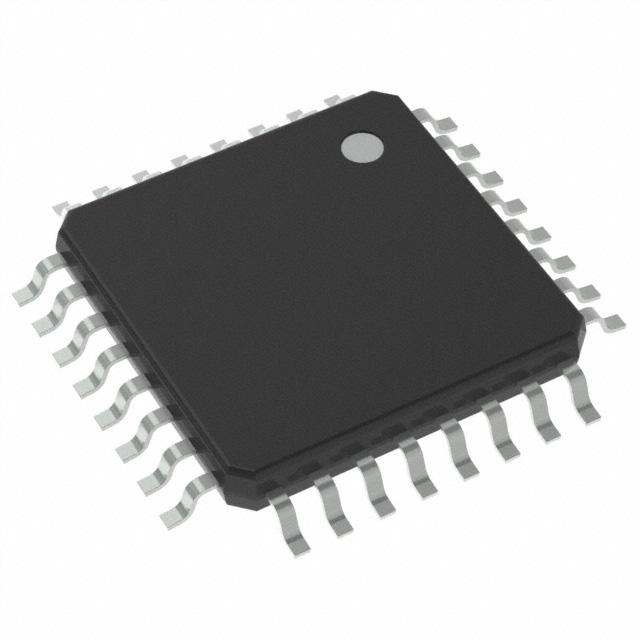
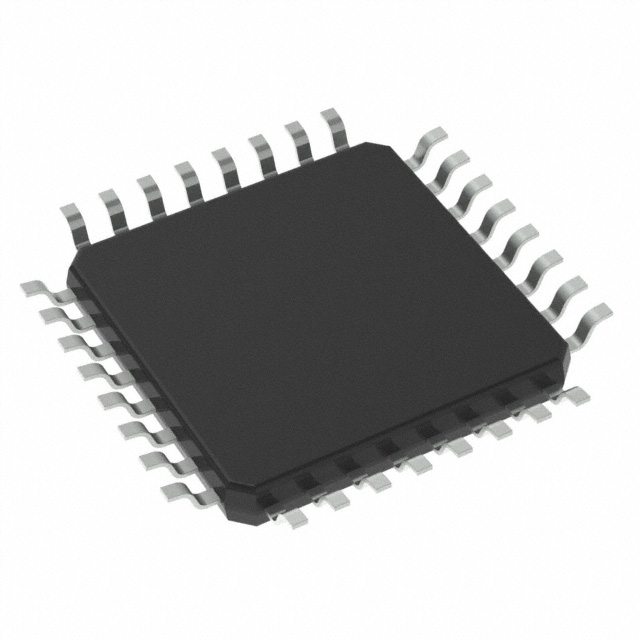
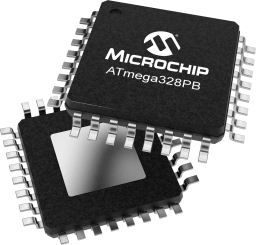
• * 32-pin TQFP and 32-pin QFN/MLF
• * 1.8-5.5V
• * -40°C to 105°C
• * 0-4 MHz @ 1.8 - 5.5V
• * 0-10 MHz @ 2.7 - 5.5.V
• * 0-20 MHz @ 4.5 - 5.5V
• * Active Mode: 0.24 mA
• * Power-Down Mode: 0.2 µA
• * Power-Save Mode: 1.3 µA (Including 32 kHz RTC)
Description
AI
The high-performance, low-power Microchip 8-bit AVR® RISC-based microcontroller combines 64 KB ISP Flash memory with read-while-write capabilities, 2 KB EEPROM, 4 KB SRAM, 27 general purpose I/O lines, 32 general purpose working registers, two flexible timer/counters with compare modes and PWM, one UART with HW LIN, an 11-channel 10-bit A/D converter with two differential programmable gain input stages, a 10-bit D/A converter, a programmable watchdog timer with an internal individual oscillator, SPI serial port, an on-chip debug system, and four software selectable power saving modes. The device operates between 2.7-5.5 volts.
By executing powerful instructions in a single clock cycle, the device achieves throughputs approaching one MIPS per MHz, balancing power consumption and processing speed.