Catalog
Enhanced product PC card controllers data manual
Key Features
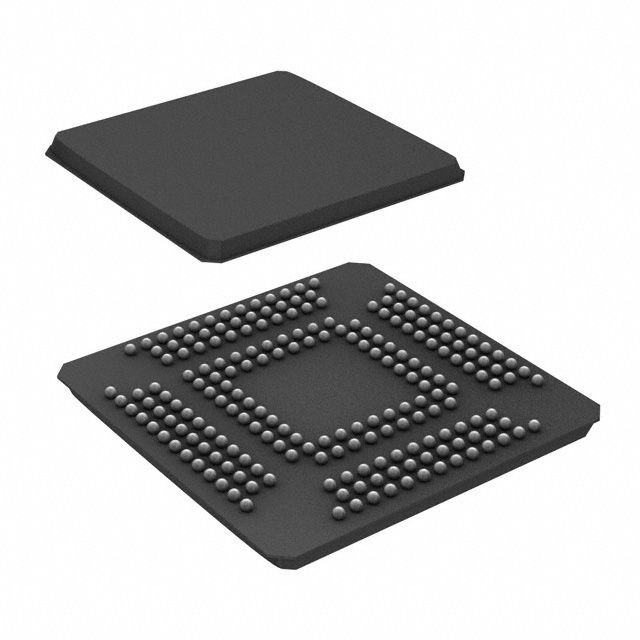
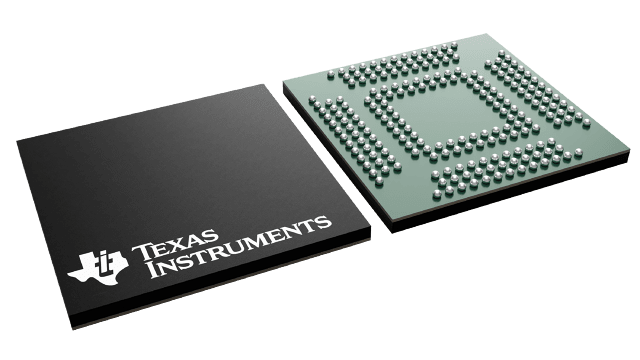
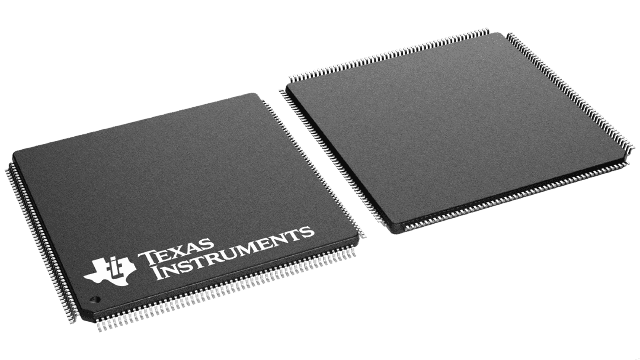
• Controlled BaselineOne Assembly/Test Site, One Fabrication SiteExtended Temperature Performance of –40°C to 85°CEnhanced Diminishing Manufacturing Sources (DMS) SupportEnhanced Product-Change NotificationQualification Pedigree209-terminal MicroStar BGA™ ball-grid array (GHK) package or 208-terminal low-profile QFP (PDV) package2.5-V core logic and 3.3-V I/O with universal PCI interfaces compatible with 3.3-V and 5-V PCI signaling environmentsIntegrated low-dropout voltage regulator (LDO-VR) eliminates the need for an external 2.5-V power supplyMix-and-match 5-V/3.3-V 16-bit PC Cards and 3.3-V CardBus CardsTwo PC Card or CardBus slots with hot insertion and removalSerial interface to TI™ TPS222X dual-slot PC Card power switchBurst transfers to maximize data throughput with CardBus CardsInterrupt configurations: parallel PCI, serialized PCI, parallel ISA, and serialized ISASerial EEPROM interface for loading subsystem ID and subsystem vendor IDPipelined architecture for greater than 130-Mbps throughput from CardBus-to-PCI and from PCI-to-CardBusUp to five general-purpose I/OsProgrammable output select for CLKRUN\Multifunction PCI device with separate configuration space for each socketFive PCI memory windows and two I/O windows available for each 16-bit interfaceTwo I/O windows and two memory windows available to each CardBus socketExchangeable-card-architecture- (ExCA-) compatible registers are mapped in memory and I/O spaceIntel™ 82365SL-DF and 82365SL register compatibleRing indicate, SUSPEND\, PCI CLKRUN\, and CardBus CCLKRUN\Socket activity LED terminalsPCI bus lock (LOCK)\Advanced quarter-micron, ultralow-power CMOS technologyInternal ring oscillatorComponent qualification in accordance with JEDEC and industry standards to ensure reliable operation over an extended temperature range. This includes, but is not limited to, Highly Accelerated Stress Test (HAST) or biased 85/85, temperature cycle, autoclave or unbiased HAST, electromigration, bond intermetallic life, and mold compound life. Such qualification testing should not be viewed as justifying use of this component beyond specified performance and environmental limits.Intel is a trademark of Intel Corporation.TI and MicroStar BGA are trademarks of Texas Instruments.Other trademarks are the property of their respective owners.Controlled BaselineOne Assembly/Test Site, One Fabrication SiteExtended Temperature Performance of –40°C to 85°CEnhanced Diminishing Manufacturing Sources (DMS) SupportEnhanced Product-Change NotificationQualification Pedigree209-terminal MicroStar BGA™ ball-grid array (GHK) package or 208-terminal low-profile QFP (PDV) package2.5-V core logic and 3.3-V I/O with universal PCI interfaces compatible with 3.3-V and 5-V PCI signaling environmentsIntegrated low-dropout voltage regulator (LDO-VR) eliminates the need for an external 2.5-V power supplyMix-and-match 5-V/3.3-V 16-bit PC Cards and 3.3-V CardBus CardsTwo PC Card or CardBus slots with hot insertion and removalSerial interface to TI™ TPS222X dual-slot PC Card power switchBurst transfers to maximize data throughput with CardBus CardsInterrupt configurations: parallel PCI, serialized PCI, parallel ISA, and serialized ISASerial EEPROM interface for loading subsystem ID and subsystem vendor IDPipelined architecture for greater than 130-Mbps throughput from CardBus-to-PCI and from PCI-to-CardBusUp to five general-purpose I/OsProgrammable output select for CLKRUN\Multifunction PCI device with separate configuration space for each socketFive PCI memory windows and two I/O windows available for each 16-bit interfaceTwo I/O windows and two memory windows available to each CardBus socketExchangeable-card-architecture- (ExCA-) compatible registers are mapped in memory and I/O spaceIntel™ 82365SL-DF and 82365SL register compatibleRing indicate, SUSPEND\, PCI CLKRUN\, and CardBus CCLKRUN\Socket activity LED terminalsPCI bus lock (LOCK)\Advanced quarter-micron, ultralow-power CMOS technologyInternal ring oscillatorComponent qualification in accordance with JEDEC and industry standards to ensure reliable operation over an extended temperature range. This includes, but is not limited to, Highly Accelerated Stress Test (HAST) or biased 85/85, temperature cycle, autoclave or unbiased HAST, electromigration, bond intermetallic life, and mold compound life. Such qualification testing should not be viewed as justifying use of this component beyond specified performance and environmental limits.Intel is a trademark of Intel Corporation.TI and MicroStar BGA are trademarks of Texas Instruments.Other trademarks are the property of their respective owners.
Description
AI
The Texas Instruments PCI1520, a 208-terminal dual-slot CardBus controller designed to meet thePCI Bus Power Management Interface Specification for PCI to CardBus Bridges, is an ultralow-power high-performance PCI-to-CardBus controller that supports two independent card sockets compliant with thePC Card Standard(rev. 7.1). The PCI1520 provides features that make it the best choice for bridging between PCI and PC Cards in both notebook and desktop computers. The 1997PC Card Standardretains the 16-bit PC Card specification defined inPCI Local Bus Specificationand defines the new 32-bit PC Card, CardBus, capable of full 32-bit data transfers at 33 MHz. The PCI1520 supports any combination of 16-bit and CardBus PC Cards in the two sockets, powered at 5 V or 3.3 V, as required.
The PCI1520 is compliant with thePCI Local Bus Specification, and its PCI interface can act as either a PCI master device or a PCI slave device. The PCI bus mastering is initiated during CardBus PC Card bridging transactions. The PCI1520 is also compliant withPCI Bus Power Management Interface Specification(rev. 1.1).
All card signals are internally buffered to allow hot insertion and removal without external buffering. The PCI1520 is register-compatible with the Intel 82365SL-DF and 82365SL ExCA controllers. The PCI1520 internal data path logic allows the host to access 8-, 16-, and 32-bit cards using full 32-bit PCI cycles for maximum performance. Independent buffering and a pipeline architecture provide an unsurpassed performance level with sustained bursting. The PCI1520 can also be programmed to accept fast posted writes to improve system-bus utilization.
Multiple system-interrupt signaling options are provided, including parallel PCI, parallel ISA, serialized ISA, and serialized PCI. Furthermore, general-purpose inputs and outputs are provided for the board designer to implement sideband functions. Many other features designed into the PCI1520, such as socket activity light-emitting diode (LED) outputs, are discussed in detail throughout the design specification.
An advanced complementary metal-oxide semiconductor (CMOS) process achieves low system power consumption while operating at PCI clock rates up to 33 MHz. Several low-power modes enable the host power management system to further reduce power consumption.
The Texas Instruments PCI1520, a 208-terminal dual-slot CardBus controller designed to meet thePCI Bus Power Management Interface Specification for PCI to CardBus Bridges, is an ultralow-power high-performance PCI-to-CardBus controller that supports two independent card sockets compliant with thePC Card Standard(rev. 7.1). The PCI1520 provides features that make it the best choice for bridging between PCI and PC Cards in both notebook and desktop computers. The 1997PC Card Standardretains the 16-bit PC Card specification defined inPCI Local Bus Specificationand defines the new 32-bit PC Card, CardBus, capable of full 32-bit data transfers at 33 MHz. The PCI1520 supports any combination of 16-bit and CardBus PC Cards in the two sockets, powered at 5 V or 3.3 V, as required.
The PCI1520 is compliant with thePCI Local Bus Specification, and its PCI interface can act as either a PCI master device or a PCI slave device. The PCI bus mastering is initiated during CardBus PC Card bridging transactions. The PCI1520 is also compliant withPCI Bus Power Management Interface Specification(rev. 1.1).
All card signals are internally buffered to allow hot insertion and removal without external buffering. The PCI1520 is register-compatible with the Intel 82365SL-DF and 82365SL ExCA controllers. The PCI1520 internal data path logic allows the host to access 8-, 16-, and 32-bit cards using full 32-bit PCI cycles for maximum performance. Independent buffering and a pipeline architecture provide an unsurpassed performance level with sustained bursting. The PCI1520 can also be programmed to accept fast posted writes to improve system-bus utilization.
Multiple system-interrupt signaling options are provided, including parallel PCI, parallel ISA, serialized ISA, and serialized PCI. Furthermore, general-purpose inputs and outputs are provided for the board designer to implement sideband functions. Many other features designed into the PCI1520, such as socket activity light-emitting diode (LED) outputs, are discussed in detail throughout the design specification.
An advanced complementary metal-oxide semiconductor (CMOS) process achieves low system power consumption while operating at PCI clock rates up to 33 MHz. Several low-power modes enable the host power management system to further reduce power consumption.