NB3W1200L Series
3.3 V 100/133 MHz Differential 1:12 Push-Pull Clock ZDB/Fanout Buffer for PCle
Manufacturer: ON Semiconductor
Catalog
3.3 V 100/133 MHz Differential 1:12 Push-Pull Clock ZDB/Fanout Buffer for PCle
Key Features
• 12 Differential Clock Output Pairs @ 0.7 V
• Low−Power NMOS Push−Pull Compatible Outputs for NB3W1200L
• Optimized 100 MHz and 133 MHz Operating Frequencies to Meet The Next Generation PCIe Gen 2/Gen 3/ Gen 4 and Intel QPI & UPI Phase Jitter
• DB1200ZL Compliant
• 3.3 V ±5% Supply Voltage Operation
• Fixed−Feedback for Lowest Input−To−Output Delay Variation
• SMBus Programmable Configurations to Allow Multiple Buffers in aSingle Control Network
• PLL Bypass Configurable for PLL or Fanout Operation
• Programmable PLL Bandwidth
• 2 Tri−level Addresses Selection (9 SMBUS Addresses)
• Individual OE Control Pin for Each of 12 Outputs
• 50 ps Max Output−to−Output Skew Performance
• 50 ps Max Cycle−to−Cycle Jitter (PLL mode)
• 100 ps Input to Output Delay Variation Performance
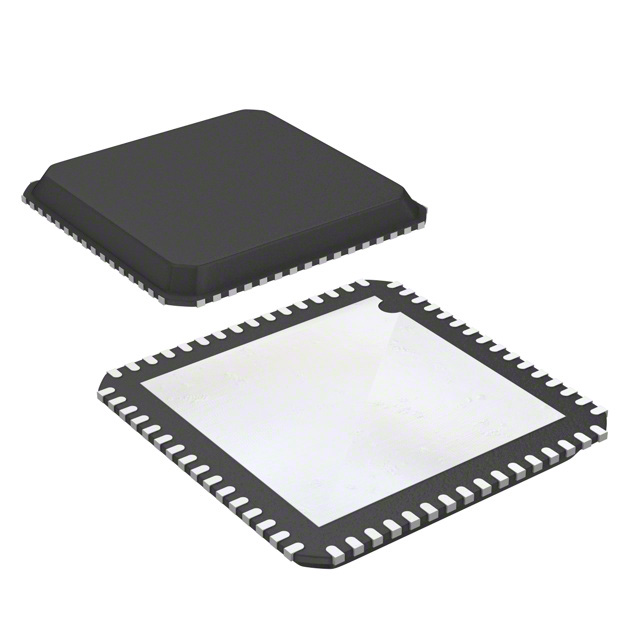
• QFN 64−pin Package, 9 mm x 9 mm
• Spread Spectrum Compatible: Tracks Input Clock Spreading for LowEMI
• 0°C to +70°C Ambient Operating Temperature
Description
AI
The NB3N1200K and NB3W1200L differential clock buffers areDB1200Z and DB1200ZL compliant and are designed to work inconjunction with a PCIe compliant source clock synthesizer to providepoint−to−point clocks to multiple agents. The device is capable ofdistributing the reference clocks for Intel® QuickPath Interconnect(Intel QPI & UPI), PCIe Gen1/Gen2/Gen3/Gen4, SAS, SATA, and Intel ScalableMemory Interconnect (Intel SMI) applications. The VCO of thedevice is optimized to support 100 MHz and 133 MHz frequencyoperation. The NB3N1200K and NB3W1200L utilizepseudo−external feedback topology to achieve low input−to outputdelay variation. The NB3N1200K is configured with the HCSL buffertype, while the NB3W1200L is configured with the low−powerNMOS Push−Pull buffer type.