DRV2667 Series
Haptic driver for piezo with integrated 105-V boost converter, waveform memory & DAC
Manufacturer: Texas Instruments
Catalog
Haptic driver for piezo with integrated 105-V boost converter, waveform memory & DAC
Key Features
• Integrated Digital Front EndUp to 400-kHz I 2C Bus ControlAdvanced Waveform Synthesizer2-kB Internal Waveform Memory100-Byte Internal FIFO InterfaceImmersion TS5000-CompliantOptional Analog InputsHigh-Voltage Piezo-Haptic DriverDrives up to 100 nF at 200 V PP and 300 HzDrives up to 150 nF at 150 V PP and 300 HzDrives up to 330 nF at 100 V PP and 300 HzDrives up to 680 nF at 50 V PP and 300 HzDifferential Output105-V Integrated Boost ConverterAdjustable Boost VoltageAdjustable Boost Current LimitProgramable Boost Current LimitIntegrated Power FET and DiodeNo Transformer Required2-ms Fast Start Up Time3.3- to 5.5-V Wide Supply Voltage Range1.8 V-Compatible, V DD-Tolerant Digital PinsIntegrated Digital Front EndUp to 400-kHz I 2C Bus ControlAdvanced Waveform Synthesizer2-kB Internal Waveform Memory100-Byte Internal FIFO InterfaceImmersion TS5000-CompliantOptional Analog InputsHigh-Voltage Piezo-Haptic DriverDrives up to 100 nF at 200 V PP and 300 HzDrives up to 150 nF at 150 V PP and 300 HzDrives up to 330 nF at 100 V PP and 300 HzDrives up to 680 nF at 50 V PP and 300 HzDifferential Output105-V Integrated Boost ConverterAdjustable Boost VoltageAdjustable Boost Current LimitProgramable Boost Current LimitIntegrated Power FET and DiodeNo Transformer Required2-ms Fast Start Up Time3.3- to 5.5-V Wide Supply Voltage Range1.8 V-Compatible, V DD-Tolerant Digital Pins
Description
AI
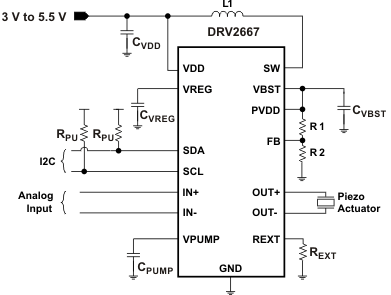
The DRV2667 device is a piezo haptic driver with integrated 105-V boost switch, integrated power diode, integrated fully-differential amplifier, and integrated digital front end capable of driving both high-voltage and low-voltage piezo haptic actuators. This versatile device supports HD haptics through the I 2C port or through the analog inputs.
The digital interface of the DRV2667 device is available through an I 2C-compatible bus. A digital interface relieves the costly processor burden of the PWM generation or additional analog channel requirements in the host system. Any writes to the internal FIFO will automatically wake up the device and begin playing the waveform after the 2-ms internal startup procedure. When the data flow stops or the FIFO under-runs, the device will automatically enter a pop-less shutdown procedure.
The DRV2667 device also includes waveform memory to store and recall waveforms with minimal latency as well as an advanced waveform synthesizer to construct complex haptic waveforms with minimal memory usage. This provide a means of hardware acceleration, relieving the host processor of haptic generation duties as well as minimizing bus traffic over the haptic interface.
The boost voltage is set using two external resistors, and the boost current limit is programmable through the R EXT resistor. A typical start-up time of 2 ms makes the DRV2667 an ideal piezo driver for fast haptic responses. Thermal overload protection prevents the device from being damaged when overdriven.
The DRV2667 device is a piezo haptic driver with integrated 105-V boost switch, integrated power diode, integrated fully-differential amplifier, and integrated digital front end capable of driving both high-voltage and low-voltage piezo haptic actuators. This versatile device supports HD haptics through the I 2C port or through the analog inputs.
The digital interface of the DRV2667 device is available through an I 2C-compatible bus. A digital interface relieves the costly processor burden of the PWM generation or additional analog channel requirements in the host system. Any writes to the internal FIFO will automatically wake up the device and begin playing the waveform after the 2-ms internal startup procedure. When the data flow stops or the FIFO under-runs, the device will automatically enter a pop-less shutdown procedure.
The DRV2667 device also includes waveform memory to store and recall waveforms with minimal latency as well as an advanced waveform synthesizer to construct complex haptic waveforms with minimal memory usage. This provide a means of hardware acceleration, relieving the host processor of haptic generation duties as well as minimizing bus traffic over the haptic interface.
The boost voltage is set using two external resistors, and the boost current limit is programmable through the R EXT resistor. A typical start-up time of 2 ms makes the DRV2667 an ideal piezo driver for fast haptic responses. Thermal overload protection prevents the device from being damaged when overdriven.