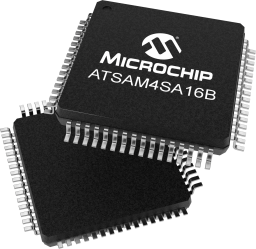
ATSAM4SA16C Series
Manufacturer: Microchip Technology
Catalog
Key Features
• * ARM Cortex-M4 with 2 Kbytes Cache running at up to 120 MHz
• * Memory Protection Unit (MPU)
• * DSP Instructions, Thumb®-2 instruction set
• * 1024 Kbytes embedded Flash, ECC, Security Bit and Lock Bits
• * 160 Kbytes embedded SRAM
• * 16 Kbytes ROM with embedded boot loader routines (UART, USB) and IAP routines
• * 8-bit Static Memory Controller (SMC): SRAM, PSRAM, NOR and NAND Flash support
• * External Bus Interface - 8-bit data, 4 chip selects, 24-bit address
• * Embedded voltage regulator for single-supply operation
• * Power-on-Reset (POR), Brown-out Detector (BOD) and Dual Watchdog for Safe Operation
• * Quartz or ceramic resonator oscillators: 3 to 20 MHz with clock failure detection and 32.768 kHz for RTT or system clock
• * RTC with Gregorian and Persian Calendar Mode, Waveform Generation in Backup mode
• * RTC counter calibration circuitry compensates for 32.768 kHz crystal frequency inaccuracy
• * Slow clock internal RC oscillator as permanent low-power mode device clock
• * High-precision 8/12 MHz factory-trimmed internal RC oscillator with 4 MHz default frequency for device startup, in-application trimming access for frequency adjustment
• * Two PLL up to 240 MHz for Device Clock and for USB
• * Temperature Sensor
• * Low-power tamper detection on two inputs, anti-tampering by immediate clear of general-purpose backup registers (GPBR)
• * 22 Peripheral DMA Controllers
• * Sleep, Wait and Backup modes; consumption down to 1 µA in Backup mode
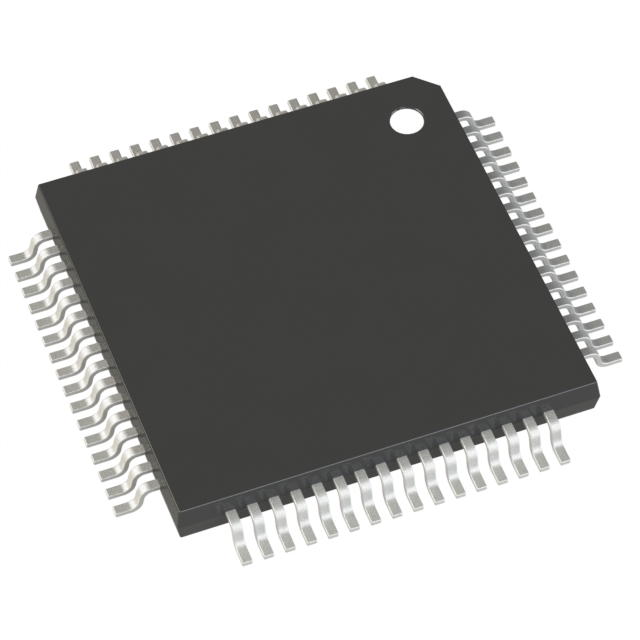
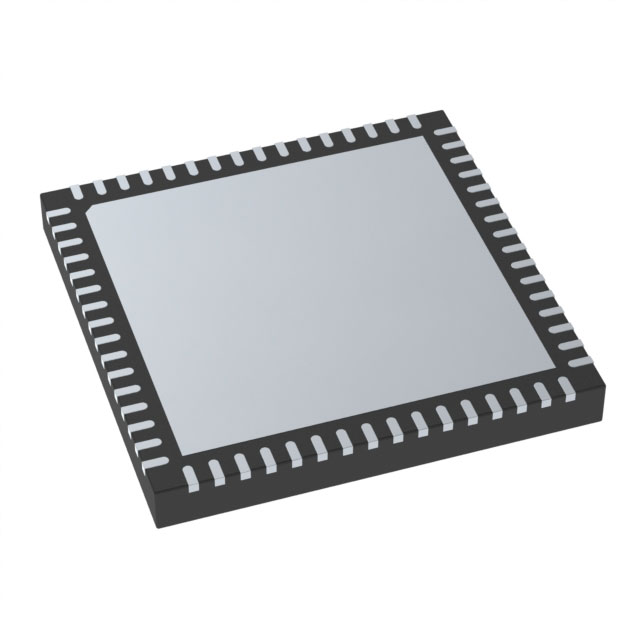
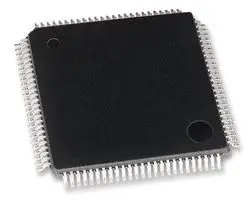
• * 100-lead LQFP, 14 x 14 mm, pitch 0.5 mm
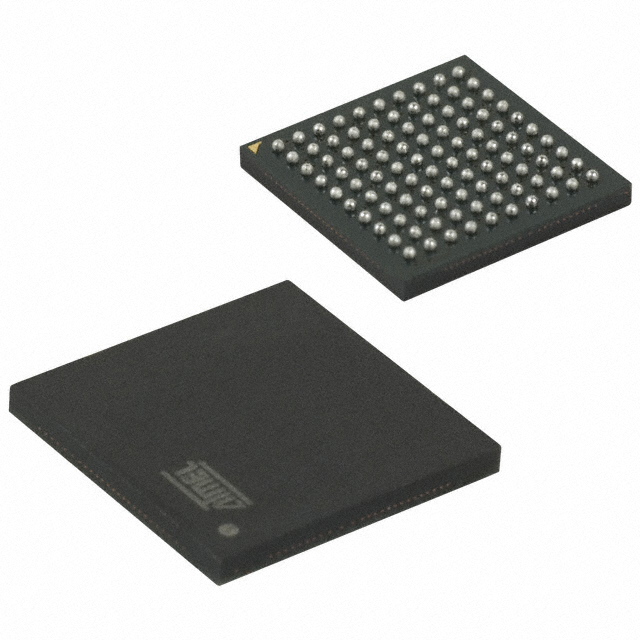
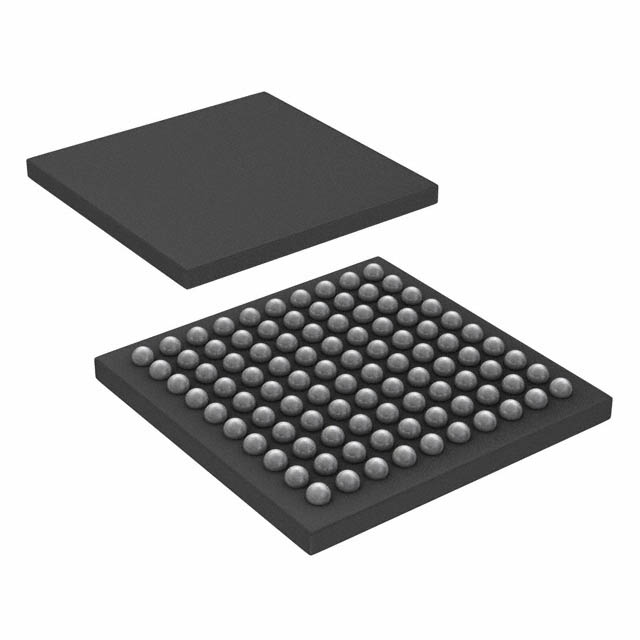
• * 100-lead TFBGA, 9 x 9 mm, pitch 0.8 mm
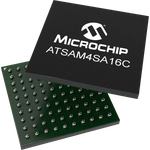
• * 100-lead VFBGA, 7 x 7 mm, pitch 0.65 mm
• * Revision A - Industrial (-40° C to +85° C), Revision B -(-40° C to +105° C)
• * USB 2.0 Device: 12 Mbps, 2668 byte FIFO, up to 8 bidirectional Endpoints, on-chip transceiver
• * Up to two USARTs with ISO7816, IrDA®, RS-485, SPI, Manchester and Modem Mode
• * Two 2-wire UARTs
• * Up to two 2-Wire Interface modules (I2C-compatible), one SPI, one Serial Synchronous Controller (I2S), one high-speed Multimedia Card Interface (SDIO/SD Card/MMC)
• * Two 3-channel 16-bit Timer Counters with capture, waveform, compare and PWM mode, Quadrature decoder logic and 2-bit Gray up/down counter for stepper motor
• * 4-channel 16-bit PWM with complementary output, fault input, 12-bit dead time generator counter for motor control
• * 32-bit Real-time Timer and RTC with calendar, alarm and 32 kHz trimming features
• * 256-bit General Purpose Backup Registers (GPBR)
• * 32-bit Cyclic Redundancy Check Calculation Unit (CRCCU) for data integrity check of off-/on-chip memories
• * 79 I/O Lines with external interrupt capability (edge or level sensitivity), debouncing, glitch filtering and on-die series resistor termination
• * Three 32-bit Parallel Input/Output Controllers, Peripheral DMA-assisted Parallel Capture mode
• * 16-channel, 1Msps ADC with differential input mode and programmable gain stage and auto calibration
• * One 2-channel 12-bit 1Msps DAC
• * One Analog Comparator with flexible input selection, selectable input hysteresis
• * Serial Wire/JTAG Debug Port(SWJ-DP)
• * Debug access to all memories and registers in the system, including Cortex-M4 register bank when the core is running, halted, or held in reset.
• * Serial Wire Debug Port (SW-DP) and Serial Wire JTAG Debug Port (SWJ-DP) debug access.
• * Flash Patch and Breakpoint (FPB) unit for implementing breakpoints and code patches.
• * Data Watchpoint and Trace (DWT) unit for implementing watchpoints, data tracing, and system profiling.
• * Instrumentation Trace Macrocell (ITM) for support of printf style debugging.
• * IEEE1149.1 JTAG Boundary-scan on all digital pins.
• * ASF-Atmel software Framework – SAM software development framework
• * Integrated in the Atmel Studio IDE with a graphical user interface or available as standalone for GCC, IAR compilers.
• * DMA support, Interrupt handlers Driver support
• * USB, TCP/IP, Wi-Fi and Bluetooth, Numerous USB classes, DHCP and Wi-Fi encryption Stacks
• * RTOS integration, FreeRTOS is a core component
Description
AI
***For New Designs, we highly recommend to consider Revision B for Prototypes and Production.***
**Support for the SAM4SA16C within Microchip Studio 6.1 requires a device support package: DOWNLOAD**
Microchip's ARM®-based SAM4SA16 microcontroller builds on the high-performance 32-bit Cortex®-M4 core.
The SAM4SA16 features:
* 1MB of flash memory and 160KB of SRAM
* 2KB of integrated cache memory
* Maximum operating speed of 120MHz
* Best-in-class power consumption: 200uA/MHz in active mode, down to 3uA at 1.8V in back-up mode with the RTC running
* 1.62V to 3.6V power supply
* Extensive peripheral set for connectivity, system control and analog interfacing
* Pin-to-pin compatible with Microchip SAM7S, SAM3N and SAM3S MCUs
* Supported by Microchip Studio, Microchip Software Framework and the SAM4S-EK2