ISO5851-Q1 Series
Automotive 5.7kVrms, 2.5A/5A single-channel isolated gate driver with active protection features
Manufacturer: Texas Instruments
Catalog
Automotive 5.7kVrms, 2.5A/5A single-channel isolated gate driver with active protection features
Key Features
• Qualified for Automotive ApplicationsAEC-Q100 Qualified With the Following Results:Device Temperature Grade 1: –40°C to +125°C Ambient Operating Temperature RangeDevice HBM Classification Level 3ADevice CDM Classification Level C6100-kV/μs Minimum Common-Mode Transient Immunity (CMTI) at VCM= 1500 V2.5-A Peak Source and 5-A Peak Sink CurrentsShort Propagation Delay: 76 ns (Typ),110 ns (Max)2-A Active Miller ClampOutput Short-Circuit ClampFault Alarm upon Desaturation Detection is Signaled onFLTand Reset ThroughRSTInput and Output Undervoltage Lockout (UVLO) with Ready (RDY) Pin IndicationActive Output Pull-down and Default Low Outputs with Low Supply or Floating Inputs3-V to 5.5-V Input Supply Voltage15-V to 30-V Output Driver Supply VoltageCMOS Compatible InputsRejects Input Pulses and Noise Transients Shorter Than 20 nsIsolation Surge Withstand Voltage 12800-VPKSafety-Related Certifications:8000-VPKVIOTMand 2121-VPKVIORMReinforced Isolation per DIN V VDE V 0884-10 (VDE V 0884-10):2006-125700-VRMSIsolation for 1 Minute per UL 1577CSA Component Acceptance Notice 5A, IEC 60950–1 and IEC 60601–1 End Equipment StandardsTUV Certification per EN 61010-1 and EN 60950-1GB4943.1-2011 CQC CertificationAll Certifications CompleteAll trademarks are the property of their respective owners.Qualified for Automotive ApplicationsAEC-Q100 Qualified With the Following Results:Device Temperature Grade 1: –40°C to +125°C Ambient Operating Temperature RangeDevice HBM Classification Level 3ADevice CDM Classification Level C6100-kV/μs Minimum Common-Mode Transient Immunity (CMTI) at VCM= 1500 V2.5-A Peak Source and 5-A Peak Sink CurrentsShort Propagation Delay: 76 ns (Typ),110 ns (Max)2-A Active Miller ClampOutput Short-Circuit ClampFault Alarm upon Desaturation Detection is Signaled onFLTand Reset ThroughRSTInput and Output Undervoltage Lockout (UVLO) with Ready (RDY) Pin IndicationActive Output Pull-down and Default Low Outputs with Low Supply or Floating Inputs3-V to 5.5-V Input Supply Voltage15-V to 30-V Output Driver Supply VoltageCMOS Compatible InputsRejects Input Pulses and Noise Transients Shorter Than 20 nsIsolation Surge Withstand Voltage 12800-VPKSafety-Related Certifications:8000-VPKVIOTMand 2121-VPKVIORMReinforced Isolation per DIN V VDE V 0884-10 (VDE V 0884-10):2006-125700-VRMSIsolation for 1 Minute per UL 1577CSA Component Acceptance Notice 5A, IEC 60950–1 and IEC 60601–1 End Equipment StandardsTUV Certification per EN 61010-1 and EN 60950-1GB4943.1-2011 CQC CertificationAll Certifications CompleteAll trademarks are the property of their respective owners.
Description
AI
The ISO5851-Q1 is a 5.7-kVRMS, reinforced isolated gate driver for IGBTs and MOSFETs with 2.5-A source and 5-A sink current. The input side operates from a single 3-V to 5.5-V supply. The output side allows for a supply range from minimum 15 V to maximum 30 V. Two complementary CMOS inputs control the output state of the gate driver. The short propagation time of 76 ns assures accurate control of the output stage.
An internal desaturation (DESAT) fault detection recognizes when the IGBT is in an overload condition. Upon a DESAT detect, the gate driver output is driven low to VEE2potential, turning the IGBT immediately off.
When desaturation is active, a fault signal is sent across the isolation barrier, pulling theFLToutput at the input side low and blocking the isolator input. TheFLToutput condition is latched and can be reset through a low-active pulse at theRSTinput.
When the IGBT is turned off during normal operation with bipolar output supply, the output is hard clamp to VEE2. If the output supply is unipolar, an active Miller clamp can be used, allowing Miller current to sink across a low impedance path preventing IGBT to be dynamically turned on during high voltage transient conditions.
When desaturation is active, a fault signal is sent across the isolation barrier pulling theFLToutput at the input side low and blocking the isolator input. TheFLToutput condition is latched and can be reset through a low-active pulse at theRSTinput.
When the IGBT is turned off during normal operation with bipolar output supply, the output is hard clamp to VEE2. If the output supply is unipolar, an active Miller clamp can be used, allowing Miller current to sink across a low impedance path preventing IGBT to be dynamically turned on during high voltage transient conditions.
The readiness for the gate driver to be operated is under the control of two undervoltage-lockout circuits monitoring the input side and output side supplies. If either side has insufficient supply the RDY output goes low; otherwise, this output is high.
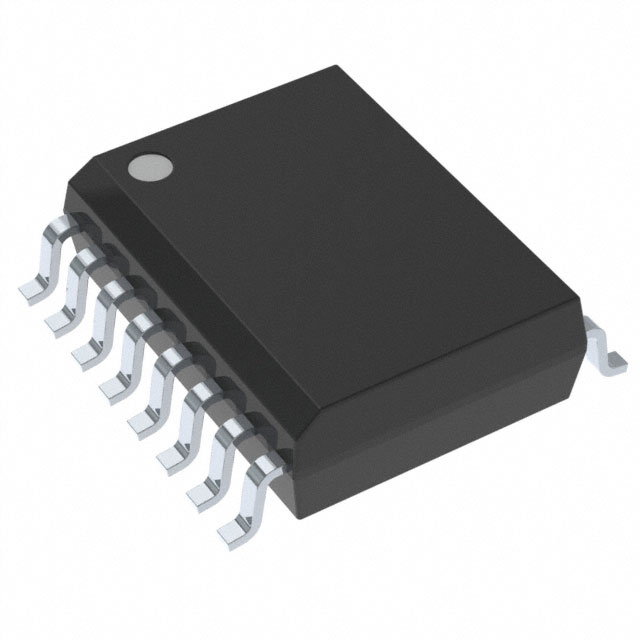
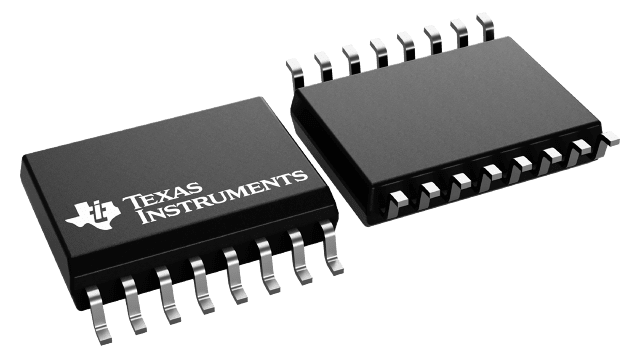
The ISO5851-Q1 is available in a 16-pin SOIC package. Device operation is specified over a temperature range from –40°C to +125°C ambient.
The ISO5851-Q1 is a 5.7-kVRMS, reinforced isolated gate driver for IGBTs and MOSFETs with 2.5-A source and 5-A sink current. The input side operates from a single 3-V to 5.5-V supply. The output side allows for a supply range from minimum 15 V to maximum 30 V. Two complementary CMOS inputs control the output state of the gate driver. The short propagation time of 76 ns assures accurate control of the output stage.
An internal desaturation (DESAT) fault detection recognizes when the IGBT is in an overload condition. Upon a DESAT detect, the gate driver output is driven low to VEE2potential, turning the IGBT immediately off.
When desaturation is active, a fault signal is sent across the isolation barrier, pulling theFLToutput at the input side low and blocking the isolator input. TheFLToutput condition is latched and can be reset through a low-active pulse at theRSTinput.
When the IGBT is turned off during normal operation with bipolar output supply, the output is hard clamp to VEE2. If the output supply is unipolar, an active Miller clamp can be used, allowing Miller current to sink across a low impedance path preventing IGBT to be dynamically turned on during high voltage transient conditions.
When desaturation is active, a fault signal is sent across the isolation barrier pulling theFLToutput at the input side low and blocking the isolator input. TheFLToutput condition is latched and can be reset through a low-active pulse at theRSTinput.
When the IGBT is turned off during normal operation with bipolar output supply, the output is hard clamp to VEE2. If the output supply is unipolar, an active Miller clamp can be used, allowing Miller current to sink across a low impedance path preventing IGBT to be dynamically turned on during high voltage transient conditions.
The readiness for the gate driver to be operated is under the control of two undervoltage-lockout circuits monitoring the input side and output side supplies. If either side has insufficient supply the RDY output goes low; otherwise, this output is high.
The ISO5851-Q1 is available in a 16-pin SOIC package. Device operation is specified over a temperature range from –40°C to +125°C ambient.