Catalog
Inductive Sensor Interface IC
Key Features
- 12-bit Position Output Resolution
- 12-bit DAC Output Interface, 16-bit PWM Output Interface
- SENT and PSI5 Output Interface
- -40°C to 150°C Operation
- AEC-Q100 Grade 0 Certification
- ISO26262 ASIL B Support
- Digital Calibration with Non-volatile Configuration Storage (EEPROM)
- Power Pin (VIN) Calibration Programming
- GPIO (SPI) Calibration Programming
- Full Range Sensor Origin Adjustment
- Redundant IC Support
- Multiple Faults Detection and Protection
- 2kHz Sensor Update Speed
- Reverse Power Protection
- Protected Watchdog Timer
- Built-in Oscillator for Driving Primary Coil
- Two Independent Analog Channels With Demodulation
- 32-Bit CORTUS APS1 RISC MCU
- Two 13-bit ADCs, One 10-bit ADC
- Temperature Sensor Available
- Low Temperature Drift
- TD, PWM (Push-Pull), PWM (OD) Output Options
- Excellent Long Term Stability
Description
AI
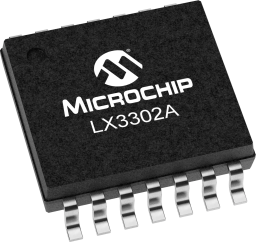
The LX3302A is a highly integrated programmable data conversion IC designed for interfacing to and managing of inductive position sensors. These sensors use printed circuit board (PCB) traces to accurately detect the location of the metal target and are immune to stray magnetics fields and eliminate the need of a magnet, required with other types of magnetic field based sensors. The device includes an integrated oscillator circuit for driving the primary coil of an inductive sensor, along with two independent analog conversion paths for conditioning, converting, and processing of sine and cosine analog signals from the secondary coils of the sensor. Each path includes an EMI filter, demodulator, anti-alias filter, programmable amplifier, and a 13-bit sigma-delta analog-to-digital converter. The resulting output is an accurate 12-bit resolution signal that represent the movement of the metal target over the PCB based sensor. There's also an additional 10-bit ADC that makes temperature sensor and z-direction measurement options available.
Each analog signal path includes digital calibration capability which allows the complete analog path (including the external sensors) to be calibrated during the system manufacturing process. The calibration information is written to an internal EEPROM resulting in improved production yields, and in-line system upgrades. The EEPROM is coupled with an internal 32-bit RISC processor to provide programmable advanced digital filtering, fault monitoring, and signal processing options to use the IC in wide range of applications.
System output interfaces include a 16-bit PWM, a 12-bit digital-to-analog converter (DAC) in addition to a digital three wire SENT and a two wire current modulated PSI5 protocol.
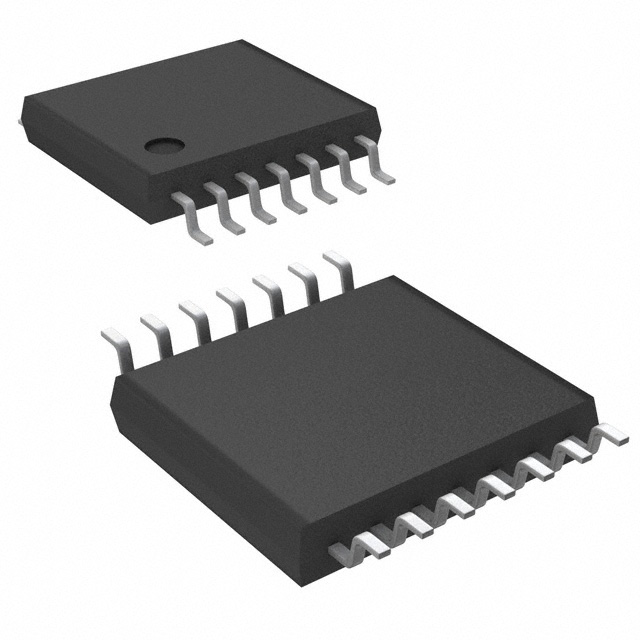
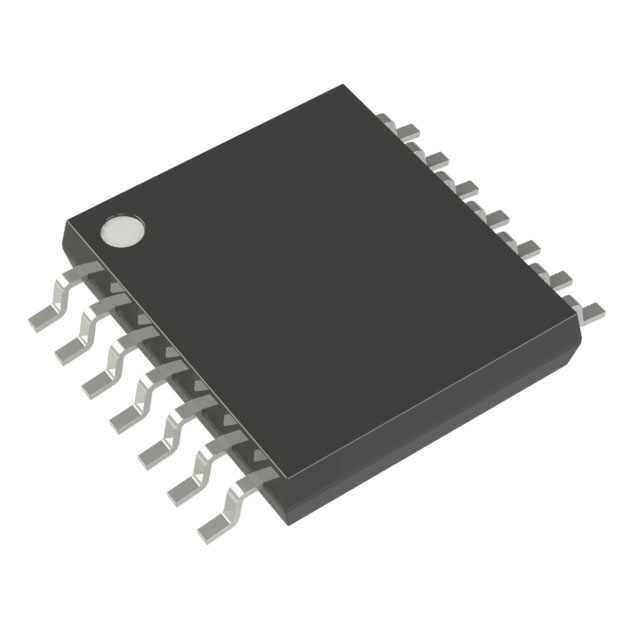
The LX3302A is offered in TSSOP14, the device is specified over a temperature range of -40°C to +150°C making it suitable for a wide range of commercial, industrial, medical, and/or automotive sensor applications.
Download your first inductive Position sensor and get a head start on your design by visiting our [**Inductive Position Sensor Design Page**](https://www.microchip.com/en-us/products/sensors-and-motor-drive/inductive-position-sensors/getting-started-with-inductive-position-sensors). Combined with one of the position sensor designs on that page, the **LX3302AQPW-EASY** variant of the LX3302A will provide a true plug and play operation. Just solder the IC on the given layout and schematic, and moving the metal target will provide sensor information. No programming of the IC or reading of the datasheet is required!
The below list of technical documents, software and reference designs are available upon request, for more information, please contact Dustin.Tenney@microchip.com or Mark.Smith@microchip.com.
- LX3302A Datasheet
- LX3302A Auto Calibration User Guide
- IPCE Sensor Evaluation and Calibration Software
Microchip can help with your own sensor design with its own unique mechanical constraints. You can start with [one of our Kits](https://www.microchip.com/design-centers/sensors/inductive-position-sensors/getting-started), but Microchip is ready to help you from day one. Talk with our sales team and describe your sensor requirement. We will work with you on getting a design up and running to take advantage of this advanced technology.
Get started with your first design by ordering a [position sensor evaluation kit](https://www.microchip.com/design-centers/sensors/inductive-position-sensors/getting-started) for your first project. There are linear and rotational evaluation kits available. Each kits includes a Sensor evaluation board, a IPCE programmer, links to our IPCE software, and applicable cables. There are also separate evaluation boards and programmers available for orders.