Catalog
1.5-Gbps 1:4 LVDS repeater
Key Features
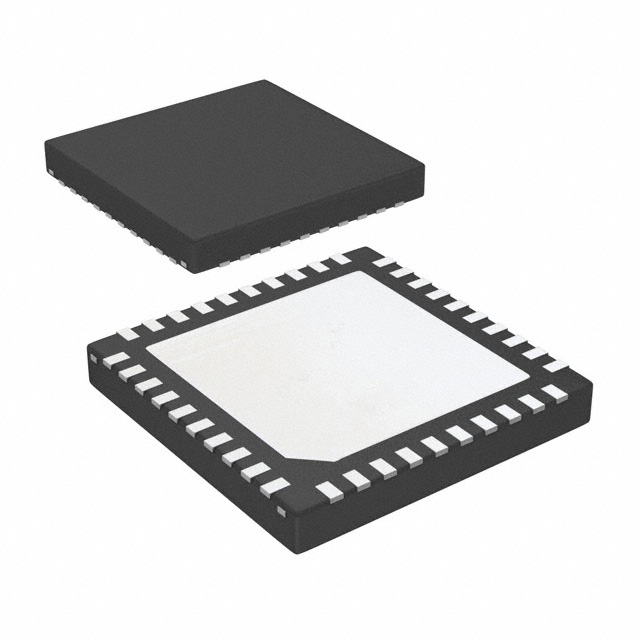
• DC - 1.5 Gbps Low Jitter, Low Skew, Low Power OperationWide Input Common Mode Voltage Range Allows for DC-Coupled Interface to LVDS, CML and LVPECL DriversRedundant InputsLOSCircuitry Detects Open Inputs Fault ConditionIntegrated 100Ω Input and Output Terminations8 kV ESD on LVDS I/O Pins Protects Adjoining ComponentsSmall 6 mm x 6 mm WQFN-40 Space Saving PackageAll trademarks are the property of their respective owners.DC - 1.5 Gbps Low Jitter, Low Skew, Low Power OperationWide Input Common Mode Voltage Range Allows for DC-Coupled Interface to LVDS, CML and LVPECL DriversRedundant InputsLOSCircuitry Detects Open Inputs Fault ConditionIntegrated 100Ω Input and Output Terminations8 kV ESD on LVDS I/O Pins Protects Adjoining ComponentsSmall 6 mm x 6 mm WQFN-40 Space Saving PackageAll trademarks are the property of their respective owners.
Description
AI
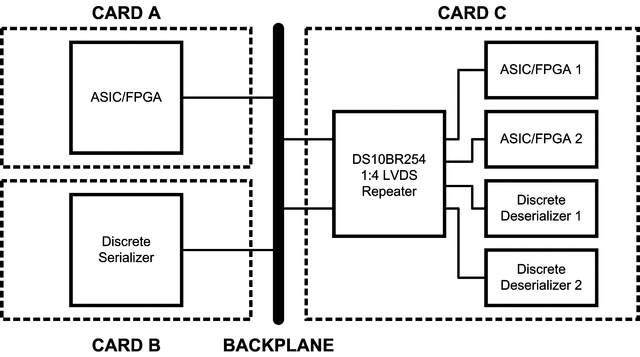
The DS10BR254 is a 1.5 Gbps 1:4 LVDS repeater optimized for high-speed signal routing and distribution over FR-4 printed circuit board backplanes and balanced cables. Fully differential signal paths ensure exceptional signal integrity and noise immunity.
The device has two different LVDS input channels and a select pin determines which input is active. A loss-of-signal (LOS) circuit monitors both input channels and a uniqueLOSpin is asserted when no signal is detected at that input.
Wide input common mode range allows the switch to accept signals with LVDS, CML and LVPECL levels; the output levels are LVDS. A very small package footprint requires a minimal space on the board while the flow-through pinout allows easy board layout. Each differential input and output is internally terminated with a 100Ω resistor to lower device return losses, reduce component count and further minimize board space.
The DS10BR254 is a 1.5 Gbps 1:4 LVDS repeater optimized for high-speed signal routing and distribution over FR-4 printed circuit board backplanes and balanced cables. Fully differential signal paths ensure exceptional signal integrity and noise immunity.
The device has two different LVDS input channels and a select pin determines which input is active. A loss-of-signal (LOS) circuit monitors both input channels and a uniqueLOSpin is asserted when no signal is detected at that input.
Wide input common mode range allows the switch to accept signals with LVDS, CML and LVPECL levels; the output levels are LVDS. A very small package footprint requires a minimal space on the board while the flow-through pinout allows easy board layout. Each differential input and output is internally terminated with a 100Ω resistor to lower device return losses, reduce component count and further minimize board space.