AD5270 Series
1024-Position, 1% Resistor Tolerance Error, SPI Interface and 50-TP Memory Digital Rheostat
Manufacturer: Analog Devices
Catalog
1024-Position, 1% Resistor Tolerance Error, SPI Interface and 50-TP Memory Digital Rheostat
Key Features
• Single-channel, 1024-/256-position resolution
• 20 kΩ, 50 kΩ and 100 kΩ nominal resistance
• Maximum ±1% nominal resistor tolerance error
• 50-times programmable (50-TP) wiper memory
• Rheostat mode temperature coefficient: 5 ppm/°C
• 2.7 V to 5.5 V single-supply operation
• ±2.5 V to ±2.75 V dual-supply operation for ac or bipolar operations
• SPI-compatible interface
• Wiper setting readback
• Power on refreshed from 50-TP memory
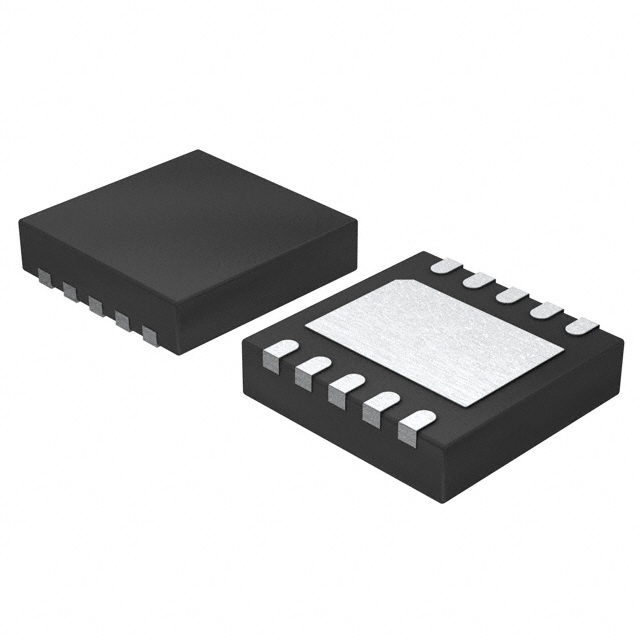
• Thin LFCSP, 10-lead, 3 mm × 3 mm × 0.8 mm package
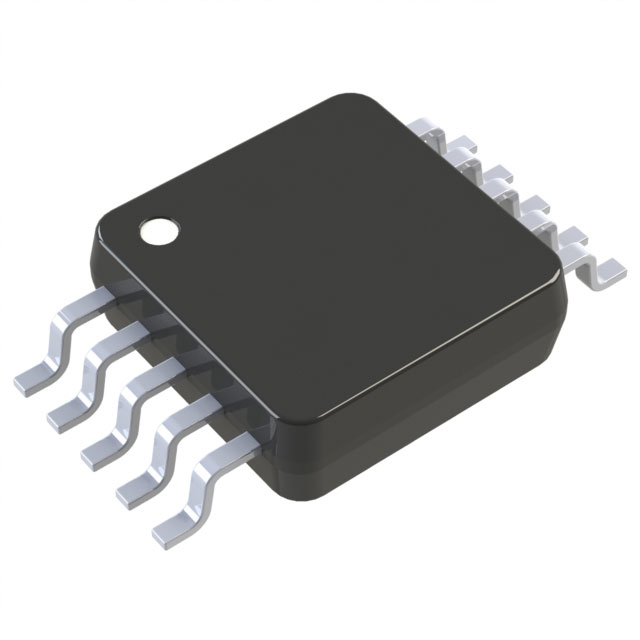
• Compact MSOP, 10-lead, 3 mm × 4.9 mm × 1.1 mm package
Description
AI
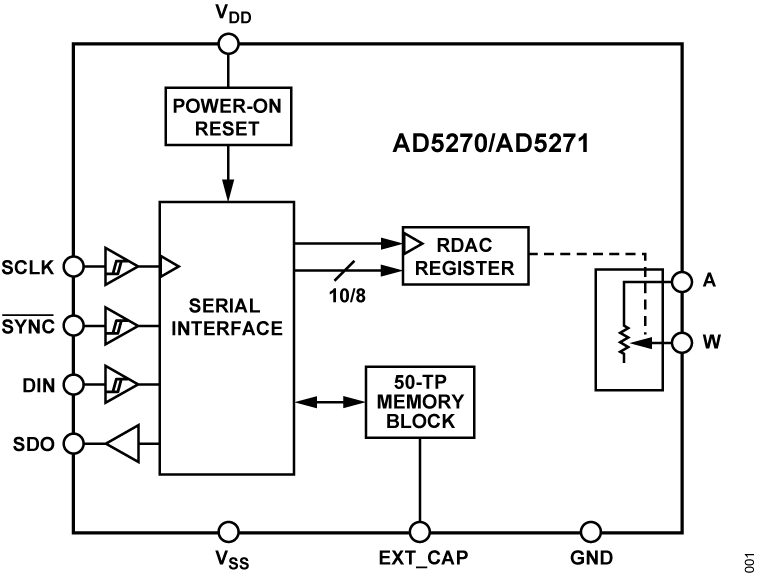
The AD5270/AD5271are single-channel, 1024-/256-position digital rheostats that combine industry leading variable resistor performance with nonvolatile memory (NVM) in a compact package.The AD5270/AD5271 ensure less than 1% end-to-end resistor tolerance error and offer 50-times programmable (50-TP) memory.The guaranteed industry leading low resistor tolerance error feature simplifies open-loop applications as well as precision calibration and tolerance matching applications.The AD5270/AD5271 device wiper settings are controllable through the SPI digital interface. Unlimited adjustments are allowed before programming the resistance value into the 50-TP memory. The AD5270/AD5271 do not require any external voltage supply to facilitate fuse blow and there are 50 opportunities for permanent programming. During 50-TP activation, a permanent blow fuse command freezes the resistance position (analogous to placing epoxy on a mechanical trimmer).The AD5270/AD5271 are available in a 3 mm x 3 mm, 10-lead LFCSP package and in a 10-lead MSOP package. The parts are guaranteed to operate over the extended industrial temperature range of −40°C to +125°C.ApplicationsMechanical potentiometer replacementsOp-amp: variable gain controlInstrumentation: gain, offset adjustmentProgrammable voltage-to-current conversionsProgrammable filters, delays, time constantsProgrammable power supplySensor calibration