


Catalog
Low-Power LinBiCMOS Multiple Drivers And Receivers
Key Features
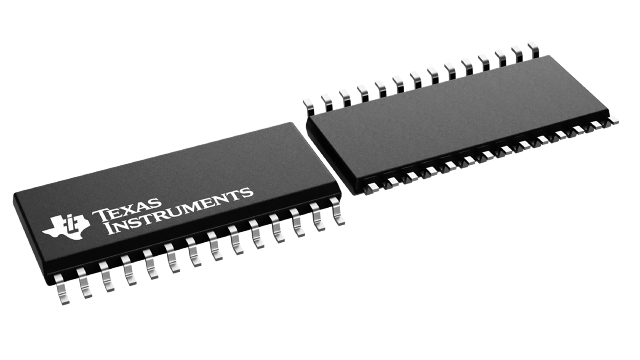
• Operates With Single 5-V Power SupplyMeets or Exceeds the Requirements of TIA/EIA-232-F and ITU Recommendation V.28Improved Performance Replacement for MAX241Operates at Data Rates up to 100 kbit/s Over a 3-m CableLow-Power Shutdown Mode...1 uA TypLinBiCMOSTMProcess TechnologyFour Drivers and Five Receivers±30-V Input Levels3-State TTL/CMOS Receiver Outputs±9-V Output Swing With a 5-V SupplyApplicationsTIA/EIA-232-F InterfaceBattery-Powered SystemsTerminalsModemsComputersPackaged in Plastic Small-Outline PackageLinBiCMOS and LinASIC are trademarks of Texas Instruments.Operates With Single 5-V Power SupplyMeets or Exceeds the Requirements of TIA/EIA-232-F and ITU Recommendation V.28Improved Performance Replacement for MAX241Operates at Data Rates up to 100 kbit/s Over a 3-m CableLow-Power Shutdown Mode...1 uA TypLinBiCMOSTMProcess TechnologyFour Drivers and Five Receivers±30-V Input Levels3-State TTL/CMOS Receiver Outputs±9-V Output Swing With a 5-V SupplyApplicationsTIA/EIA-232-F InterfaceBattery-Powered SystemsTerminalsModemsComputersPackaged in Plastic Small-Outline PackageLinBiCMOS and LinASIC are trademarks of Texas Instruments.
Description
AI
The SN75LBC241 is a low-power LinBiCMOSTMline-interface device containing four independent drivers and five receivers. It is designed as a plug-in replacement for the Maxim MAX241. The SN75LBC241 provides a capacitive-charge-pump voltage generator to produce RS-232 voltage levels from a 5-V supply. The charge-pump oscillator frequency is 20 kHz. Each receiver converts RS-232 inputs to 5-V TTL/CMOS levels. The receivers have a typical threshold of 1.2 V and a typical hysteresis of 0.5 V and can accept ±30-V inputs. Each driver converts TTL/CMOS input levels into RS-232 levels.
The SN75LBC241 includes a receiver, a 3-state control line, and a low-power shutdown control line. When the EN\ line is high, receiver outputs are placed in the high-impedance state. When EN\ is low, normal operation is enabled.
The shutdown mode reduces power dissipation to less than 5 uW, typically. In this mode, receiver outputs have high impedance, driver outputs are turned off, and the charge-pump circuit is turned off. When SHUTDOWN is high, the shutdown mode is enabled. When SHUTDOWN is low, normal operation is enabled.
This device has been designed to conform to TIA/EIA-232-F and ITU Recommendation V.28.
The SN75LBC241 has been designed using LinBiCMOS technology and cells contained in the Texas Instruments LinASICTMlibrary. Use of LinBiCMOS circuitry increases latch-up immunity in this device over an all-CMOS design.
The SN75LBC241 is characterized for operation from 0°C to 70°C.
The SN75LBC241 is a low-power LinBiCMOSTMline-interface device containing four independent drivers and five receivers. It is designed as a plug-in replacement for the Maxim MAX241. The SN75LBC241 provides a capacitive-charge-pump voltage generator to produce RS-232 voltage levels from a 5-V supply. The charge-pump oscillator frequency is 20 kHz. Each receiver converts RS-232 inputs to 5-V TTL/CMOS levels. The receivers have a typical threshold of 1.2 V and a typical hysteresis of 0.5 V and can accept ±30-V inputs. Each driver converts TTL/CMOS input levels into RS-232 levels.
The SN75LBC241 includes a receiver, a 3-state control line, and a low-power shutdown control line. When the EN\ line is high, receiver outputs are placed in the high-impedance state. When EN\ is low, normal operation is enabled.
The shutdown mode reduces power dissipation to less than 5 uW, typically. In this mode, receiver outputs have high impedance, driver outputs are turned off, and the charge-pump circuit is turned off. When SHUTDOWN is high, the shutdown mode is enabled. When SHUTDOWN is low, normal operation is enabled.
This device has been designed to conform to TIA/EIA-232-F and ITU Recommendation V.28.
The SN75LBC241 has been designed using LinBiCMOS technology and cells contained in the Texas Instruments LinASICTMlibrary. Use of LinBiCMOS circuitry increases latch-up immunity in this device over an all-CMOS design.
The SN75LBC241 is characterized for operation from 0°C to 70°C.