ONET8551T Series
11.3-Gbps limiting transimpedance amplifier with RSSI
Manufacturer: Texas Instruments
Catalog
11.3-Gbps limiting transimpedance amplifier with RSSI
Key Features
• 9-GHz Bandwidth10-kΩ Differential Small SignalTransimpedance–20-dBm Sensitivity0.9-µARMSInput Referred Noise2.5-mAp-pInput Overload CurrentReceived Signal Strength Indication(RSSI)92-mW Typical Power DissipationCML Data Outputs With On-Chip50-Ω Back-TerminationOn Chip Supply Filter CapacitorSingle +3.3-V SupplyDie Size: 870 µm x 1036 µm9-GHz Bandwidth10-kΩ Differential Small SignalTransimpedance–20-dBm Sensitivity0.9-µARMSInput Referred Noise2.5-mAp-pInput Overload CurrentReceived Signal Strength Indication(RSSI)92-mW Typical Power DissipationCML Data Outputs With On-Chip50-Ω Back-TerminationOn Chip Supply Filter CapacitorSingle +3.3-V SupplyDie Size: 870 µm x 1036 µm
Description
AI
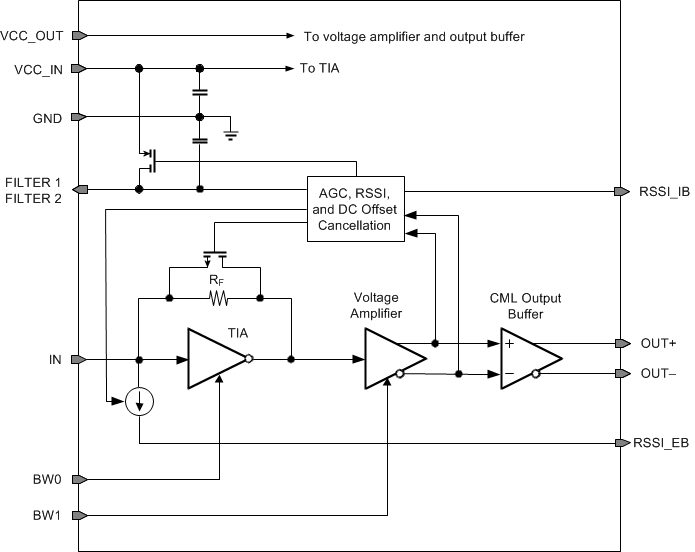
The ONET8551T device is a high-speed, high-gain, limiting transimpedance amplifier used in optical receivers with data rates up to 11.3 Gbps. It features low-input referred noise, 9-GHz bandwidth, 10-kΩ small signal transimpedance, and a received signal strength indicator (RSSI.
The ONET8551T device is available in die form, includes an on-chip VCC bypass capacitor, and is optimized for packaging in a TO can.
The ONET8551T device requires a single +3.3-V supply. The power-efficient design typically dissipates less than 95 mW. The device is characterized for operation from –40°C to 100°C case (IC back-side) temperature.
The ONET8551T device is a high-speed, high-gain, limiting transimpedance amplifier used in optical receivers with data rates up to 11.3 Gbps. It features low-input referred noise, 9-GHz bandwidth, 10-kΩ small signal transimpedance, and a received signal strength indicator (RSSI.
The ONET8551T device is available in die form, includes an on-chip VCC bypass capacitor, and is optimized for packaging in a TO can.
The ONET8551T device requires a single +3.3-V supply. The power-efficient design typically dissipates less than 95 mW. The device is characterized for operation from –40°C to 100°C case (IC back-side) temperature.