Catalog
9-Bit Bus Interface Flip-Flops With 3-State Outputs
Key Features
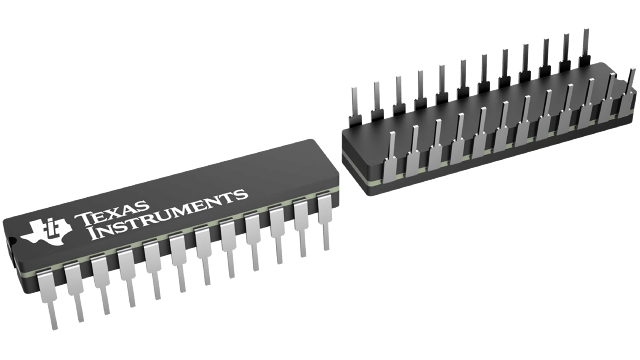
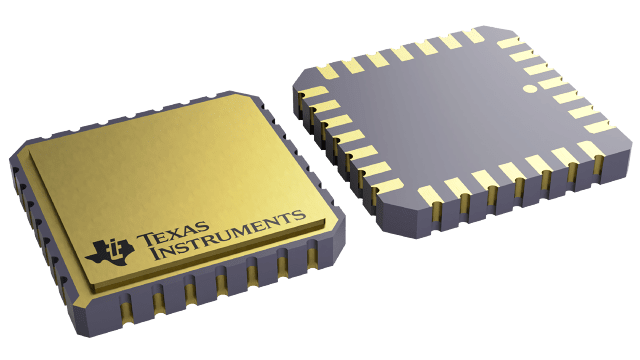
• Functionally Equivalent to AMD's AM29823 and AM29824Provide Extra Data Width Necessary for Wider Address/Data Paths or Buses With ParityOutputs Have Undershoot-Protection CircuitryPower-Up High-Impedance StateBuffered Control Inputs to Reduce dc Loading EffectsPackage Options Include Plastic Small-Outline (DW) Packages, Ceramic Chip Carriers (FK), and Standard Plastic (NT) and Ceramic (JT) 300-mil DIPsFunctionally Equivalent to AMD's AM29823 and AM29824Provide Extra Data Width Necessary for Wider Address/Data Paths or Buses With ParityOutputs Have Undershoot-Protection CircuitryPower-Up High-Impedance StateBuffered Control Inputs to Reduce dc Loading EffectsPackage Options Include Plastic Small-Outline (DW) Packages, Ceramic Chip Carriers (FK), and Standard Plastic (NT) and Ceramic (JT) 300-mil DIPs
Description
AI
These 9-bit flip-flops feature 3-state outputs designed specifically for driving highly capacitive or relatively low-impedance loads. These devices are particularly suitable for implementing wider buffer registers, I/O ports, bidirectional bus drivers, parity bus interfacing, and working registers.
With the clock-enable () input low, the nine D-type edge-triggered flip-flops enter data on the low-to-high transitions of the clock (CLK) input. Takinghigh disables the clock buffer, latching the outputs. The SN54AS823A and SN74AS823A have noninverting data (D) inputs and the SN74AS824A has inverting (D\) inputs. Taking the clear () input low causes the nine Q outputs to go low independently of the clock.
A buffered output-enable () input can be used to place the nine outputs in either a normal logic state (high or low logic level) or the high-impedance state. In the high-impedance state, the outputs neither load nor drive the bus lines significantly. The high-impedance state and increased drive provide the capability to drive bus lines without interface or pullup components.
does not affect the internal operation of the flip-flops. Old data can be retained or new data can be entered while the outputs are in the high-impedance state.
The SN54AS823A is characterized for operation over the full military temperature range of -55°C to 125°C. The SN74AS823A and SN74AS824A are characterized for operation from 0°C to 70°C.
These 9-bit flip-flops feature 3-state outputs designed specifically for driving highly capacitive or relatively low-impedance loads. These devices are particularly suitable for implementing wider buffer registers, I/O ports, bidirectional bus drivers, parity bus interfacing, and working registers.
With the clock-enable () input low, the nine D-type edge-triggered flip-flops enter data on the low-to-high transitions of the clock (CLK) input. Takinghigh disables the clock buffer, latching the outputs. The SN54AS823A and SN74AS823A have noninverting data (D) inputs and the SN74AS824A has inverting (D\) inputs. Taking the clear () input low causes the nine Q outputs to go low independently of the clock.
A buffered output-enable () input can be used to place the nine outputs in either a normal logic state (high or low logic level) or the high-impedance state. In the high-impedance state, the outputs neither load nor drive the bus lines significantly. The high-impedance state and increased drive provide the capability to drive bus lines without interface or pullup components.
does not affect the internal operation of the flip-flops. Old data can be retained or new data can be entered while the outputs are in the high-impedance state.
The SN54AS823A is characterized for operation over the full military temperature range of -55°C to 125°C. The SN74AS823A and SN74AS824A are characterized for operation from 0°C to 70°C.