Catalog
3A Step-Down SMPS Regulator
Key Features
• + 3.3V, 5V, 12V, and adjustable output versions
• + Voltage over specified line and load conditions:
• + Fixed version: ±3% max. output voltage
• + Adjustable version: ±2% max. feedback voltage
• + Guaranteed 3A output current
• + Wide input voltage range: 4V to 40V
• + Wide output voltage range: 1.23V to 37V
• + Requires only 4 external components
• + 52kHz fixed frequency internal oscillator
• + Low power standby mode IQ typically < 200µA
• + 80% efficiency (adjustable version typically > 80%)
• + Uses readily available standard inductors
• + Thermal shutdown and current limit protection
• + 100% electrical thermal limit burn-in
Description
AI
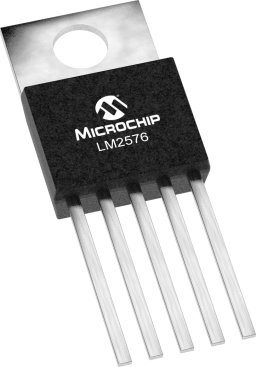
The LM2576 series of monolithic integrated circuits provide all the active functions for a step-down (buck) switching regulator. Fixed versions are available with a 3.3V, 5V, or 12V fixed output. Adjustable versions have an output voltage range from 1.23V to 37V. Both versions are capable of driving a 3A load with excellent line and load regulation.
These regulators are simple to use because they require a minimum number of external components and include internal frequency compensation and a fixed-frequency oscillator.
The LM2576 series offers a high efficiency replacement for popular three-terminal adjustable linear regulators. It substantially reduces the size of the heat sink, and in many cases no heat sink is required.
A standard series of inductors available from several different manufacturers are ideal for use with the LM2576 series. This feature greatly simplifies the design of switch-mode power supplies.
The feedback voltage is guaranteed to ±2% tolerance for adjustable versions, and the output voltage is guaranteed to ±3% for fixed versions, within specified input voltages and output load conditions. The oscillator frequency is guaranteed to±10%. External shutdown is included, featuring less than 200µA standby current. The output switch includes cycle-by-cycle current limiting and thermal shutdown for full protection under fault conditions.