


Deep-Dive with AI
Search across all available documentation for this part.
Deep-Dive with AI
Technical Specifications
Parameters and characteristics for this part
| Specification | JBP18S030MJ |
|---|---|
| Access Time | 50 ns |
| Memory Format | PROM |
| Memory Interface | Parallel |
| Memory Organization [custom] | 8 |
| Memory Organization [custom] | 32 |
| Memory Size | 256 bit |
| Memory Type | Non-Volatile |
| Mounting Type | Through Hole |
| Operating Temperature [Max] | 125 °C |
| Operating Temperature [Min] | -55 °C |
| Package / Case | 7.62 mm, 0.3 in |
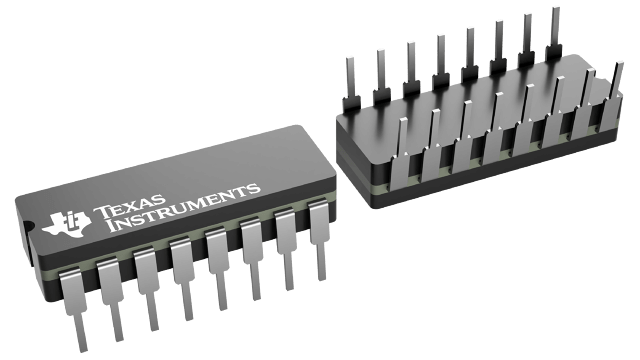
| Package / Case | 16-CDIP |
| Supplier Device Package | 16-CDIP |
| Voltage - Supply [Max] | 5.5 V |
| Voltage - Supply [Min] | 4.5 V |
Pricing
Prices provided here are for design reference only. For realtime values and availability, please visit the distributors directly
| Distributor | Package | Quantity | $ | |
|---|---|---|---|---|
| Texas Instruments | TUBE | 1 | $ 110.41 | |
| 100 | $ 107.09 | |||
| 250 | $ 89.16 | |||
| 1000 | $ 83.01 | |||
Description
General part information
JBP18S030 Series
These monolithic TTL programmable read-only memories (PROMs) feature titanium-tungsten (Ti-W) fuse links with each link designed to program in 20 microseconds. The Schottky-clamped versions of these PROMs offer considerable flexibility for upgrading existing designs or improving new designs as they feature full Schottky clamping for improved performance, low-current MOS-compatible p-n-p inputs, choice of bus-drive three-state or open-collector outputs, and improved chip-select access times.
Data can be electronically programmed, as desired, at any bit location in accordance with the programming procedure specified. All PROMs are supplied with a low-logic level output condition stored at each bit location. The programming procedure open-circuits Ti-W metal links, which reverses the stored logic level at selected locations. The procedure is irreversible; once altered, the output for that bit location is permanently programmed. Outputs that have never been altered may late be programmed to supply the opposite output level. Operation of the unit within the recommended operating conditions will not alter the memory content.
A low level at the chip-select input(s) enables each PROM. The opposite level at any chip-select input causes the outputs to be off.
Documents
Technical documentation and resources