


Zenode.ai Logo
Beta
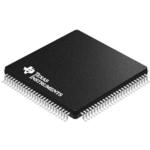
Texas Instruments-LM3S2739-IQC50-A2 Microcontrollers - MCUs MCU 32-bit ARM Cortex M3 RISC 128KB Flash 2.5V/3V/3.3V 100-Pin LQFP Tray
Integrated Circuits (ICs)

MSP430F6637IPZ

Active
Texas Instruments

20 MHZ MCU WITH 192KB FLASH, 16KB SRAM, 12-BIT ADC, 12-BIT DAC, COMPARATOR, DMA, 160 SEG LCD, USB

Deep-Dive with AI

Search across all available documentation for this part.

Texas Instruments-LM3S2739-IQC50-A2 Microcontrollers - MCUs MCU 32-bit ARM Cortex M3 RISC 128KB Flash 2.5V/3V/3.3V 100-Pin LQFP Tray
Integrated Circuits (ICs)

MSP430F6637IPZ

Active
Texas Instruments

20 MHZ MCU WITH 192KB FLASH, 16KB SRAM, 12-BIT ADC, 12-BIT DAC, COMPARATOR, DMA, 160 SEG LCD, USB

Technical Specifications

Parameters and characteristics for this part

SpecificationMSP430F6637IPZ
ConnectivitySCI, UART/USART, USB, LINbus, IrDA, I2C, SPI
Core ProcessorMSP430 CPUXV2
Core Size16-Bit
Data Converters
Data Converters [custom]12 b
Data Converters [custom]16
Mounting TypeSurface Mount
Number of I/O74 I/O
Operating Temperature [Max]85 °C
Operating Temperature [Min]-40 °C
Oscillator TypeInternal
Package / Case100-LQFP
PeripheralsBrown-out Detect/Reset, DMA, POR, WDT, PWM
Program Memory Size192 KB
Program Memory TypeFLASH
RAM Size18K x 8
Speed20 MHz
Supplier Device Package100-LQFP (14x14)
Voltage - Supply (Vcc/Vdd) [Max]3.6 V
Voltage - Supply (Vcc/Vdd) [Min]1.8 V

Pricing

Prices provided here are for design reference only. For realtime values and availability, please visit the distributors directly

DistributorPackageQuantity$
DigikeyTray 180$ 7.87
Texas InstrumentsJEDEC TRAY (10+1) 1$ 8.87
100$ 7.23
250$ 5.68
1000$ 4.82

Description

General part information

MSP430F6637 Series

The TI MSP430™ family of ultra-low-power microcontrollers consists of several devices featuring different sets of peripherals targeted for various applications. The architecture, combined with five low-power modes, is optimized to achieve extended battery life in portable measurement applications. The device features a powerful 16-bit RISC CPU, 16-bit registers, and constant generators that contribute to maximum code efficiency. The digitally controlled oscillator (DCO) allows the device to wake up from low-power modes to active mode in 3 µs (typical).

The MSP430F663x devices are microcontrollers with a high-performance 12-bit ADC, a comparator, two USCIs, USB 2.0, a hardware multiplier, DMA, four 16-bit timers, an RTC module with alarm capabilities, an LCD driver, and up to 74 I/O pins.

For complete module descriptions, see theMSP430F5xx and MSP430F6xx Family User’s Guide.

Documents

Technical documentation and resources
MSP430 MCUs Development Guide Book (Rev. A)

User guide

Ultra-low power USB for portable embedded applications

White paper

Random Number Generation Using MSP430™ MCUs (Rev. A)

Application note

MSP430F6637 Microcontroller Errata (Rev. AD)

Errata

General Oversampling of MSP ADCs for Higher Resolution (Rev. A)

Application note

Understanding MSP430 Flash Data Retention (Rev. A)

Application note

Using the TPS3619 With MSP430 Microcontrollers (Rev. B)

Application note

Implementing An Ultra-Low-Power Keypad Interface With MSP430 MCUs (Rev. A)

Application note

Tiny DCDC Converter Reference Design (Rev. A)

Application note

CRC Implementation with MSP430 MCUs (Rev. A)

Application note

ESD Diode Current Specification (Rev. B)

Application note

Mixing C and Assembler With MSP430™ MCUs (Rev. A)

Application note

Getting Started With the MSP430F663x Sample Kit

User guide

Design Considerations When Using the MSP430 Graphics Library

Application note

Programming a Flash-Based MSP430 MCU Using the JTAG Interface (Rev. H)

Application note

1.8V – 5.5V Input, High-Efficiency DCDC Converter Reference Design for MSP430 (Rev. B)

Application note

Migration Guide From MSP430 MCUs to MSPM0 MCUs (Rev. A)

Application note

Wave Digital Filtering Using an MSP430 MCU (Rev. A)

Application note

MSP430x5xx and MSP430x6xx Family User's Guide (Rev. Q)

User guide

Advanced Debugging Using the Enhanced Emulation Module (EEM) With CCS v6 (Rev. F)

Application note

MSP430 Flash Memory Characteristics (Rev. B)

Application note

Interfacing the 3-V MSP430 MCU to 5-V Circuits (Rev. A)

Application note

Starting a USB Design Using MSP430 MCUs (Rev. B)

Application note

Migrating from the MSP430F5xx,F6xx Family to the MSP430FR58xx/FR59xx/68xx Family (Rev. D)

Application note

MSP Code Protection Features

Application note

Li-Ion Battery Charger Solution Using an MSP430™ MCU (Rev. B)

Application note

MSP430F663x Mixed-Signal Microcontrollers datasheet (Rev. G)

Data sheet

USB Field Firmware Updates on MSP430 MCUs (Rev. C)

Application note

Efficient Multiplication and Division Using MSP430 MCUs (Rev. A)

Application note

MSP430 System ESD Troubleshooting Guide

Application note

MSP430 System-Level ESD Considerations (Rev. B)

Application note

MSP430 LFXT1 Oscillator Accuracy (Rev. A)

Application note

MSP430 32-kHz Crystal Oscillators (Rev. D)

Application note

Designing With MSP430™ MCUs and Segment LCDs (Rev. A)

Application note

MSP430 Based Lithium-Ion Polymer Battery Charging and Gauging Solution Using USB (Rev. A)

Application note

Software Coding Techniques for MSP430™ MCUs (Rev. B)

Application note

Using the MSP430 RTC_B Module With Battery Backup Supply (Rev. B)

Application note

Using the USCI I2C Master (Rev. A)

Application note

Powering the MSP430 from a High Voltage Input using the TPS62122 (Rev. C)

Application note

SYS/BIOS (TI-RTOS Kernel) User's Guide (Rev. V)

User guide

Power Management Solutions for Ultra-Low-Power 16-Bit MSP430 MCUs (Rev. D)

White paper