Deep-Dive with AI
Search across all available documentation for this part.
Deep-Dive with AI
Technical Specifications
Parameters and characteristics for this part
| Specification | ISO1176DWG4 |
|---|---|
| Channel Type | Unidirectional |
| Common Mode Transient Immunity (Min) [Min] | 25 kV/µs |
| Data Rate | 40 Mbps |
| Inputs - Side 1/Side 2 [custom] | 2 |
| Inputs - Side 1/Side 2 [custom] | 1 |
| Isolated Power | False |
| Mounting Type | Surface Mount |
| Number of Channels [custom] | 3 |
| Operating Temperature [Max] | 85 °C |
| Operating Temperature [Min] | -40 °C |
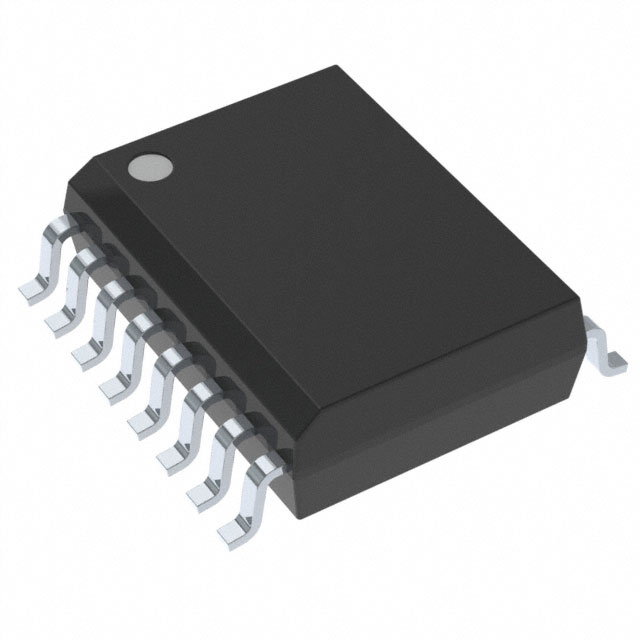
| Package / Case | 16-SOIC |
| Package / Case [x] | 0.295 in |
| Package / Case [y] | 7.5 mm |
| Supplier Device Package | 16-SOIC |
| Technology | Capacitive Coupling |
| Type | RS422, RS485 |
| Voltage - Isolation | 2500 Vrms |
| Voltage - Supply [Max] | 5.5 V, 5.25 V |
| Voltage - Supply [Min] | 3.15 V, 4.75 V |
Pricing
Prices provided here are for design reference only. For realtime values and availability, please visit the distributors directly
| Distributor | Package | Quantity | $ | |
|---|---|---|---|---|
Description
General part information
ISO1176T Series
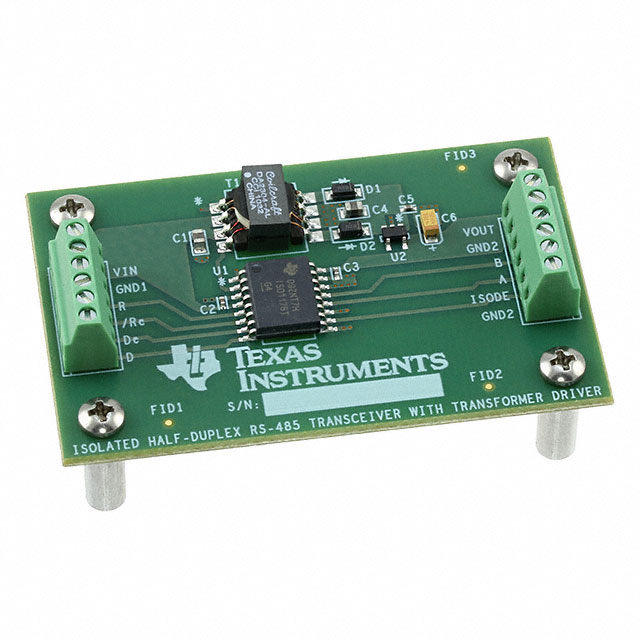
The ISO1176T is an isolated differential line transceiver with integrated oscillator outputs that provide the primary voltage for an isolation transformer. The device is ideal for long transmission lines because the ground loop is broken to allow the device to operate with a much larger common-mode voltage range.
The symmetrical isolation barrier of each device is tested to provide 4242V PK of isolation per VDE for 60 seconds between the line transceiver and the logic-level interface.
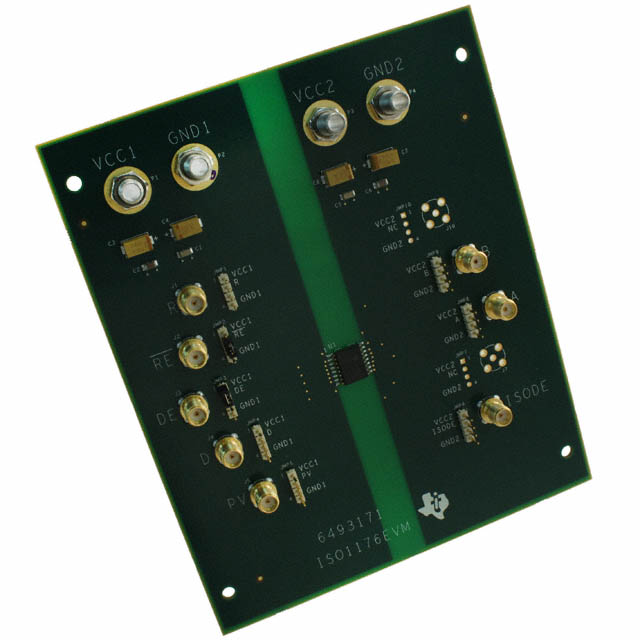
The galvanically isolated differential bus transceiver is an integrated circuit designed for bi-directional data communication on multipoint bus-transmission lines. The transceiver combines a galvanically isolated differential line driver and differential input line receiver. The driver has an active-high enable with isolated enable-state output on the ISODE pin (pin 10) to facilitate direction control. The driver differential outputs and the receiver differential inputs connect internally to form a differential input/output (I/O) bus port that is designed to offer minimum loading to the bus whenever the driver is disabled or V CC2 = 0.
Documents
Technical documentation and resources
No documents available