Deep-Dive with AI
Search across all available documentation for this part.
Deep-Dive with AI
Technical Specifications
Parameters and characteristics for this part
| Specification | SN74ALS561ADW |
|---|---|
| Count Rate | 30 MHz |
| Direction | Down |
| Logic Type | Binary Counter |
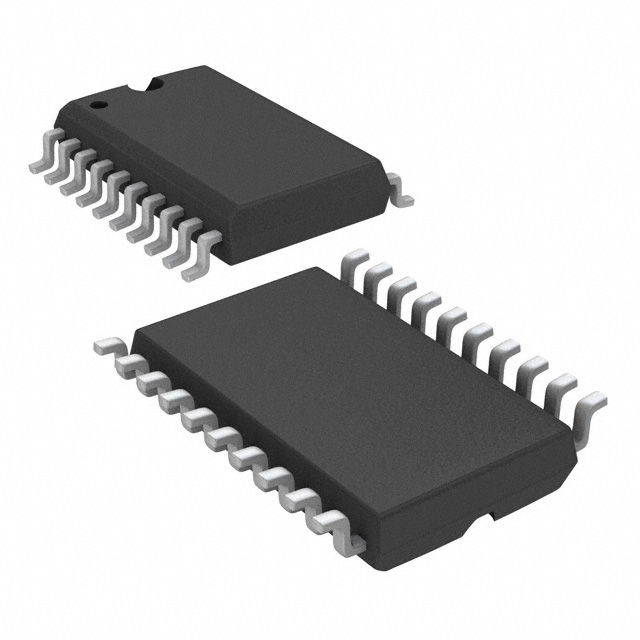
| Mounting Type | Surface Mount |
| Number of Bits per Element | 4 |
| Number of Elements | 1 |
| Operating Temperature [Max] | 70 °C |
| Operating Temperature [Min] | 0 °C |
| Package / Case | 20-SOIC |
| Package / Case [y] | 0.295 in |
| Package / Case [y] | 7.5 mm |
| Reset | Asynchronous, Synchronous |
| Supplier Device Package | 20-SOIC |
| Timing | Synchronous |
| Trigger Type | Positive Edge |
| Voltage - Supply [Max] | 5.5 V |
| Voltage - Supply [Min] | 4.5 V |
Pricing
Prices provided here are for design reference only. For realtime values and availability, please visit the distributors directly
| Distributor | Package | Quantity | $ | |
|---|---|---|---|---|
Description
General part information
SN74ALS561A Series
These binary counters are programmable and offer synchronous and asynchronous clearing as well as synchronous and asynchronous loading. All synchronous functions are executed on the positive-going edge of the clock.
The clear function is initiated by applying a low level to either asynchronous clear (ACLR\) or synchronous clear (SCLR\). ACLR\ (direct clear) overrides all other functions of the device, while SCLR\ overrides only the other synchronous functions. Data is loaded from the A, B, C, and D inputs by applying a low level to asynchronous load (ALOAD\) or by the combination of a low level at synchronous load (SLOAD\) and a positive-going clock transition. The counting function is enabled only when enable P (ENP), enable T (ENT), ACLR\, ALOAD\, SCLR\, and SLOAD\ are all high.
A high level at the output-enable () input forces the Q outputs into the high-impedance state, and a low level enables those outputs. Counting is independent of OE\. ENT is fed forward to enable the ripple-carry output (RCO) to produce a high-level pulse while the count is maximum (15). The clocked carry output (CCO) produces a high-level pulse for a duration equal to that of the low level of the clock when RCO is high and the counter is enabled (ENP and ENT are high); otherwise, CCO is low. CCO does not have the glitches commonly associated with a ripple-carry output. Cascading is normally accomplished by connecting RCO or CCO of the first counter to ENT of the next counter. However, for very high-speed counting, RCO should be used for cascading because CCO does not become active until the clock returns to the low level.
Documents
Technical documentation and resources
No documents available