Deep-Dive with AI
Search across all available documentation for this part.
Deep-Dive with AI
Technical Specifications
Parameters and characteristics for this part
| Specification | TPSM846C24DEVM-007 |
|---|---|
| Board Type | Fully Populated |
| Contents | Board(s) |
| Current - Output | 70 A |
| Frequency - Switching | 500 kHz |
| Main Purpose | DC/DC, Step Down |
| Outputs and Type | 1 |
| Outputs and Type | Non-Isolated, 1 Non-Isolated Output |
| Regulator Topology | Buck |
| Supplied Contents | Board(s) |
| Utilized IC / Part | TPSM846C24 |
| Voltage - Input [Max] | 15 V |
| Voltage - Input [Min] | 4.5 V |
| Voltage - Output [Max] | 2 V |
| Voltage - Output [Min] | 0.5 V |
Pricing
Prices provided here are for design reference only. For realtime values and availability, please visit the distributors directly
| Distributor | Package | Quantity | $ | |
|---|---|---|---|---|
| Digikey | Bulk | 1 | $ 118.80 | |
| N/A | 2 | $ 118.80 | ||
Description
General part information
TPSM846 Series
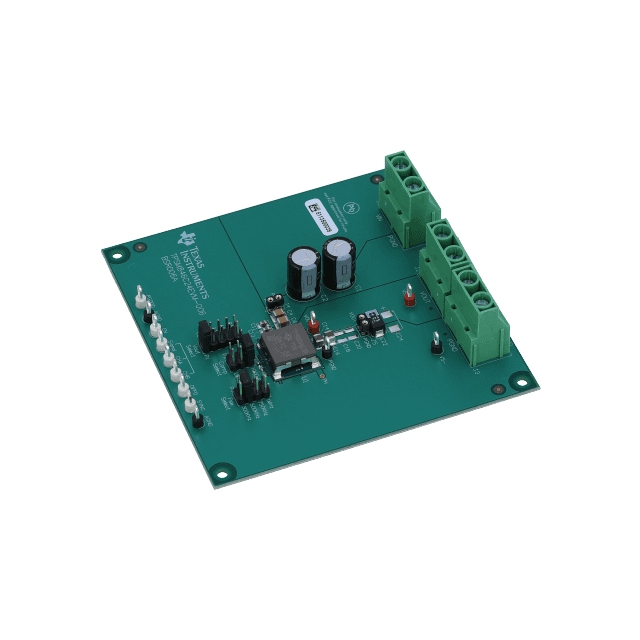
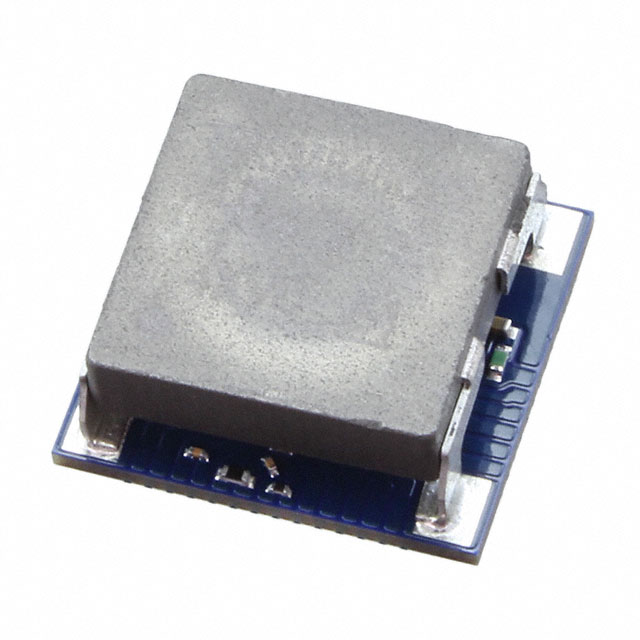
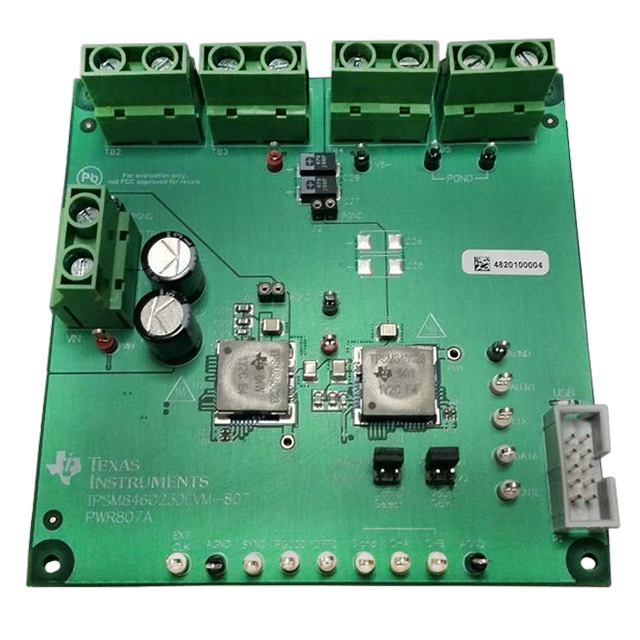
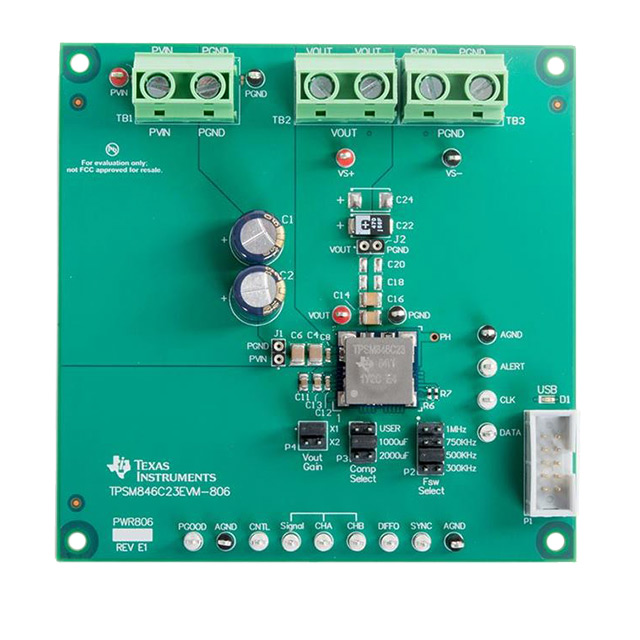
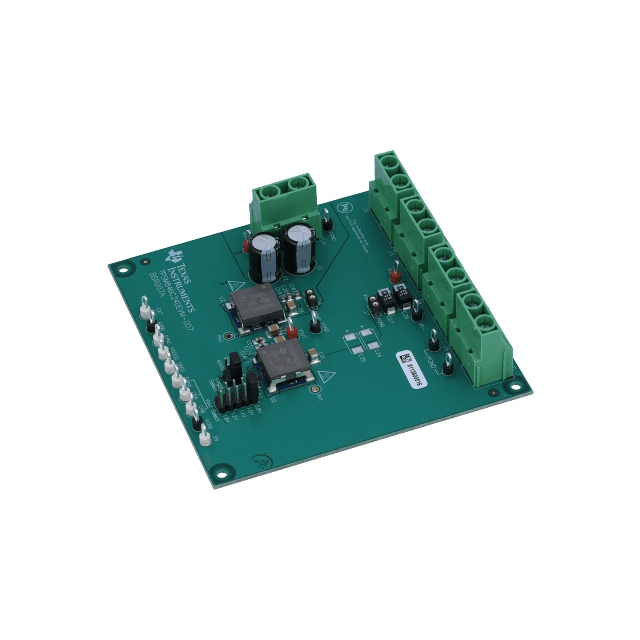
The TPSM846C23 is a 35-A fixed-frequency, PMBus-compliant, step-down power module, with PMBus commands that allow for the configuration, control, and monitoring of key power regulator functions. The module incorporates the controller, power MOSFETs, inductor, and associated components into a rugged, thermally enhanced, surface-mount package. The user supplies the input and output capacitors along with a few other passive components to set the operating parameters of the module. Two modules can be configured to work in parallel to provide up to a 70-A, two-phase power solution.
The PMBus interface provides for converter configuration of output voltage, UVLO, soft start, soft stop, overcurrent, and thermal shutdown parameters. The interface also provides support for telemetry that can report the actual output voltage, output current, and device temperature. Standard PMBuswarningandfaultfunctions are also supported. The device supports PMBus communication speeds up to 400 kHz and supports a subset of the commands in the PMBus 1.3 specification.
The 15-mm × 16-mm component footprint is easy to solder onto a printed circuit board and allows a compact, point-of-load design.
Documents
Technical documentation and resources