Deep-Dive with AI
Search across all available documentation for this part.
Deep-Dive with AI
Technical Specifications
Parameters and characteristics for this part
| Specification | SN74V235-20PAG |
|---|---|
| Access Time | 12 ns |
| Bus Directional | Uni-Directional |
| Current - Supply (Max) [Max] | 35 mA |
| Data Rate | 50 MHz |
| Expansion Type | Width, Depth |
| Function | Synchronous |
| FWFT Support | True |
| Memory Size | 36 K |
| Mounting Type | Surface Mount |
| Operating Temperature [Max] | 70 °C |
| Operating Temperature [Min] | 0 °C |
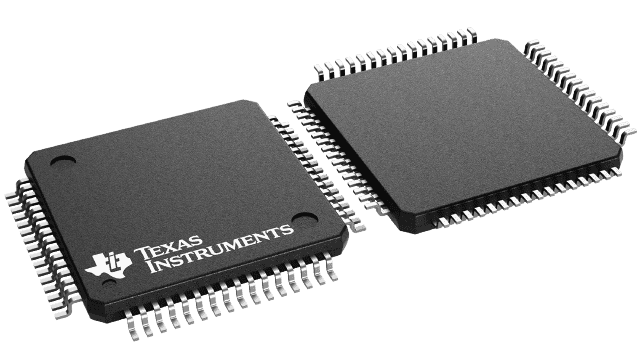
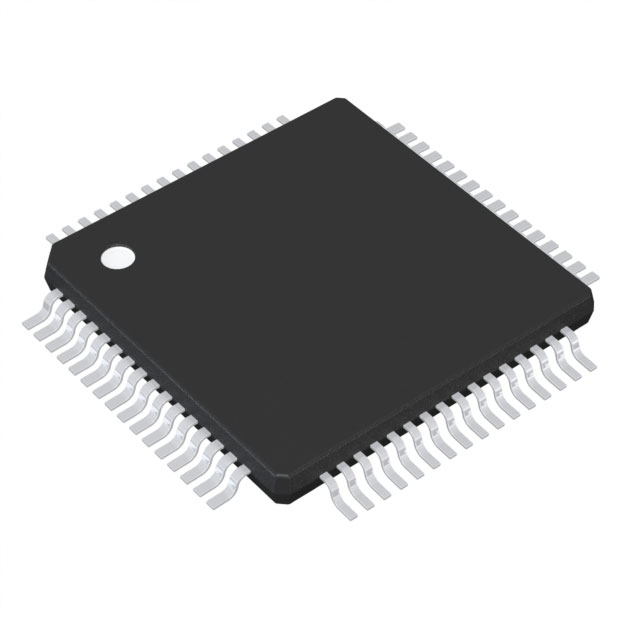
| Package / Case | 64-TQFP |
| Programmable Flags Support | True |
| Retransmit Capability | False |
| Supplier Device Package | 64-TQFP (10x10) |
| Voltage - Supply [Max] | 3.6 V |
| Voltage - Supply [Min] | 3 V |
Pricing
Prices provided here are for design reference only. For realtime values and availability, please visit the distributors directly
| Distributor | Package | Quantity | $ | |
|---|---|---|---|---|
Description
General part information
SN74V235 Series
The SN74V215, SN74V225, SN74V235, and SN74V245 are very high-speed, low-power CMOS clocked first-in first-out (FIFO) memories. They support clock frequencies up to 133 MHz and have read-access times as fast as 5 ns. These DSP-Sync™ FIFO memories feature read and write controls for use in applications such as DSP-to-processor communication, DSP-to-analog front end (AFE) buffering, network, video, and data communications.
These are synchronous FIFOs, which means each port employs a synchronous interface. All data transfers through a port are gated to the low-to-high transition of a continuous (free-running) port clock by enable signals. The continuous clocks for each port are independent of one another and can be asynchronous or coincident. The enables for each port are arranged to provide a simple interface between DSPs, microprocessors, and/or buses controlled by a synchronous interface. An output-enable (OE)\ input controls the 3-state output.
The synchronous FIFOs have two fixed flags, empty flag/output ready (EF\/OR\) and full flag/input ready (FF\/IR\), and two programmable flags, almost-empty (PAE)\ and almost-full (PAF)\. The offset loading of the programmable flags is controlled by a simple state machine, and is initiated by asserting the load pin (LD)\. A half-full flag (HF)\ is available when the FIFO is used in a single-device configuration.
Documents
Technical documentation and resources