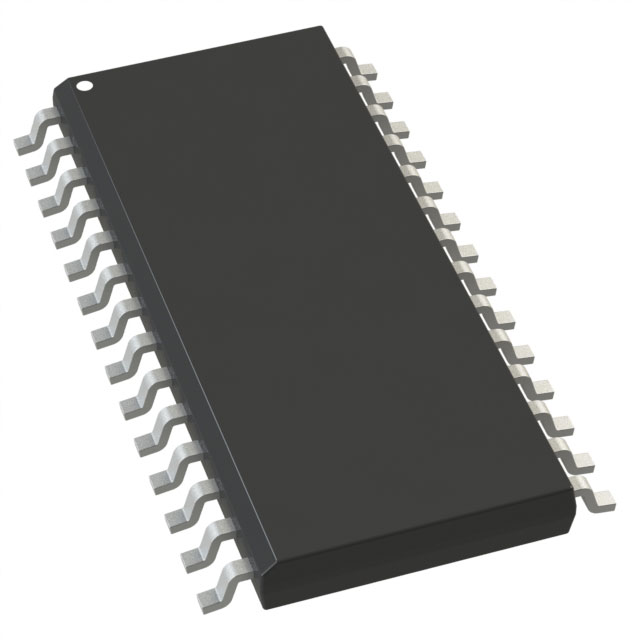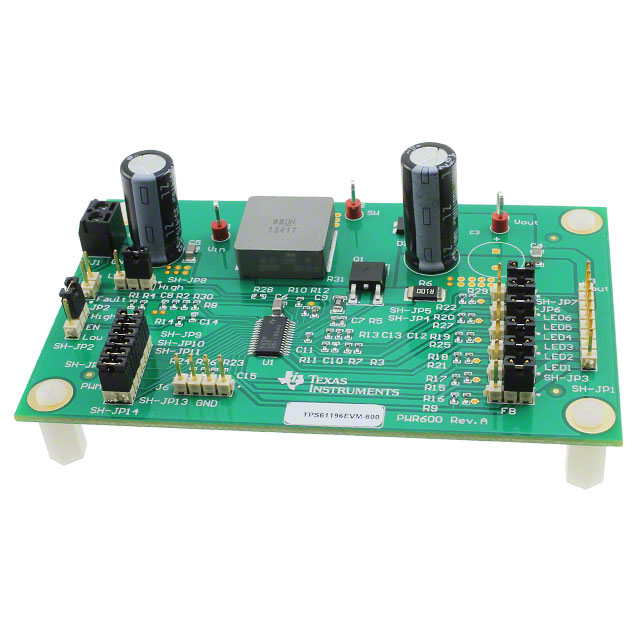
TPS61196EVM-600
ActiveEVAL BOARD LED DRIVER TPS61196
Deep-Dive with AI
Search across all available documentation for this part.
TPS61196EVM-600
ActiveEVAL BOARD LED DRIVER TPS61196
Deep-Dive with AI
Technical Specifications
Parameters and characteristics for this part
| Specification | TPS61196EVM-600 |
|---|---|
| Contents | Board(s) |
| Current - Output / Channel | 200 mA |
| Features | Dimmable |
| Outputs and Type | 6 Non-Isolated Outputs |
| Supplied Contents | Board(s) |
| Utilized IC / Part | TPS61196 |
| Voltage - Input [Max] | 30 V |
| Voltage - Input [Min] | 10 V |
| Voltage - Output | 60 V |
Pricing
Prices provided here are for design reference only. For realtime values and availability, please visit the distributors directly
| Distributor | Package | Quantity | $ | |
|---|---|---|---|---|
| Digikey | Box | 1 | $ 58.80 | |
| N/A | 7 | $ 58.80 | ||
Description
General part information
TPS61196 Series
The TPS61196-Q1 provides a highly integrated solution for automotive LCD backlighting with an independent PWM dimming function for each string. This device is a current mode boost controller driving up to six WLED strings with multiple LEDs in series. Each string has an independent current regulator providing a LED current adjustable from 50 mA to 400 mA within ±1.5% matching accuracy. The minimal voltage at the current sink is programmable in the range of 0.3 V to 1 V to fit with different LED current settings. The input voltage range for the device is from 8 V to 30 V.
The TPS61196-Q1 adjusts the boost controller’s output voltage automatically to provide only the voltage required by the LED string with the largest forward voltage drop plus the minimum required voltage at that string’s IFB pin, thereby optimizing driver efficiency. Its switching frequency is programmed by an external resistor from 100 kHz to 800 kHz.
The TPS61196-Q1 supports direct PWM brightness dimming. Each string has an independent PWM control input. During the PWM dimming, the LED current is turned on or turned off at the frequency and duty cycle which are determined by the external PWM signal. The PWM frequency ranges from 90 Hz to 22 kHz.
Documents
Technical documentation and resources