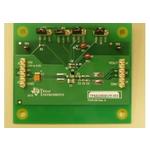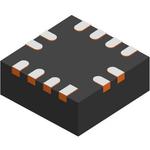
TPS63050RMWR
ActiveCONV DC-DC 2.5V TO 5.5V INVERTING/SYNCHRONOUS STEP UP/SYNCHRONOUS STEP DOWN SINGLE-OUT 2.5V TO 5.5V 0.5A 12-PIN VQFN T/R
Deep-Dive with AI
Search across all available documentation for this part.
TPS63050RMWR
ActiveCONV DC-DC 2.5V TO 5.5V INVERTING/SYNCHRONOUS STEP UP/SYNCHRONOUS STEP DOWN SINGLE-OUT 2.5V TO 5.5V 0.5A 12-PIN VQFN T/R
Deep-Dive with AI
Technical Specifications
Parameters and characteristics for this part
| Specification | TPS63050RMWR |
|---|---|
| Current - Output | 500 mA |
| Frequency - Switching | 2.5 MHz |
| Function | Step-Up/Step-Down |
| Mounting Type | Surface Mount |
| Number of Outputs | 1 |
| Operating Temperature [Max] | 85 °C |
| Operating Temperature [Min] | -40 °C |
| Output Configuration | Positive |
| Output Type | Adjustable |
| Package / Case | 12-VFQFN |
| Supplier Device Package | 12-VQFN-HR (2.5x2.5) |
| Synchronous Rectifier | True |
| Topology | Buck-Boost |
| Voltage - Input (Max) [Max] | 5.5 V |
| Voltage - Input (Min) [Min] | 2.5 V |
| Voltage - Output (Max) [Max] | 5.5 V |
| Voltage - Output (Min/Fixed) | 2.5 V |
Pricing
Prices provided here are for design reference only. For realtime values and availability, please visit the distributors directly
| Distributor | Package | Quantity | $ | |
|---|---|---|---|---|
| Digikey | Cut Tape (CT) | 1 | $ 2.02 | |
| 10 | $ 1.81 | |||
| 25 | $ 1.71 | |||
| 100 | $ 1.46 | |||
| 250 | $ 1.37 | |||
| 500 | $ 1.20 | |||
| 1000 | $ 0.99 | |||
| Digi-Reel® | 1 | $ 2.02 | ||
| 10 | $ 1.81 | |||
| 25 | $ 1.71 | |||
| 100 | $ 1.46 | |||
| 250 | $ 1.37 | |||
| 500 | $ 1.20 | |||
| 1000 | $ 0.99 | |||
| Tape & Reel (TR) | 3000 | $ 0.92 | ||
| 6000 | $ 0.89 | |||
| Texas Instruments | LARGE T&R | 1 | $ 1.52 | |
| 100 | $ 1.25 | |||
| 250 | $ 0.90 | |||
| 1000 | $ 0.68 | |||
Description
General part information
TPS63050 Series
The TPS6305x family of devices is a high efficiency, low quiescent-current buck-boost converter, suitable for applications where the input voltage is higher or lower than the output.
Continuous output current can go as high as 500 mA in boost mode and as high as 1 A in buck mode. The maximum average current in the switches is limited to a typical value of 1 A. The TPS6305x family of devices regulate the output voltage over the complete input voltage range by automatically switching between buck or boost mode depending on the input voltage, ensuring seamless transition between modes.
The buck-boost converter is based on a fixed-frequency, pulse-width-modulation (PWM) controller using synchronous rectification to obtain the highest efficiency. At low load currents, the converter enters Power Save Mode to maintain high efficiency over the complete load current range.
Documents
Technical documentation and resources