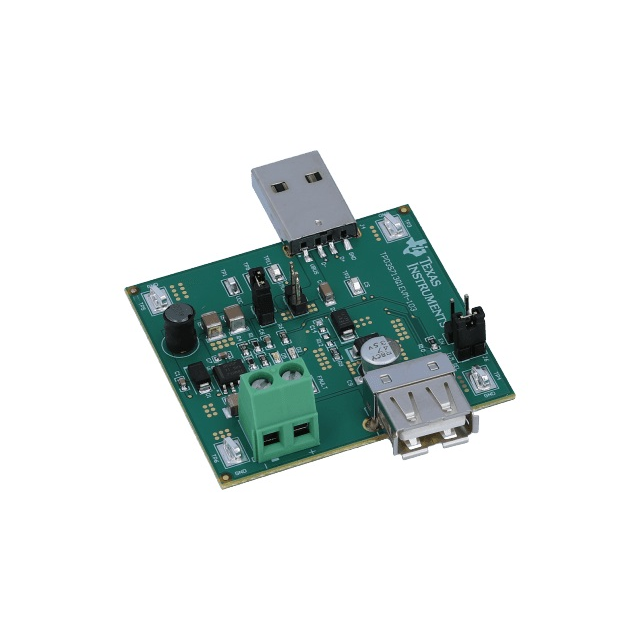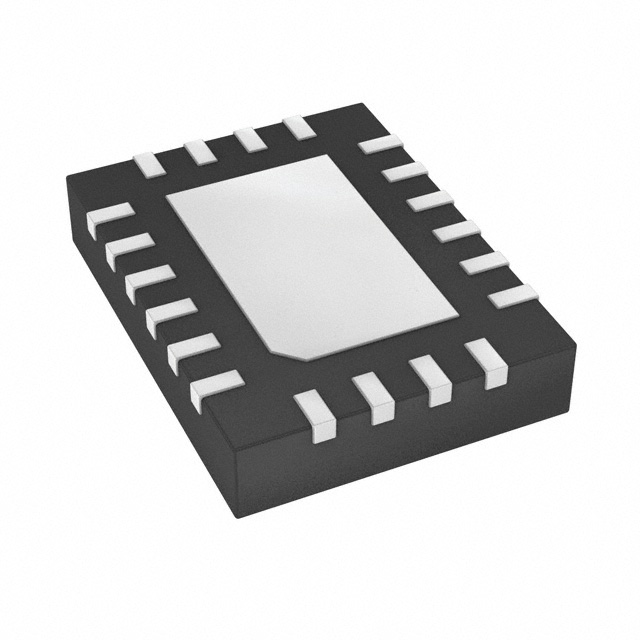
TPD3S713QRVCRQ1
ActiveAUTOMOTIVE USB 0.05-A TO 0.6-A ADJUSTABLE CURRENT LIMIT AND VBUS/D+/D- SHORT-TO-VBATT PROTECTION
Deep-Dive with AI
Search across all available documentation for this part.
TPD3S713QRVCRQ1
ActiveAUTOMOTIVE USB 0.05-A TO 0.6-A ADJUSTABLE CURRENT LIMIT AND VBUS/D+/D- SHORT-TO-VBATT PROTECTION
Technical Specifications
Parameters and characteristics for this part
| Specification | TPD3S713QRVCRQ1 |
|---|---|
| Grade | Automotive |
| Mounting Type | Surface Mount |
| Number of Circuits | 1 |
| Package / Case | 20-WFQFN Exposed Pad |
| Qualification | AEC-Q100 |
| Technology | Internal Switch |
| Voltage - Clamping | 18 V |
Pricing
Prices provided here are for design reference only. For realtime values and availability, please visit the distributors directly
| Distributor | Package | Quantity | $ | |
|---|---|---|---|---|
| Digikey | Cut Tape (CT) | 1 | $ 1.79 | |
| 10 | $ 1.49 | |||
| 100 | $ 1.18 | |||
| 500 | $ 1.00 | |||
| 1000 | $ 0.85 | |||
| Digi-Reel® | 1 | $ 1.79 | ||
| 10 | $ 1.49 | |||
| 100 | $ 1.18 | |||
| 500 | $ 1.00 | |||
| 1000 | $ 0.85 | |||
| Tape & Reel (TR) | 3000 | $ 0.75 | ||
| Texas Instruments | LARGE T&R | 1 | $ 1.35 | |
| 100 | $ 1.11 | |||
| 250 | $ 0.80 | |||
| 1000 | $ 0.60 | |||
Description
General part information
TPD3S713-Q1 Series
The TPD3S713x-Q1 is a single-chip solution for short-to-battery, short-circuit, and ESD protection for high-speed data and power lines in automotive USB hub, head unit, telematics, and media interface applications. The integrated data switches provide best-in-class bandwidth for minimal signal degradation during USB short-to-battery events. The high bandwidth of 1.2 GHz allows for a clean USB2.0 high-speed 480-Mbps eye diagram with the long captive cables that are common in the automotive USB environment.
The short-to-battery protection isolates the internal system circuits from any overvoltage conditions at the V BUS, DP_IN, and DM_IN pins. On these pins, the TPD3S713x-Q1 can handle overvoltages up to 18 V for hot plug and DC events and shut off the internal switches to the upstream transceiver from harmful voltage and current spikes.
The V BUS pin also provides an adjustable current limited load switch from 50 mA to 600 mA, which provides flexibility and also saves system power budget when the port requires only several tens of milliampere.
Documents
Technical documentation and resources