TPIC2603DW
Active5.5-V TO 25-V 6-CHANNEL SERIAL INTERFACE LOW-SIDE DRIVER
Deep-Dive with AI
Search across all available documentation for this part.
TPIC2603DW
Active5.5-V TO 25-V 6-CHANNEL SERIAL INTERFACE LOW-SIDE DRIVER
Deep-Dive with AI
Technical Specifications
Parameters and characteristics for this part
| Specification | TPIC2603DW |
|---|---|
| Current - Output (Max) [Max] | 350 mA |
| Fault Protection | Current Limiting (Fixed), Over Voltage, Over Temperature, Open Load Detect |
| Interface | Serial |
| Mounting Type | Surface Mount |
| Number of Outputs | 6 |
| Operating Temperature [Max] | 125 °C |
| Operating Temperature [Min] | -40 °C |
| Output Configuration | Low Side |
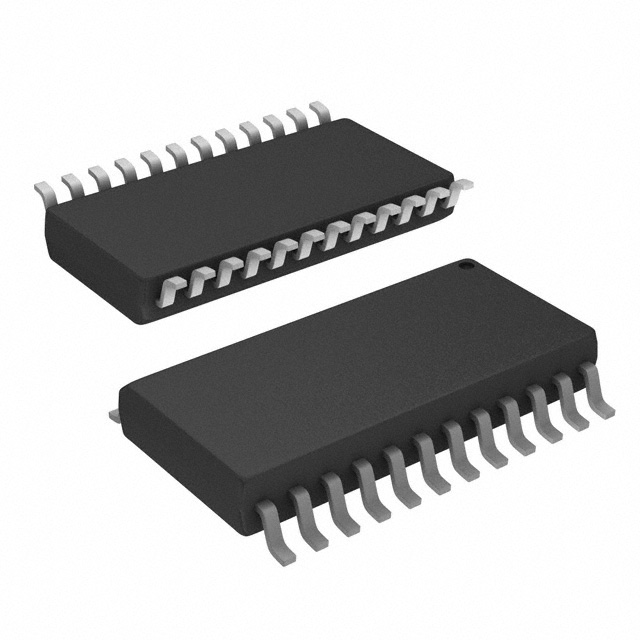
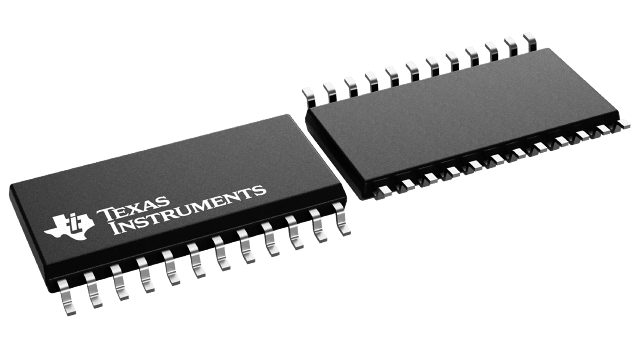
| Package / Case | 24-SOIC |
| Package / Case [custom] | 7.5 mm |
| Package / Case [custom] | 0.295 in |
| Ratio - Input:Output [custom] | 1:6 |
| Rds On (Typ) | 1.7 Ohm |
| Supplier Device Package | 24-SOIC |
| Switch Type | General Purpose |
| Voltage - Load [Max] | 25 V |
| Voltage - Load [Min] | 5.5 V |
| Voltage - Supply (Vcc/Vdd) [Max] | 5.5 V |
| Voltage - Supply (Vcc/Vdd) [Min] | 4.5 V |
Pricing
Prices provided here are for design reference only. For realtime values and availability, please visit the distributors directly
| Distributor | Package | Quantity | $ | |
|---|---|---|---|---|
| Digikey | Tube | 1 | $ 7.15 | |
| 10 | $ 4.87 | |||
| 25 | $ 4.28 | |||
| 100 | $ 3.62 | |||
| 250 | $ 3.30 | |||
| 500 | $ 3.10 | |||
| 1000 | $ 2.94 | |||
| 2500 | $ 2.77 | |||
| Texas Instruments | TUBE | 1 | $ 4.69 | |
| 100 | $ 3.83 | |||
| 250 | $ 3.01 | |||
| 1000 | $ 2.55 | |||
Description
General part information
TPIC2603 Series
The TPIC2603 is a monolithic low-side driver which provides serial interface and diagnostics to control six on-board power DMOS switches. Each channel has independent OFF-state open-load sense, ON-state shorted-load/short-to-battery protection, over-battery-voltage-lockout protection, and over-temperature sense with fault status reported through the serial interface. The device also provides inductive voltage transient protection for each drain output. The TPIC2603 drives inductive and resistive loads such as relays, valves, and lamps.
Serial data input (SDI) is transferred through the serial register when CS\ is low on low-to-high transitions of the serial clock (SCLK). Each string of data must consist of 8 or 16 bits of data. A logic high input data bit turns the respective output channel ON and a logic low data bit turns it OFF. CS\ must be transited high after all of the serial data has been clocked into the device. A low-to-high transition of CS\ transfers the last six bits of serial data to the output buffer, places the serial data out (SDO) terminal in a high-impedance state, and re-enables the fault register. Fault data for the device is sent out the SDO terminal. The first bit of the shift register is exclusively ORed with the fault registers. When a fault exists, the SDI data is inverted as it is transferred out of SDO. Fault data consists of fault flags for over-temperature (bit 6) and shorted/open-load (bits 0-5) for each of the six output channels. Fault register bits are set or cleared asynchronously, when CS\ is high to reflect the current state of the hardware. The fault must be present when CS\ is transited from high to low to be captured and reported in the serial fault data. New faults cannot be captured in the serial register when CS\ is low.
When an over-current or shorted-load fault occurs, the channel transits into a low duty cycle pulse-width-modulated (PWM) signal as long as the fault is present. More detail on fault detection operation is presented in the device operation section of this data sheet.
Documents
Technical documentation and resources