


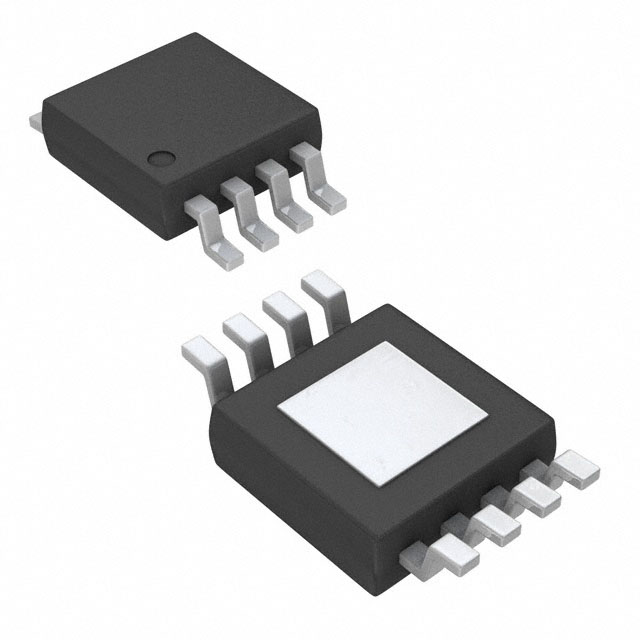
THS4011CDGN
Active290-MHZ LOW-DISTORTION VOLTAGE-FEEDBACK AMPLIFIER
Deep-Dive with AI
Search across all available documentation for this part.
THS4011CDGN
Active290-MHZ LOW-DISTORTION VOLTAGE-FEEDBACK AMPLIFIER
Deep-Dive with AI
Technical Specifications
Parameters and characteristics for this part
| Specification | THS4011CDGN |
|---|---|
| -3db Bandwidth | 290 MHz |
| Amplifier Type | Voltage Feedback |
| Current - Input Bias | 2 µA |
| Current - Output / Channel | 110 mA |
| Current - Supply | 7.8 mA |
| Gain Bandwidth Product | 290 MHz |
| Mounting Type | Surface Mount |
| Number of Circuits | 1 |
| Operating Temperature [Max] | 70 °C |
| Operating Temperature [Min] | 0 °C |
| Package / Case | Exposed Pad, 8-TSSOP, 8-MSOP |
| Package / Case [custom] | 0.118 in, 3 mm |
| Slew Rate | 310 V/µs |
| Supplier Device Package | 8-HVSSOP |
| Voltage - Input Offset | 1 mV |
| Voltage - Supply Span (Max) [Max] | 32 V |
THS4011 Series
290-MHz Low-Distortion Voltage-Feedback Amplifier
| Part | Current - Output / Channel | Number of Circuits | Voltage - Input Offset | Gain Bandwidth Product | Voltage - Supply Span (Max) [Max] | Mounting Type | Operating Temperature [Max] | Operating Temperature [Min] | Slew Rate | Current - Input Bias | -3db Bandwidth | Amplifier Type | Package / Case | Package / Case [y] | Package / Case [x] | Current - Supply | Supplier Device Package | Current - Supply (Main IC) | Supplied Contents | Output Type | Utilized IC / Part | Voltage - Supply, Single/Dual (±) [Max] | Voltage - Supply, Single/Dual (±) [Min] | Channels per IC | Board Type | Package / Case [custom] |
|---|---|---|---|---|---|---|---|---|---|---|---|---|---|---|---|---|---|---|---|---|---|---|---|---|---|---|
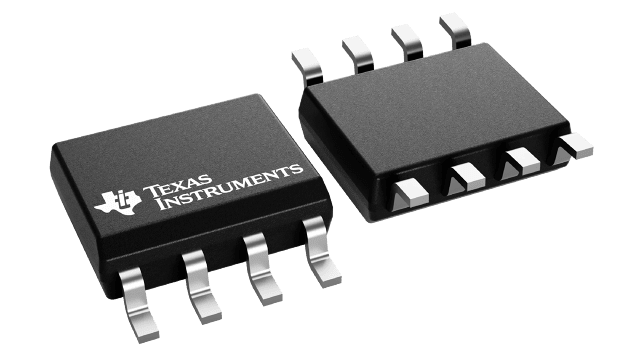 Texas Instruments | 110 mA | 1 | 1 mV | 290 MHz | 32 V | Surface Mount | 70 °C | 0 °C | 310 V/µs | 2 µA | 290 MHz | Voltage Feedback | 8-SOIC | 3.9 mm | 0.154 in | 7.8 mA | 8-SOIC | |||||||||
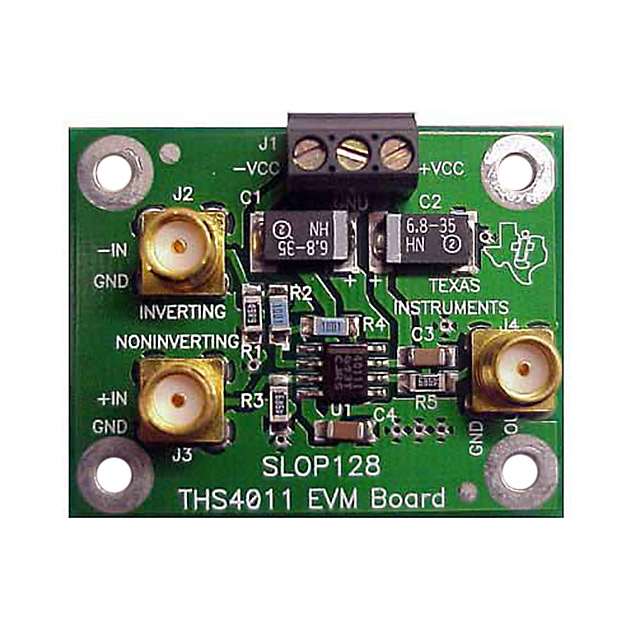 Texas Instruments | 110 mA | 310 V/µs | 290 MHz | Voltage Feedback | 7.8 mA | Board(s) | Single-Ended | THS4011 | 16 V 32 V | -4.5 V 9 V | 1 - Single | Fully Populated | ||||||||||||||
Texas Instruments | 110 mA | 1 | 1 mV | 290 MHz | 32 V | Surface Mount | 70 °C | 0 °C | 310 V/µs | 2 µA | 290 MHz | Voltage Feedback | 8-MSOP 8-TSSOP Exposed Pad | 7.8 mA | 8-HVSSOP | 0.118 in 3 mm | ||||||||||
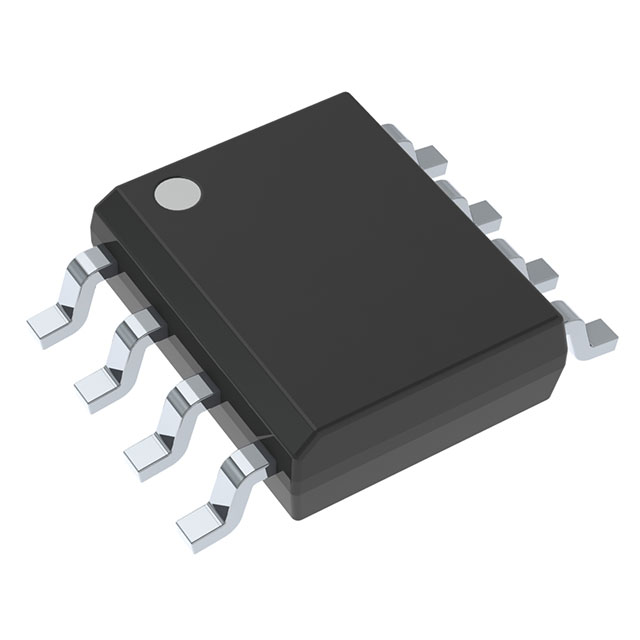 Texas Instruments | 1 | 1 mV | 290 MHz | 32 V | Surface Mount | 85 °C | -40 °C | 310 V/µs | 2 µA | 290 MHz | Voltage Feedback | 8-SOIC | 3.9 mm | 0.154 in | 7.8 mA | 8-SOIC | ||||||||||
Texas Instruments | 110 mA | 1 | 1 mV | 290 MHz | 32 V | Surface Mount | 70 °C | 0 °C | 310 V/µs | 2 µA | 290 MHz | Voltage Feedback | 8-SOIC | 3.9 mm | 0.154 in | 7.8 mA | 8-SOIC | |||||||||
Texas Instruments | 110 mA | 1 | 1 mV | 290 MHz | 32 V | Surface Mount | 85 °C | -40 °C | 310 V/µs | 2 µA | 290 MHz | Voltage Feedback | 8-MSOP 8-TSSOP Exposed Pad | 7.8 mA | 8-HVSSOP | 0.118 in 3 mm |
Pricing
Prices provided here are for design reference only. For realtime values and availability, please visit the distributors directly
| Distributor | Package | Quantity | $ | |
|---|---|---|---|---|
| Digikey | Tube | 1 | $ 6.29 | |
| 10 | $ 5.68 | |||
| 80 | $ 4.71 | |||
| 320 | $ 4.50 | |||
| 560 | $ 4.10 | |||
| 1040 | $ 3.57 | |||
| 2560 | $ 3.44 | |||
| Texas Instruments | TUBE | 1 | $ 7.96 | |
| 100 | $ 6.49 | |||
| 250 | $ 5.10 | |||
| 1000 | $ 4.33 | |||
Description
General part information
THS4011 Series
The THS4011 and THS4012 are high-speed, single/dual, voltage feedback amplifiers ideal for a wide range of applications. The devices offer good ac performance, with 290-MHz bandwidth, 310-V/µs slew rate, and 37-ns settling time (0.1%). These amplifiers have a high output drive capability of 110 mA and draw only 7.8-mA supply current per channel. For applications requiring low distortion, the THS4011/4012 operate with a total harmonic distortion (THD) of -80 dBc at f = 1 MHz. For video applications, the THS4011/4012 offer 0.1-dB gain flatness to 70 MHz, 0.006% differential gain error, and 0.01° differential phase error.
The THS4011 and THS4012 are high-speed, single/dual, voltage feedback amplifiers ideal for a wide range of applications. The devices offer good ac performance, with 290-MHz bandwidth, 310-V/µs slew rate, and 37-ns settling time (0.1%). These amplifiers have a high output drive capability of 110 mA and draw only 7.8-mA supply current per channel. For applications requiring low distortion, the THS4011/4012 operate with a total harmonic distortion (THD) of -80 dBc at f = 1 MHz. For video applications, the THS4011/4012 offer 0.1-dB gain flatness to 70 MHz, 0.006% differential gain error, and 0.01° differential phase error.
Documents
Technical documentation and resources