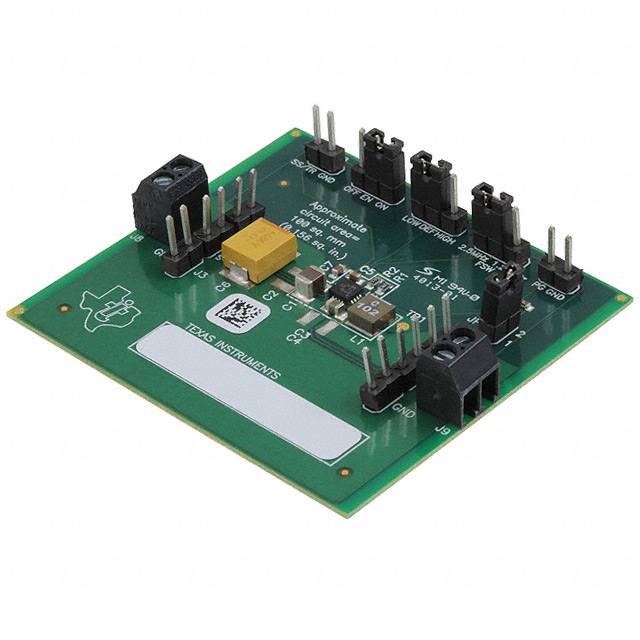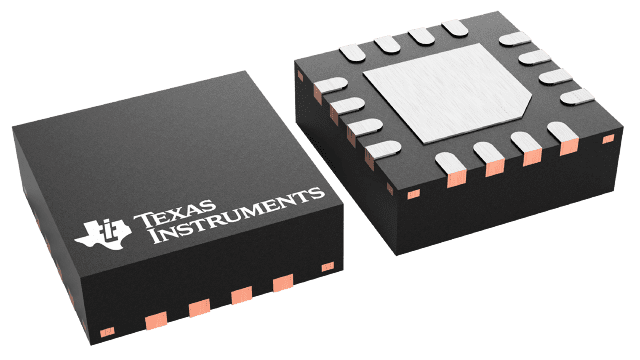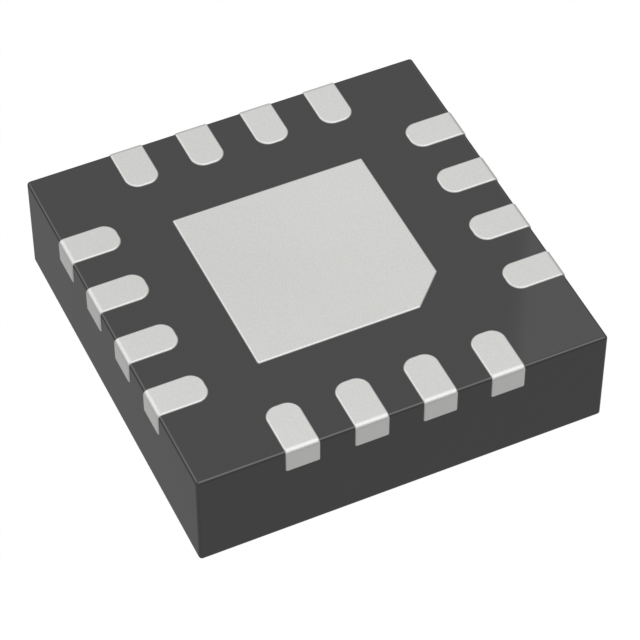
TPS62130RGTT
ActiveCONV DC-DC 3V TO 17V SYNCHRONOUS STEP DOWN SINGLE-OUT 0.9V TO 6V 3A 16-PIN VQFN EP T/R
Deep-Dive with AI
Search across all available documentation for this part.
TPS62130RGTT
ActiveCONV DC-DC 3V TO 17V SYNCHRONOUS STEP DOWN SINGLE-OUT 0.9V TO 6V 3A 16-PIN VQFN EP T/R
Deep-Dive with AI
Technical Specifications
Parameters and characteristics for this part
| Specification | TPS62130RGTT |
|---|---|
| Current - Output | 3 A |
| Frequency - Switching | 2.5 MHz |
| Function | Step-Down |
| Mounting Type | Surface Mount |
| Number of Outputs | 1 |
| Operating Temperature [Max] | 85 C |
| Operating Temperature [Min] | -40 ¯C |
| Output Configuration | Positive |
| Output Type | Adjustable |
| Package / Case | 16-VFQFN Exposed Pad |
| Supplier Device Package | 16-VQFN, 3x3 |
| Synchronous Rectifier | True |
| Topology | Buck |
| Voltage - Input (Max) [Max] | 17 V |
| Voltage - Input (Min) [Min] | 3 V |
| Voltage - Output (Min/Fixed) | 0.9 V |
Pricing
Prices provided here are for design reference only. For realtime values and availability, please visit the distributors directly
| Distributor | Package | Quantity | $ | |
|---|---|---|---|---|
| Arrow | N/A | 250 | $ 1.54 | |
| 500 | $ 1.47 | |||
| 1000 | $ 1.40 | |||
| 2500 | $ 1.38 | |||
| Digikey | Cut Tape (CT) | 1 | $ 2.74 | |
| 10 | $ 2.04 | |||
| 25 | $ 1.87 | |||
| 100 | $ 1.68 | |||
| Digi-Reel® | 1 | $ 2.74 | ||
| 10 | $ 2.04 | |||
| 25 | $ 1.87 | |||
| 100 | $ 1.68 | |||
| N/A | 1854 | $ 2.74 | ||
| Tape & Reel (TR) | 250 | $ 1.59 | ||
| 500 | $ 1.53 | |||
| 750 | $ 1.50 | |||
| 1250 | $ 1.47 | |||
| 1750 | $ 1.46 | |||
| 2500 | $ 1.44 | |||
| 6250 | $ 1.40 | |||
| Newark | Each (Supplied on Cut Tape) | 1 | $ 3.70 | |
| 10 | $ 2.98 | |||
| 25 | $ 2.69 | |||
| 50 | $ 2.62 | |||
| 100 | $ 2.53 | |||
| 250 | $ 2.43 | |||
| 500 | $ 2.35 | |||
| 1000 | $ 2.32 | |||
| Texas Instruments | SMALL T&R | 1 | $ 2.34 | |
| 100 | $ 1.94 | |||
| 250 | $ 1.39 | |||
| 1000 | $ 1.05 | |||
Description
General part information
TPS62130 Series
The TPS6213x family are easy-to-use synchronous step down DC-DC converters optimized for applications with high power density. A high switching frequency of typically 2.5 MHz allows the use of small inductors and provides fast transient response as well as high output voltage accuracy by use of the DCS-Control topology.
With their wide operating input voltage range of 3 V to 17 V, the devices are ideally suited for systems powered from either a Li-Ion or other batteries as well as from 12-V intermediate power rails. They support up to 3-A continuous output current at output voltages between 0.9 V and 6 V (with 100% duty cycle mode). The output voltage start-up ramp is controlled by the soft-start pin, which allows operation as either a stand-alone power supply or in tracking configurations. Power sequencing is also possible by configuring the Enable and open-drain Power Good pins.
In power save mode, the devices draw quiescent current of approximately 17 µA from VIN. Power save mode, entered automatically and seamlessly if the load is small, maintains high efficiency over the entire load range. In shutdown mode, the device is turned off and shutdown current consumption is less than 2 µA.
Documents
Technical documentation and resources