


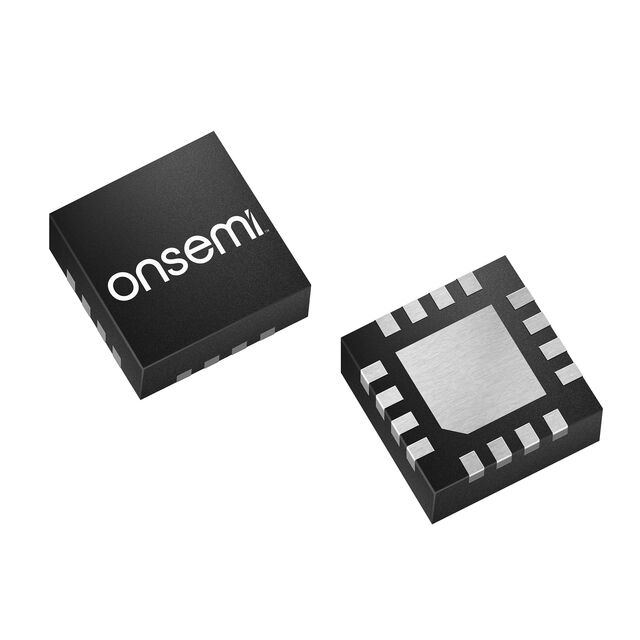
NIV3071MTW4TWG
ActiveEFUSE, 4 CHANNEL, 48V, 2.5A WETTABLE FLANK/ REEL ROHS COMPLIANT: YES
Deep-Dive with AI
Search across all available documentation for this part.
NIV3071MTW4TWG
ActiveEFUSE, 4 CHANNEL, 48V, 2.5A WETTABLE FLANK/ REEL ROHS COMPLIANT: YES
Deep-Dive with AI
Technical Specifications
Parameters and characteristics for this part
| Specification | NIV3071MTW4TWG |
|---|---|
| Current - Output | 2.5 A |
| Function | Electronic Fuse |
| Mounting Type | Wettable Flank, Surface Mount |
| Operating Temperature [Max] | 150 °C |
| Operating Temperature [Min] | -40 °C |
| Package / Case | 16-WQFN Exposed Pad |
| Sensing Method | High-Side |
| Supplier Device Package | 16-WQFN (5x6) |
| Voltage - Input [Max] | 60 V |
| Voltage - Input [Min] | 8 V |
Pricing
Prices provided here are for design reference only. For realtime values and availability, please visit the distributors directly
| Distributor | Package | Quantity | $ | |
|---|---|---|---|---|
| Digikey | Cut Tape (CT) | 1 | $ 6.01 | |
| 10 | $ 5.15 | |||
| 100 | $ 4.29 | |||
| 500 | $ 3.79 | |||
| 1000 | $ 3.41 | |||
| 2000 | $ 3.19 | |||
| Digi-Reel® | 1 | $ 6.01 | ||
| 10 | $ 5.15 | |||
| 100 | $ 4.29 | |||
| 500 | $ 3.79 | |||
| 1000 | $ 3.41 | |||
| 2000 | $ 3.19 | |||
| Tape & Reel (TR) | 5000 | $ 3.13 | ||
| Newark | Each (Supplied on Full Reel) | 1000 | $ 4.30 | |
| ON Semiconductor | N/A | 1 | $ 3.33 | |
Description
General part information
NIV3071 Series
The NIV3071 is an 8V to 60V, 10A eFuse (2.5A per channel), incorporating 4 independent channels in a 5x6mm package. The device provides protection to critical downstream (inductive, capacitive and resistive) loads from output shorts, overloads and overcurrent events on each channel independently.All outputs can be shorted together for a combined 10A load current under 48V or the NIV3071 can be configured to drive 4 independent loads (2.5A per channel), from 4 independent power supplies. This flexibility enables the NIV3071 to be well suited for automotive 12V, 24V, 36V, and 48V applications including zonal control units, ADAS domain controllers, telematics, harness protection applications, and heads up display.Each independent channel can be controlled by an active−high enable pin, while the active−low fault pin communicates status to an external microcontroller. The device features an internal soft-start delay and trip time control, as well as adjustable current limit setting for all channels. A built-in thermal shutdown circuit with auto−retry capability allows operation after the fault condition is cleared.
Documents
Technical documentation and resources