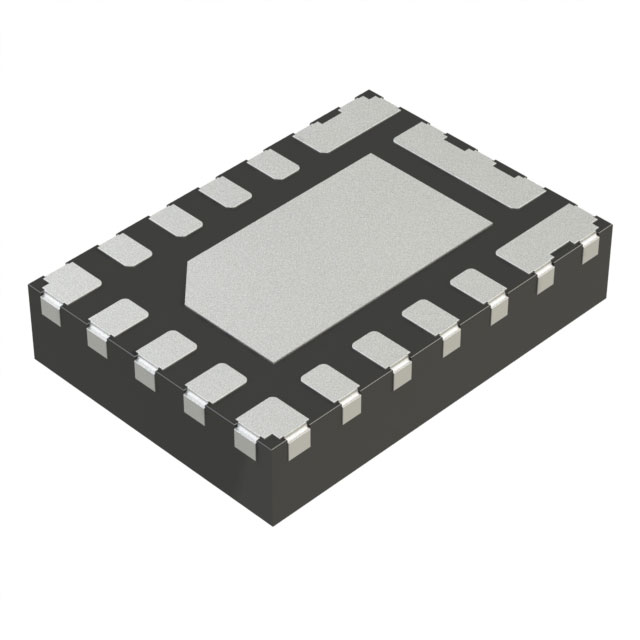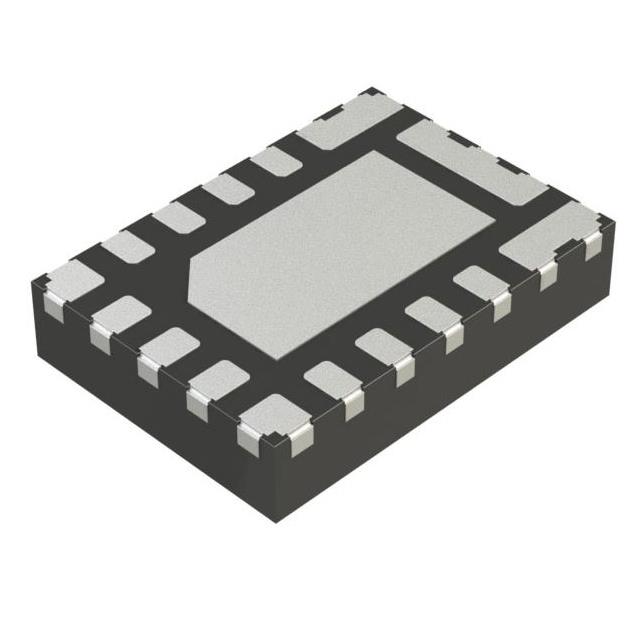
TPS62871Y1QWRXSRQ1
ActiveAUTOMOTIVE, 2.7V TO 6V INPUT, 9A STACKABLE SYNCHRONOUS BUCK CONVERTER
Deep-Dive with AI
Search across all available documentation for this part.
TPS62871Y1QWRXSRQ1
ActiveAUTOMOTIVE, 2.7V TO 6V INPUT, 9A STACKABLE SYNCHRONOUS BUCK CONVERTER
Technical Specifications
Parameters and characteristics for this part
| Specification | TPS62871Y1QWRXSRQ1 |
|---|---|
| Current - Output | 9 A |
| Frequency - Switching | 2.25 MHz, 1.5 MHz, 2.5 MHz, 3 MHz |
| Function | Step-Down |
| Grade | Automotive |
| Mounting Type | Wettable Flank, Surface Mount |
| Number of Outputs | 1 |
| Operating Temperature [Max] | 125 °C |
| Operating Temperature [Min] | -40 °C |
| Output Configuration | Positive |
| Output Type | Adjustable |
| Package / Case | 16-TFQFN Exposed Pad |
| Qualification | AEC-Q100 |
| Supplier Device Package | 16-VQFN |
| Supplier Device Package [x] | 2.55 |
| Supplier Device Package [y] | 3.55 |
| Synchronous Rectifier | True |
| Topology | Buck |
| Voltage - Input (Max) [Max] | 6 V |
| Voltage - Input (Min) [Min] | 2.7 V |
| Voltage - Output (Max) [Max] | 3.35 V |
| Voltage - Output (Min/Fixed) [Min] | 0.4 V |
Pricing
Prices provided here are for design reference only. For realtime values and availability, please visit the distributors directly
| Distributor | Package | Quantity | $ | |
|---|---|---|---|---|
| Digikey | N/A | 2200 | $ 4.52 | |
| Tape & Reel (TR) | 3000 | $ 2.15 | ||
| Texas Instruments | LARGE T&R | 1 | $ 3.23 | |
| 100 | $ 2.83 | |||
| 250 | $ 1.99 | |||
| 1000 | $ 1.60 | |||
Description
General part information
TPS62871 Series
The TPS6287x is a family of pin-to-pin 6A, 9A, 12A, and 15A synchronous step-down DC/DC converters with differential remote sensing. For each current rating, there are full-featured device variants with I2C interface and limited-featured device variants without I2C interface. All devices offer high efficiency and ease of use. Low-resistance power switches allow up to 15A continuous output current at high ambient temperatures.
The devices can operate in stacked mode to deliver higher output currents or to spread the power dissipation across multiple devices.
The TPS6287x family implements an enhanced DCS-control scheme that supports fast transients with fixed-frequency operation. Devices can operate in power save mode for maximum efficiency, or forced-PWM mode for the best transient performance and lowest output voltage ripple.
Documents
Technical documentation and resources