CC2630F128RSMR
ActiveSIMPLELINK™ 32-BIT ARM CORTEX-M3 ZIGBEE AND 6LOWPAN WIRELESS MCU WITH 128KB FLASH
Deep-Dive with AI
Search across all available documentation for this part.
CC2630F128RSMR
ActiveSIMPLELINK™ 32-BIT ARM CORTEX-M3 ZIGBEE AND 6LOWPAN WIRELESS MCU WITH 128KB FLASH
Technical Specifications
Parameters and characteristics for this part
| Specification | CC2630F128RSMR |
|---|---|
| Current - Receiving [Max] | 6.1 mA |
| Current - Receiving [Min] | 5.9 mA |
| Current - Transmitting [Max] | 9.1 mA |
| Current - Transmitting [Min] | 6.1 mA |
| Data Rate (Max) | 250 kbps |
| Frequency | 2.4 GHz |
| GPIO | 10 |
| Memory Size | 128 kB, 28 kB |
| Mounting Type | Surface Mount |
| Operating Temperature [Max] | 85 °C |
| Operating Temperature [Min] | -40 °C |
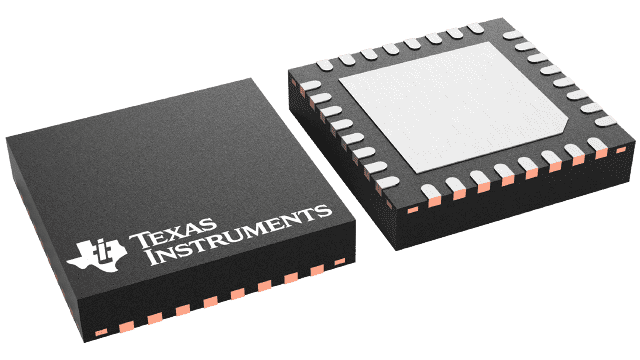
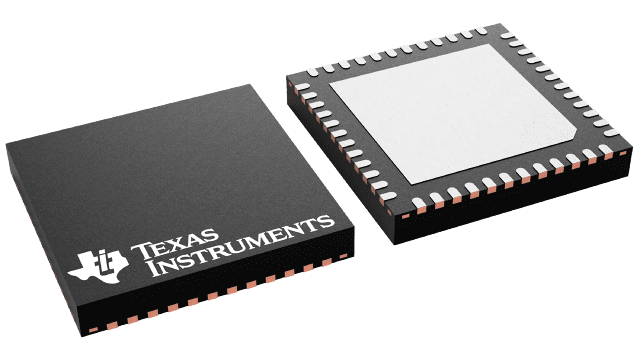
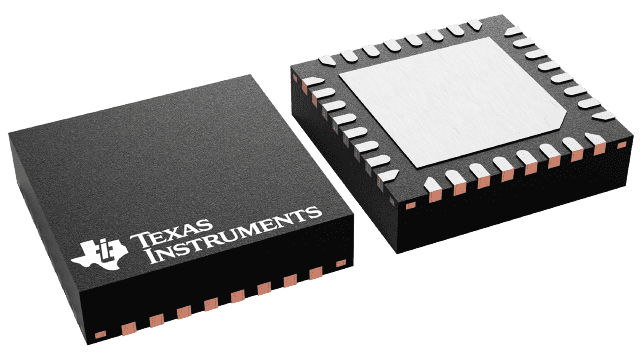
| Package / Case | 32-VFQFN Exposed Pad |
| Power - Output | 5 dBm |
| Protocol | Zigbee®, 6LoWPAN |
| RF Family/Standard | 802.15.4 |
| Sensitivity | -100 dBm |
| Serial Interfaces | SPI, I2C, UART, JTAG, I2S |
| Supplier Device Package | 32-VQFN (4x4) |
| Type | TxRx + MCU |
| Voltage - Supply [Max] | 3.8 V |
| Voltage - Supply [Min] | 1.8 V |
Pricing
Prices provided here are for design reference only. For realtime values and availability, please visit the distributors directly
| Distributor | Package | Quantity | $ | |
|---|---|---|---|---|
| Digikey | Cut Tape (CT) | 1 | $ 5.48 | |
| Digi-Reel® | 1 | $ 5.48 | ||
| Tape & Reel (TR) | 3000 | $ 2.60 | ||
| Texas Instruments | LARGE T&R | 1 | $ 3.91 | |
| 100 | $ 3.43 | |||
| 250 | $ 2.40 | |||
| 1000 | $ 1.94 | |||
Description
General part information
CC2630 Series
The CC2630 device is a wireless MCU targeting ZigBee®and 6LoWPAN applications.
The device is a member of the CC26xx family of cost-effective, ultralow power, 2.4-GHz RF devices. Very low active RF and MCU current and low-power mode current consumption provide excellent battery lifetime and allow for operation on small coin cell batteries and in energy-harvesting applications.
The CC2630 device contains a 32-bit ARM Cortex-M3 processor that runs at 48 MHz as the main processor and a rich peripheral feature set that includes a unique ultralow power sensor controller. This sensor controller is ideal for interfacing external sensors and for collecting analog and digital data autonomously while the rest of the system is in sleep mode. Thus, the CC2630 device is ideal for battery-powered and energy harvesting end nodes in ZigBee and 6LoWPAN networks.
Documents
Technical documentation and resources