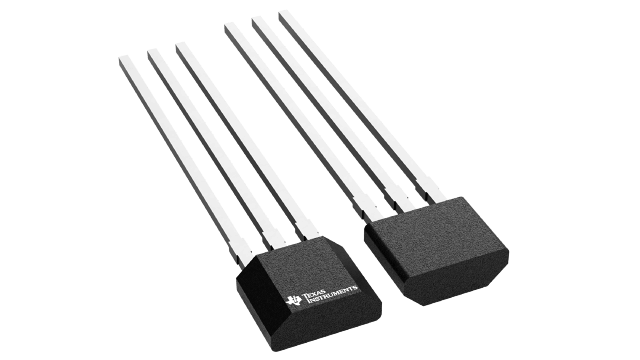
DRV5032AJLPG
ActiveLOW-POWER (5HZ, <1ΜA) LOW-VOLTAGE (UP TO 5.5V) SWITCH
Deep-Dive with AI
Search across all available documentation for this part.
DRV5032AJLPG
ActiveLOW-POWER (5HZ, <1ΜA) LOW-VOLTAGE (UP TO 5.5V) SWITCH
Technical Specifications
Parameters and characteristics for this part
| Specification | DRV5032AJLPG |
|---|---|
| Current - Output (Max) [Max] | 5 mA |
| Current - Supply (Max) [Max] | 3.5 çA |
| Features | Temperature Compensated |
| Function | Omnipolar Switch |
| Mounting Type | Through Hole |
| Operating Temperature [Max] | 85 °C |
| Operating Temperature [Min] | -40 °C |
| Output Type | Open Drain |
| Package / Case | TO-226-3, TO-92-3 Short Body |
| Polarization | Either |
| Sensing Range | 3 mT, 9.5 mT |
| Supplier Device Package | TO-92-3 |
| Technology | Hall Effect |
| Test Condition [Max] | 85 °C |
| Test Condition [Min] | -40 °C |
| Voltage - Supply [Max] | 5.5 V |
| Voltage - Supply [Min] | 1.65 V |
Pricing
Prices provided here are for design reference only. For realtime values and availability, please visit the distributors directly
| Distributor | Package | Quantity | $ | |
|---|---|---|---|---|
| Digikey | Bulk | 1 | $ 0.63 | |
| 10 | $ 0.56 | |||
| 25 | $ 0.53 | |||
| 100 | $ 0.44 | |||
| 250 | $ 0.41 | |||
| 500 | $ 0.36 | |||
| 1000 | $ 0.34 | |||
| Texas Instruments | BULK | 1 | $ 0.26 | |
| 100 | $ 0.17 | |||
| 250 | $ 0.13 | |||
| 1000 | $ 0.09 | |||
Description
General part information
DRV5032 Series
The DRV5032 device is an ultra-low-power digital-switch Hall effect sensor, designed for the most compact and battery-sensitive systems. The device is offered in multiple magnetic thresholds, sampling rates, output drivers, and packages to accommodate various applications.
When the applied magnetic flux density exceeds the BOP threshold, the device outputs a low voltage. The output stays low until the flux density decreases to less than BRP, and then the output either drives a high voltage or becomes high impedance, depending on the device version. By incorporating an internal oscillator, the device samples the magnetic field and updates the output at a rate of 80Hz, 20Hz or 5Hz for the lowest current consumption. Omnipolar and unipolar magnetic responses are available.
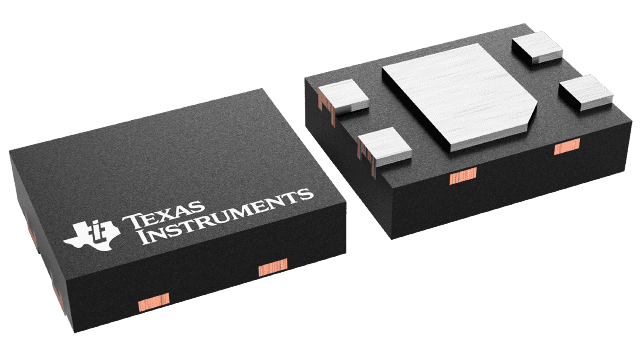
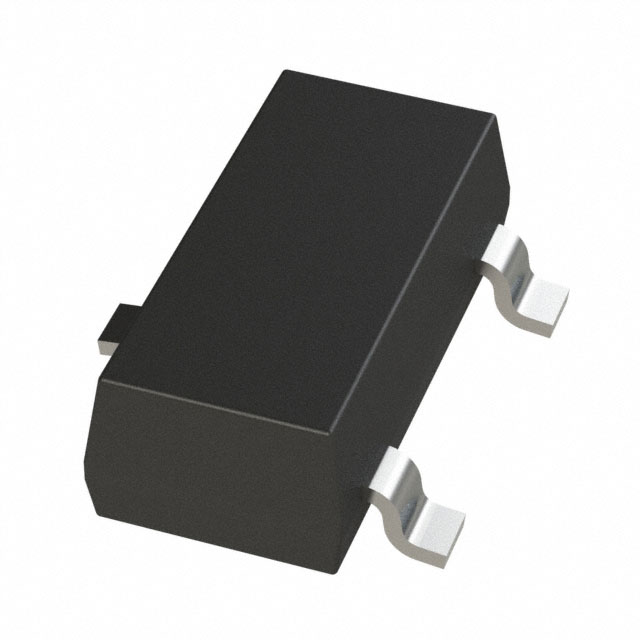
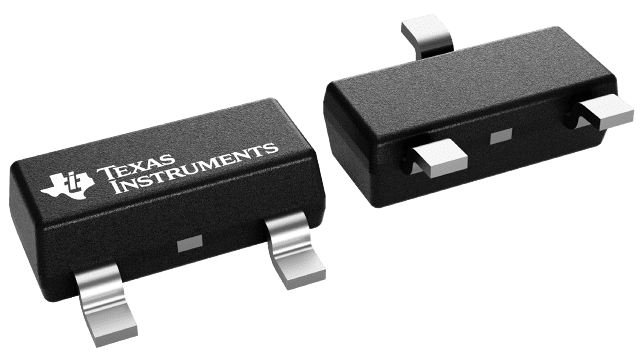
The device operates from a VCC range of 1.65V to 5.5V, and is packaged in a standard SOT-23, TO-92 and small X2SON.
Documents
Technical documentation and resources