Deep-Dive with AI
Search across all available documentation for this part.
Deep-Dive with AI
Technical Specifications
Parameters and characteristics for this part
| Specification | SN75LBC175DR |
|---|---|
| Mounting Type | Surface Mount |
| Number of Drivers/Receivers [custom] | 0 |
| Number of Drivers/Receivers [custom] | 4 |
| Operating Temperature [Max] | 70 °C |
| Operating Temperature [Min] | 0 °C |
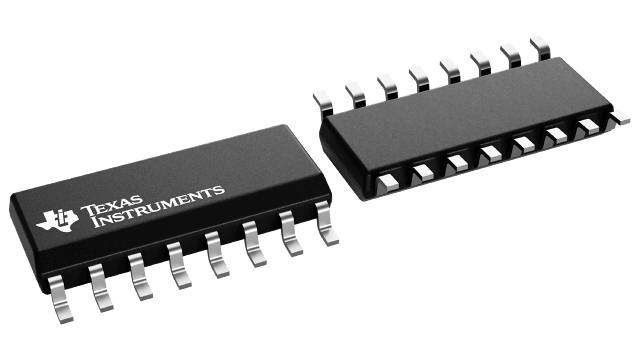
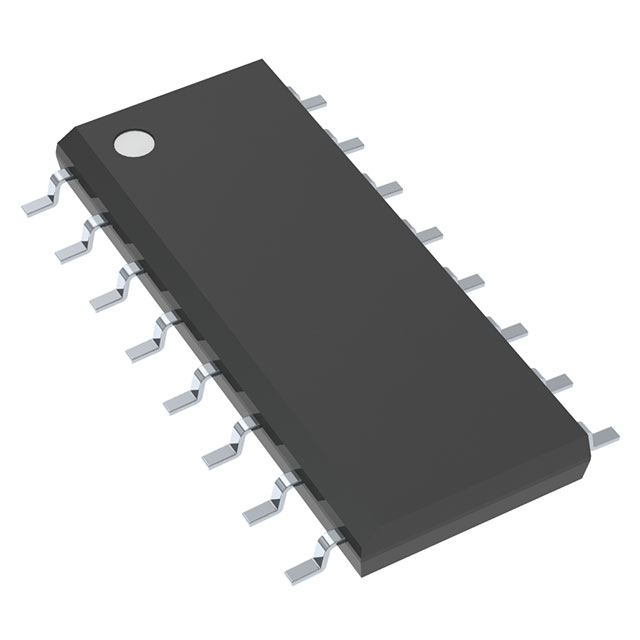
| Package / Case | 16-SOIC |
| Package / Case [x] | 0.154 in |
| Package / Case [y] | 3.9 mm |
| Protocol | RS423, RS485, RS422 |
| Receiver Hysteresis | 45 mV |
| Supplier Device Package | 16-SOIC |
| Type | Receiver |
| Voltage - Supply [Max] | 5.25 V |
| Voltage - Supply [Min] | 4.75 V |
Pricing
Prices provided here are for design reference only. For realtime values and availability, please visit the distributors directly
| Distributor | Package | Quantity | $ | |
|---|---|---|---|---|
| Digikey | Cut Tape (CT) | 1 | $ 5.26 | |
| 10 | $ 3.52 | |||
| 25 | $ 3.07 | |||
| 100 | $ 2.56 | |||
| 250 | $ 2.31 | |||
| 500 | $ 2.16 | |||
| 1000 | $ 2.04 | |||
| Digi-Reel® | 1 | $ 5.26 | ||
| 10 | $ 3.52 | |||
| 25 | $ 3.07 | |||
| 100 | $ 2.56 | |||
| 250 | $ 2.31 | |||
| 500 | $ 2.16 | |||
| 1000 | $ 2.04 | |||
| Tape & Reel (TR) | 2500 | $ 1.98 | ||
| 5000 | $ 1.91 | |||
Description
General part information
SN75LBC175A Series
The SN65LBC175A and SN75LBC175A are quadruple differential line receivers with 3-state outputs, designed for TIA/EIA-485 (RS-485), TIA/EIA-422 (RS-422), and ISO 8482 (Euro RS-485) applications.
These devices are optimized for balanced multipoint bus communication at data rates up to and exceeding 50 million bits per second. The transmission media may be twisted-pair cables, printed-circuit board traces, or backplanes. The ultimate rate and distance of data transfer is dependent upon the attenuation characteristics of the media and the noise coupling to the environment.
Each receiver operates over a wide range of positive and negative common-mode input voltages, and features ESD protection to 6 kV, making it suitable for high-speed multipoint data transmission applications in harsh environments. These devices are designed using LinBiCMOS™, facilitating low power consumption and inherent robustness.
Documents
Technical documentation and resources
No documents available