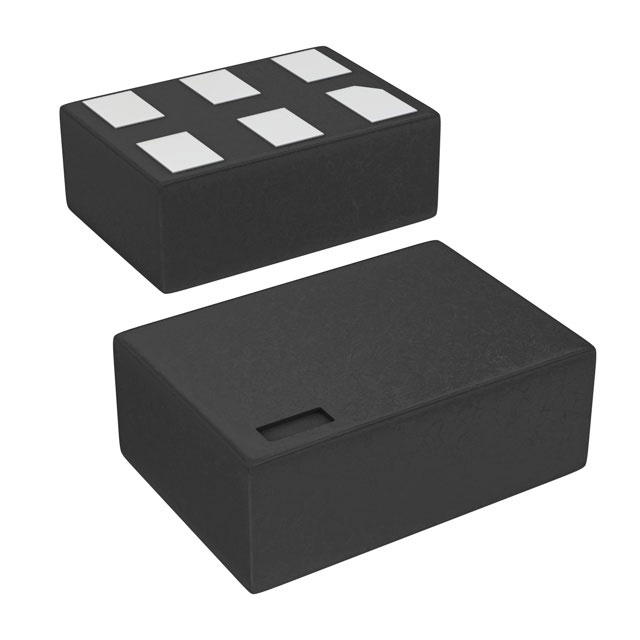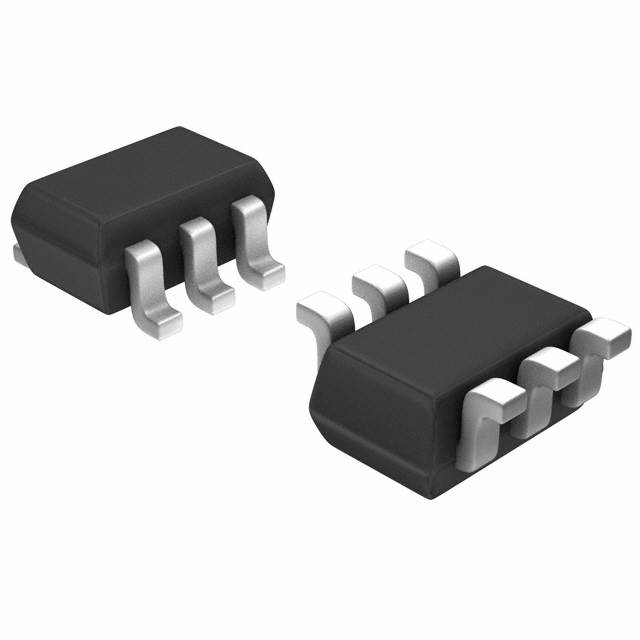
NC7WP14P6X
ObsoleteSCHMITT TRIGGER 2 9.2NS@3.3V,30PF 900MV~3.6V SC-70-6 INVERTERS ROHS
Deep-Dive with AI
Search across all available documentation for this part.
NC7WP14P6X
ObsoleteSCHMITT TRIGGER 2 9.2NS@3.3V,30PF 900MV~3.6V SC-70-6 INVERTERS ROHS
Deep-Dive with AI
Technical Specifications
Parameters and characteristics for this part
| Specification | NC7WP14P6X |
|---|---|
| Current - Output High, Low [custom] | 2.6 mA |
| Current - Output High, Low [custom] | 2.6 mA |
| Current - Quiescent (Max) [Max] | 900 nA |
| Features | Schmitt Trigger |
| Input Logic Level - High [Max] | 2.6 V |
| Input Logic Level - High [Min] | 0.65 V |
| Input Logic Level - Low [Max] | 0.6 V |
| Input Logic Level - Low [Min] | 0.1 V |
| Logic Type | Inverter |
| Max Propagation Delay @ V, Max CL | 9.2 ns |
| Mounting Type | Surface Mount |
| Number of Circuits | 2 |
| Number of Inputs | 2 |
| Operating Temperature [Max] | 85 °C |
| Operating Temperature [Min] | -40 °C |
| Package / Case | 6-TSSOP, SC-88, SOT-363 |
| Supplier Device Package | SC-88 (SC-70-6) |
| Voltage - Supply [Max] | 3.6 V |
| Voltage - Supply [Min] | 0.9 V |
Pricing
Prices provided here are for design reference only. For realtime values and availability, please visit the distributors directly
| Distributor | Package | Quantity | $ | |
|---|---|---|---|---|
| LCSC | Piece | 1 | $ 1.06 | |
| 10 | $ 0.88 | |||
| 30 | $ 0.79 | |||
| 100 | $ 0.70 | |||
| 500 | $ 0.62 | |||
| 1000 | $ 0.59 | |||
Description
General part information
NC7WP14 Series
The NC7WP14 is a dual inverter with Schmitt trigger inputs from ON Semiconductor's Ultra Low Power (ULP) Series of TinyLogic®. Ideal for applications where battery life is critical, this product is designed for ultra low power consumption within the VCCoperating range of 0.9V to 3.6V VCC. The internal circuit is composed of a minimum of inverter stages, including the output buffer, to enable ultra low static and dynamic power. The NC7WP14, for lower drive requirements, is uniquely designed for optimized power and speed, and is fabricated with an advanced CMOS technology to achieve best in class speed operation while maintaining extremely low CMOS power dissipation.
Documents
Technical documentation and resources