


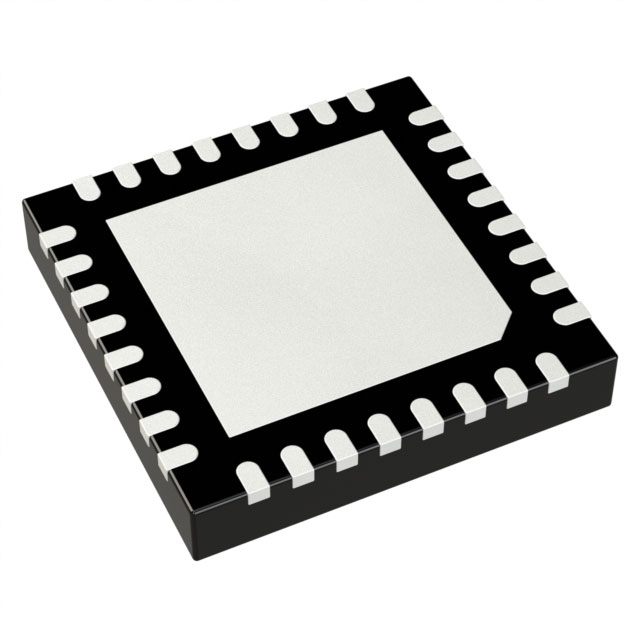
ADS125H02IRHBR
Active24-BIT, 40-KSPS, 2-CH DELTA-SIGMA ADC WITH ±20-V INPUT, PGA, IDACS, GPIOS AND VREF
Deep-Dive with AI
Search across all available documentation for this part.
ADS125H02IRHBR
Active24-BIT, 40-KSPS, 2-CH DELTA-SIGMA ADC WITH ±20-V INPUT, PGA, IDACS, GPIOS AND VREF
Technical Specifications
Parameters and characteristics for this part
| Specification | ADS125H02IRHBR |
|---|---|
| Architecture | Sigma-Delta |
| Configuration | MUX-PGA-ADC |
| Data Interface | Parallel, SPI |
| Features | PGA |
| Input Type | Single Ended, Differential |
| Mounting Type | Surface Mount |
| Number of A/D Converters | 1 |
| Number of Bits | 24 |
| Number of Inputs | 3 |
| Operating Temperature [Max] | 125 °C |
| Operating Temperature [Min] | -45 °C |
| Package / Case | 32-VFQFN Exposed Pad |
| Ratio - S/H:ADC | 0:1 |
| Reference Type | External, Internal |
| Sampling Rate (Per Second) | 40k |
| Supplier Device Package | 32-VQFN (5x5) |
| Voltage - Supply, Analog [Max] | 36 V |
| Voltage - Supply, Analog [Min] | 5 V |
| Voltage - Supply, Digital [Max] | 5.25 V |
| Voltage - Supply, Digital [Min] | 2.7 V |
Pricing
Prices provided here are for design reference only. For realtime values and availability, please visit the distributors directly
| Distributor | Package | Quantity | $ | |
|---|---|---|---|---|
| Digikey | Tape & Reel (TR) | 3000 | $ 8.67 | |
| Texas Instruments | LARGE T&R | 1 | $ 11.14 | |
| 100 | $ 9.73 | |||
| 250 | $ 7.50 | |||
| 1000 | $ 6.71 | |||
Description
General part information
ADS125H02 Series
The ADS125H02 is a ±20-V input, 24-bit, delta-sigma (ΔΣ) analog-to-digital converter (ADC). The ADC features a low-noise programmable gain amplifier (PGA), an internal reference, clock oscillator, and signal or reference out-of-range monitors.
The integration of a wide input range, ±18-V PGA and an ADC into a single package reduces board area up to 50% compared to discrete solutions.
Programmable gain of 0.125 to 128 (corresponding to an equivalent input range from ±20 V to ±20 mV) eliminates the need for an external attenuator or external gain stages. 1-GΩ minimum input impedance reduces error caused by sensor loading. Additionally, the low noise and low drift performance allow direct connections to bridge, resistance temperature detector (RTD), and thermocouple sensors.
Documents
Technical documentation and resources