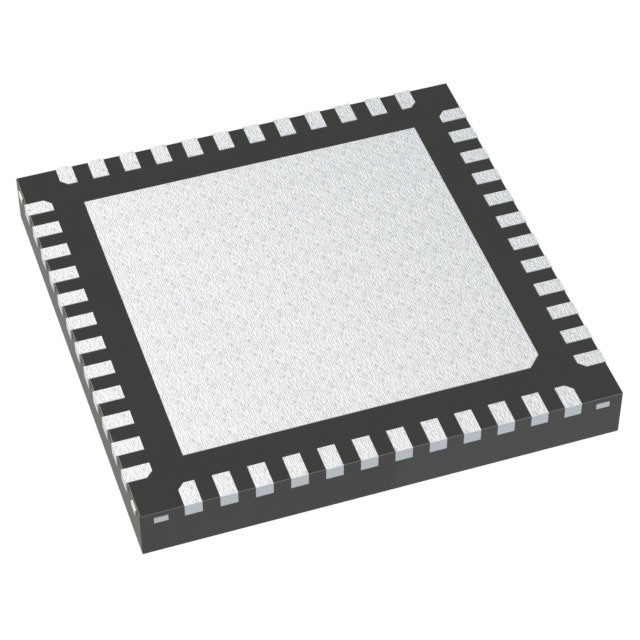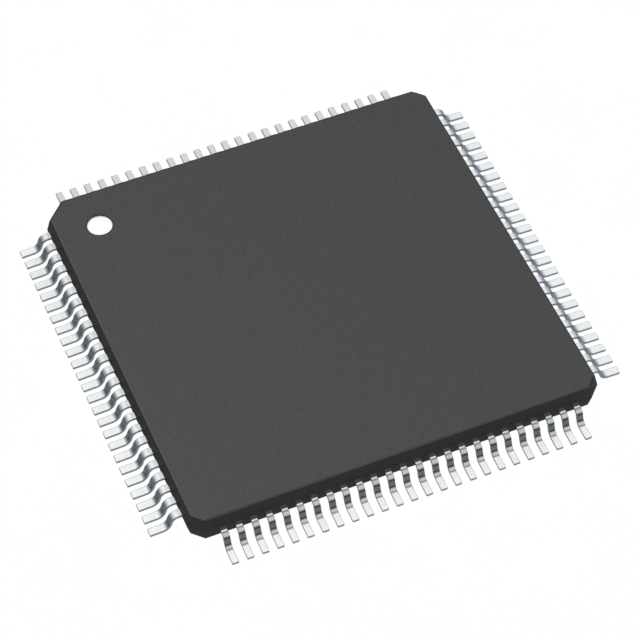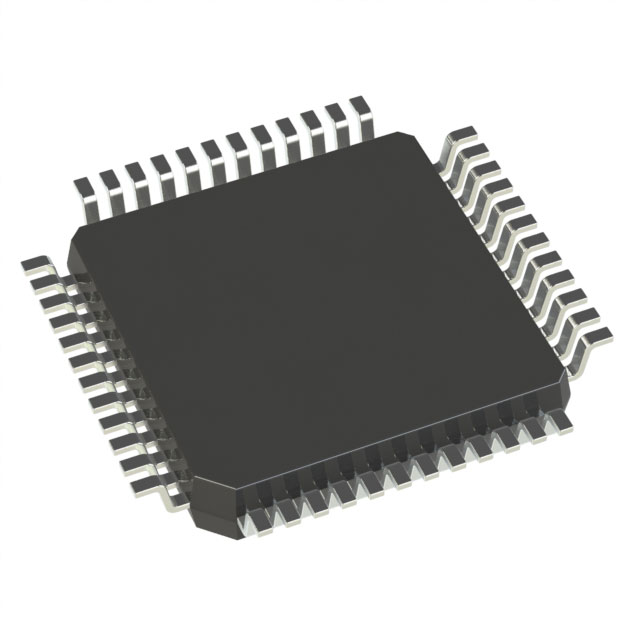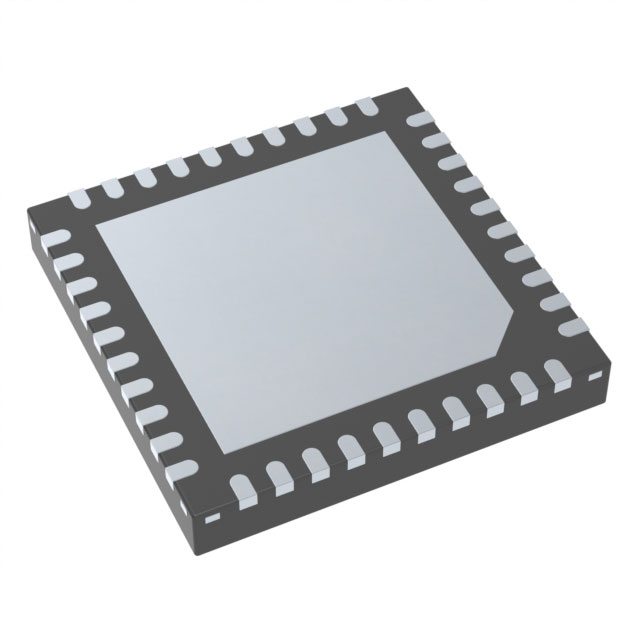
R7FA4M2AB3CFM#BA0
Active100MHZ ARM CORTEX-M33 TRUSTZONE, HIGH INTEGRATION WITH LOWEST ACTIVE POWER CONSUMPTION
Deep-Dive with AI
Search across all available documentation for this part.
R7FA4M2AB3CFM#BA0
Active100MHZ ARM CORTEX-M33 TRUSTZONE, HIGH INTEGRATION WITH LOWEST ACTIVE POWER CONSUMPTION
Deep-Dive with AI
Technical Specifications
Parameters and characteristics for this part
| Specification | R7FA4M2AB3CFM#BA0 |
|---|---|
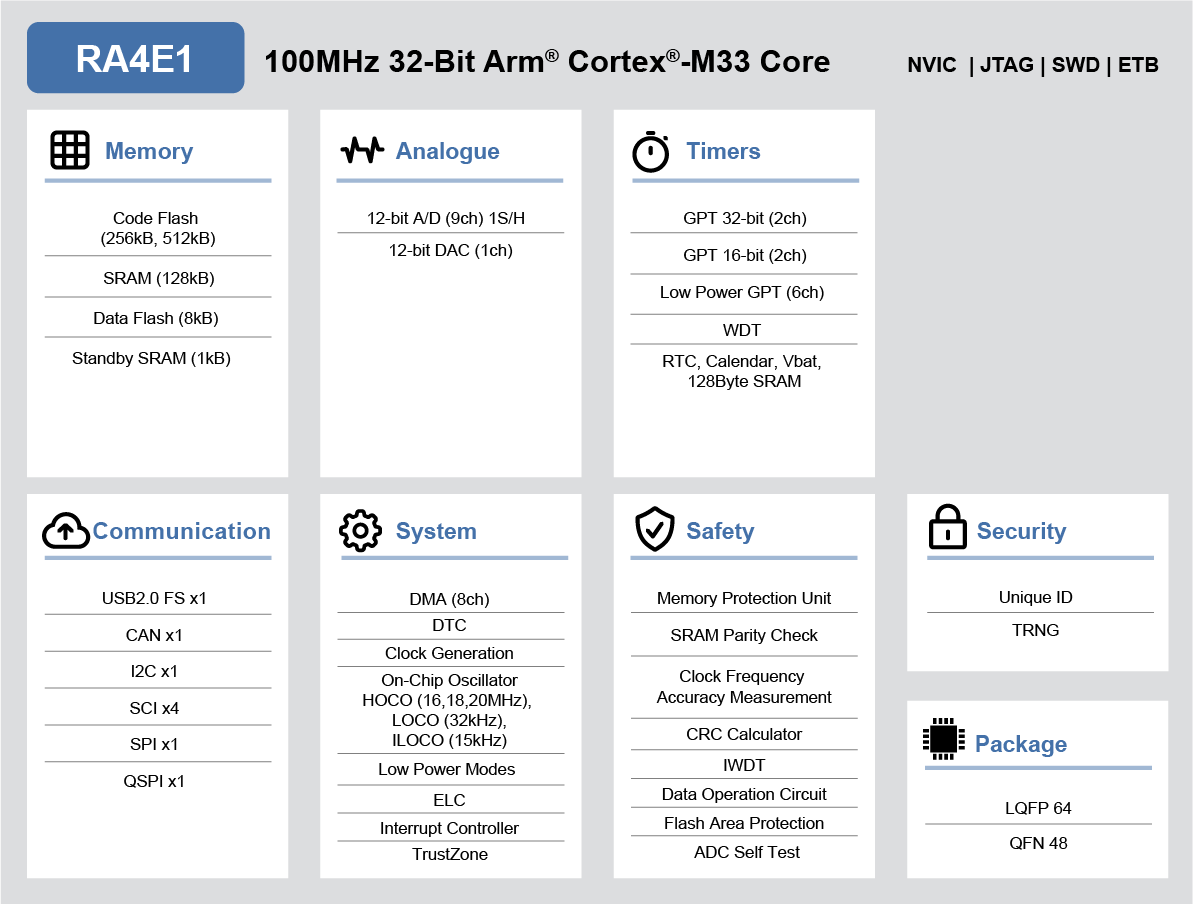
| Connectivity | UART/USART, QSPI, CANbus, USB, SPI, I2C, SCI |
| Core Processor | ARM® Cortex®-M33 |
| Core Size | 32-Bit |
| Data Converters [custom] | 9, 2 channels |
| Data Converters [custom] | 12 b |
| EEPROM Size | 8 K |
| Mounting Type | Surface Mount |
| Number of I/O | 44 |
| Operating Temperature [Max] | 105 °C |
| Operating Temperature [Min] | -40 °C |
| Oscillator Type | Internal |
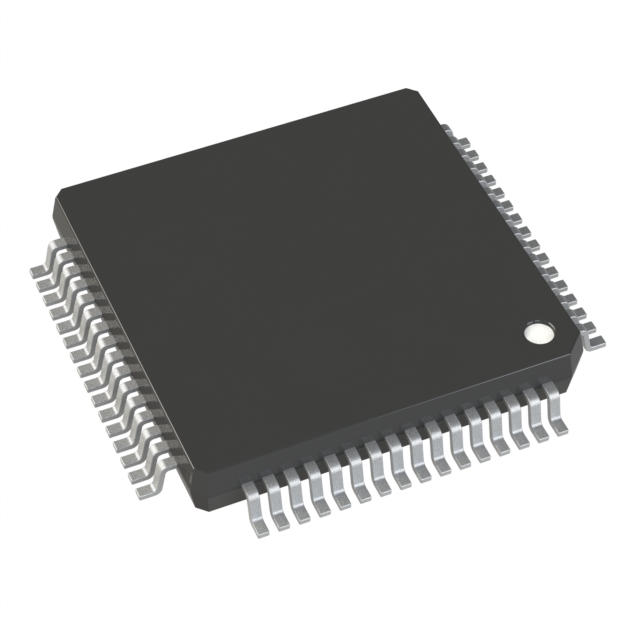
| Package / Case | 64-LQFP |
| Peripherals | POR, WDT, PWM, DMA, Temp Sensor, LVD, AES |
| Program Memory Size | 256 KB |
| Program Memory Type | FLASH |
| RAM Size | 128 K |
| Speed | 100 MHz |
| Supplier Device Package | 64-LFQFP (10x10) |
| Voltage - Supply (Vcc/Vdd) [Max] | 3.6 V |
| Voltage - Supply (Vcc/Vdd) [Min] | 2.7 V |
Pricing
Prices provided here are for design reference only. For realtime values and availability, please visit the distributors directly
| Distributor | Package | Quantity | $ | |
|---|---|---|---|---|
| Digikey | Tray | 1280 | $ 2.63 | |
Description
General part information
R7FA4M2AC3 Series
The Renesas RA4M2 group of 32-bit microcontrollers (MCUs) uses the high-performance Arm®Cortex®-M33 core with TrustZone®. In concert with the secure crypto engine, it offers secure element functionality. The RA4M2 is built on a highly efficient 40nm process and is supported by an open and flexible ecosystem concept—the Flexible Software Package (FSP), built on FreeRTOS—and is expandable to use other RTOSes and middleware. The RA4M2 is suitable for IoT applications requiring vast communication options, future proof security, large embedded RAM, and low active power consumption down to 81µA/MHz running the CoreMark®algorithm from Flash.
Documents
Technical documentation and resources