Deep-Dive with AI
Search across all available documentation for this part.
Deep-Dive with AI
Technical Specifications
Parameters and characteristics for this part
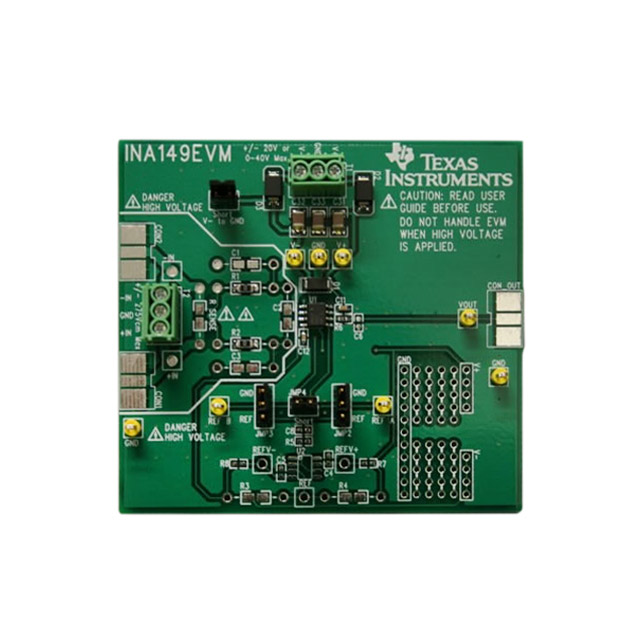
| Specification | INA149EVM |
|---|---|
| Amplifier Type | Differential |
| Board Type | Fully Populated |
| Channels per IC | 1 - Single |
| Current - Output / Channel | 25 mA |
| Current - Supply (Main IC) | 810 µA |
| Slew Rate | 5 V/çs |
| Supplied Contents | Board(s) |
| Utilized IC / Part | INA149 |
| Voltage - Supply, Single/Dual (±) [Max] | 18 V, 36 V |
| Voltage - Supply, Single/Dual (±) [Min] | 2 V, 4 V |
Pricing
Prices provided here are for design reference only. For realtime values and availability, please visit the distributors directly
| Distributor | Package | Quantity | $ | |
|---|---|---|---|---|
| Digikey | Box | 1 | $ 58.80 | |
Description
General part information
INA149-EP Series
The INA149 is a precision unity-gain difference amplifier with a very high input common-mode voltage range. It is a single, monolithic device that consists of a precision op amp and an integrated thin-film resistor network. The INA149 can accurately measure small differential voltages in the presence of common-mode signals up to ±275 V. The INA149 inputs are protected from momentary common-mode or differential overloads of up to500 V.
In many applications, where galvanic isolation in not required, the INA149 can replace isolation amplifiers. This ability can eliminate costly isolated input side power supplies and the associated ripple, noise, and quiescent current. The excellent 0.0005% nonlinearity and 500-kHz bandwidth of the INA149 are superior to those of conventional isolation amplifiers.
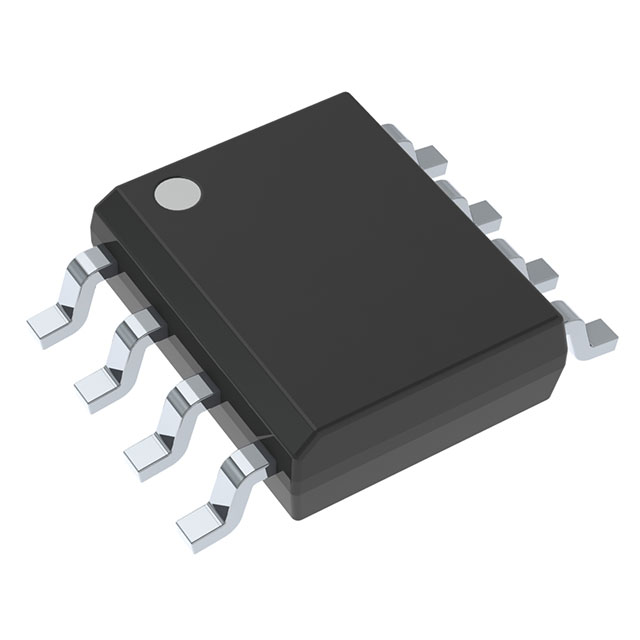
The INA149 is pin-compatible with the INA117 and INA148 type high common-mode voltage amplifiers and offers improved performance over both devices. The INA149 is available in the SOIC-8 package with operation specified over the military temperature range of –55°C to +125°C.
Documents
Technical documentation and resources