HIP9011ABZT
ActiveIC SENSOR ENGINE KNOCK 20-SOIC
Deep-Dive with AI
Search across all available documentation for this part.
HIP9011ABZT
ActiveIC SENSOR ENGINE KNOCK 20-SOIC
Deep-Dive with AI
Technical Specifications
Parameters and characteristics for this part
| Specification | HIP9011ABZT |
|---|---|
| Current - Supply | 8 mA |
| Input Type | Logic |
| Mounting Type | Surface Mount |
| Operating Temperature [Max] | 125 °C |
| Operating Temperature [Min] | -40 °C |
| Output Type | Logic |
| Package / Case | 20-SOIC |
| Package / Case [y] | 0.295 in |
| Package / Case [y] | 7.5 mm |
| Supplier Device Package | 20-SOIC |
| Type | Engine Knock Signal Processor |
Pricing
Prices provided here are for design reference only. For realtime values and availability, please visit the distributors directly
| Distributor | Package | Quantity | $ | |
|---|---|---|---|---|
| Digikey | Tape & Reel (TR) | 1000 | $ 2.80 | |
| 2000 | $ 2.66 | |||
Description
General part information
HIP9011 Series
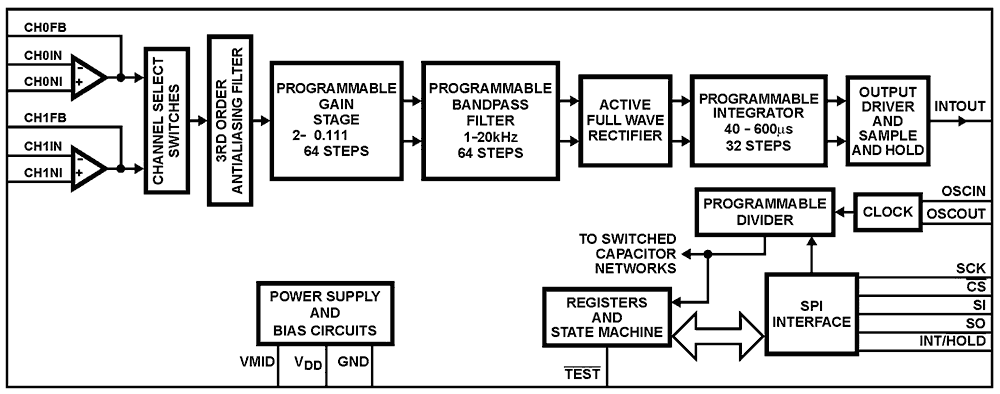
The HIP9011 is used to provide a method of detecting premature detonation often referred to as Knock or Ping in internal combustion engines. The IC is shown in the Simplified Block Diagram. The chip can select between one of two sensors, if needed for accurate monitoring or for V type engines. Internal control via the SPI bus is fast enough to switch sensors between each firing cycle. A programmable bandpass filter processes the signal from either of the sensor inputs. The bandpass filter can be selected to optimize the extraction the engine knock or ping signals from the engine background noise. Further single processing is obtained by full wave rectification of the filtered signal and applying it to an integrator whose output voltage level is proportional to the knock signal amplitude. The chip is under microprocessor control via a SPI interface bus.
Documents
Technical documentation and resources