


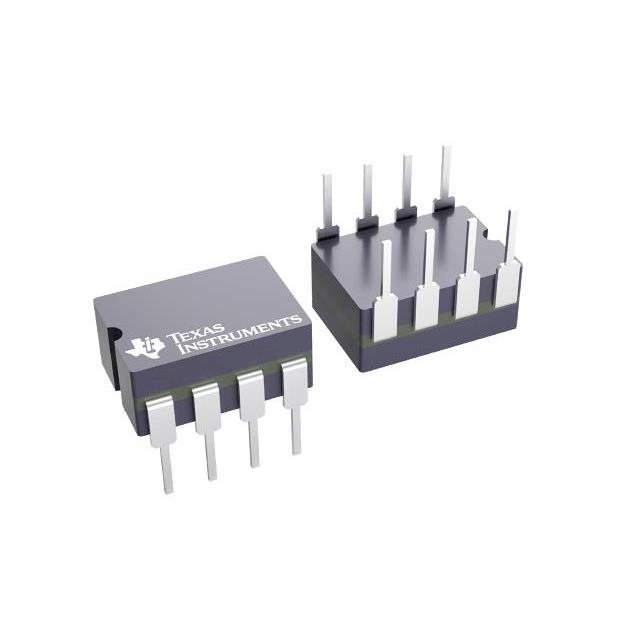
JL2951BPA
ActiveSERIES OF ADJUSTABLE MICROPOWER VOLTAGE REGULATORS
Deep-Dive with AI
Search across all available documentation for this part.
JL2951BPA
ActiveSERIES OF ADJUSTABLE MICROPOWER VOLTAGE REGULATORS
Deep-Dive with AI
Technical Specifications
Parameters and characteristics for this part
| Specification | JL2951BPA |
|---|---|
| Control Features | Enable |
| Current - Output | 100 mA |
| Mounting Type | Through Hole |
| Number of Regulators | 1 |
| Operating Temperature [Max] | 125 °C |
| Operating Temperature [Min] | -55 °C |
| Output Configuration | Positive |
| Output Type | Adjustable (Fixed) |
| Package / Case | 7.62 mm |
| Package / Case | 0.3 in |
| Package / Case | 8-CDIP |
| Protection Features | Over Temperature |
| PSRR | 50 dB |
| Supplier Device Package | 8-CDIP |
| Voltage - Input (Max) [Max] | 30 V |
| Voltage - Output (Max) | 29 V |
| Voltage - Output (Min/Fixed) | 5 V |
| Voltage - Output (Min/Fixed) | 1.24 V |
| Voltage Dropout (Max) [Max] | 0.6 V |
Pricing
Prices provided here are for design reference only. For realtime values and availability, please visit the distributors directly
| Distributor | Package | Quantity | $ | |
|---|---|---|---|---|
| Texas Instruments | TUBE | 1 | $ 62.05 | |
| 100 | $ 55.16 | |||
| 250 | $ 45.34 | |||
| 1000 | $ 40.56 | |||
Description
General part information
LP2951JAN Series
The LP2951 is a micropower voltage regulator with very low quiescent current (75μA typ.) and very low dropout voltage (typ. 40mV at light loads and 380mV at 100mA). It is ideally suited for use in battery-powered systems. Furthermore, the quiescent current increases only slightly in dropout, prolonging battery life.
An additional feature is an error flag output which warns of a low output voltage, often due to falling batteries on the input. It may be used for a power-on reset. A second feature is the logic-compatible shutdown input which enables the regulator to be switched on and off. Also, the part may be pin-strapped for a 5V, 3V, or 3.3V output (depending on the version), or programmed from 1.24V to 29V with an external pair of resistors.
Careful design of the LP2951 has minimized all contributions to the error budget. This includes a tight initial tolerance (0.5% typ.), extremely good load and line regulation (0.05% typ.) and a very low output voltage temperature coefficient, making the part useful as a low-power voltage reference.
Documents
Technical documentation and resources