


Deep-Dive with AI
Search across all available documentation for this part.
Deep-Dive with AI
Technical Specifications
Parameters and characteristics for this part
| Specification | LMH1208RTVT |
|---|---|
| Applications | Professional Video |
| Control Interface | Serial |
| Function | Driver |
| Mounting Type | Surface Mount |
| Standards | SMPTE, DVB-ASI, AES10 |
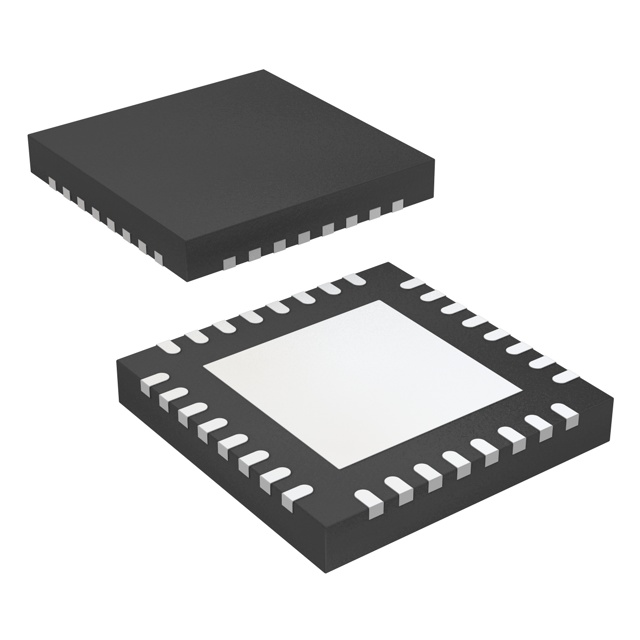
| Supplier Device Package | 32-WQFN (5x5) |
| Voltage - Supply [Max] | 2.625 V |
| Voltage - Supply [Min] | 2.375 V |
Pricing
Prices provided here are for design reference only. For realtime values and availability, please visit the distributors directly
| Distributor | Package | Quantity | $ | |
|---|---|---|---|---|
| Digikey | Cut Tape (CT) | 1 | $ 16.80 | |
| 10 | $ 15.44 | |||
| 25 | $ 14.80 | |||
| 100 | $ 13.04 | |||
| Digi-Reel® | 1 | $ 16.80 | ||
| 10 | $ 15.44 | |||
| 25 | $ 14.80 | |||
| 100 | $ 13.04 | |||
| Tape & Reel (TR) | 250 | $ 12.40 | ||
| 500 | $ 11.60 | |||
| LCSC | Piece | 1 | $ 10.64 | |
| Texas Instruments | SMALL T&R | 1 | $ 14.65 | |
| 10 | $ 12.51 | |||
| 100 | $ 7.92 | |||
Description
General part information
LMH1208 Series
LMH1208 device is a 12G UHD-SDI low power dual output cable driver. It supports SMPTE video rates up to 11.88 Gbps, enabling UHD video for 4K/8K applications. The additional equalized 100-Ω driver output on the host-side can be used for monitoring or signal distribution purposes.
The programmable PCB input equalizer provides high frequency boost to reduce inter symbol interference (ISI) induced by PCB board trace. The integrated 75-Ω termination and return loss network at both cable driver outputs facilitate overall system design in meeting stringent SMPTE return loss requirements.
Input Signal Detect determines the presence of a valid signal at the input of the cable driver. This sensing feature may be used to alert the user of a system fault and activate a Power Save Mode, reducing the power consumption of the cable driver. The LMH1208 provides selectable slew rates for data rates up to 11.88 Gbps. The output slew rate and amplitude can be controlled by pin, SPI, or SMBus control.
Documents
Technical documentation and resources