TCAN1048AVDMTRQ1
ActiveENHANCED AUTOMOTIVE DUAL CAN TRANSCEIVER WITH INVERTED STANDBY AND 1.8-V I/O SUPPORT
Deep-Dive with AI
Search across all available documentation for this part.
TCAN1048AVDMTRQ1
ActiveENHANCED AUTOMOTIVE DUAL CAN TRANSCEIVER WITH INVERTED STANDBY AND 1.8-V I/O SUPPORT
Deep-Dive with AI
Technical Specifications
Parameters and characteristics for this part
| Specification | TCAN1048AVDMTRQ1 |
|---|---|
| Data Rate | 8 Mbps |
| Duplex | Half |
| Grade | Automotive |
| Mounting Type | Wettable Flank, Surface Mount |
| Number of Drivers/Receivers [custom] | 2 |
| Number of Drivers/Receivers [custom] | 2 |
| Operating Temperature [Max] | 150 °C |
| Operating Temperature [Min] | -40 °C |
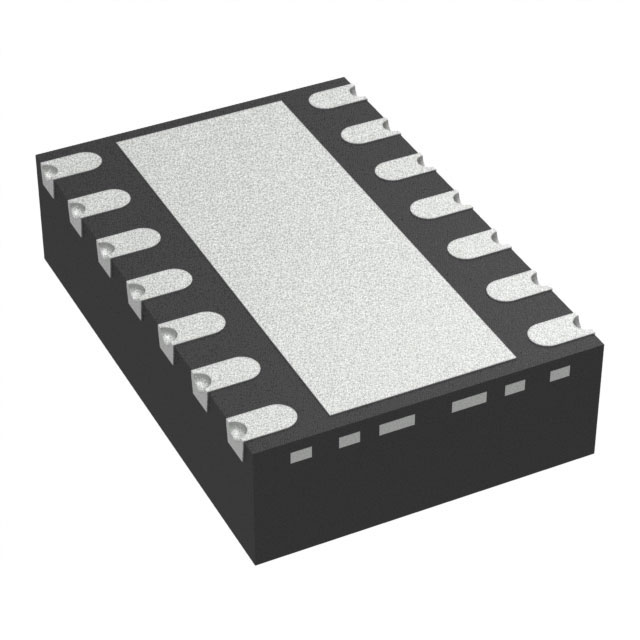
| Package / Case | 14-VDFN Exposed Pad |
| Protocol | CANbus |
| Qualification | AEC-Q100 |
| Receiver Hysteresis | 200 mV |
| Supplier Device Package | 14-VSON (4.5x3) |
| Type | Transceiver |
| Voltage - Supply [Max] | 5.5 V |
| Voltage - Supply [Min] | 4.5 V |
Pricing
Prices provided here are for design reference only. For realtime values and availability, please visit the distributors directly
| Distributor | Package | Quantity | $ | |
|---|---|---|---|---|
| Digikey | Cut Tape (CT) | 1 | $ 1.88 | |
| 10 | $ 1.67 | |||
| 25 | $ 1.59 | |||
| 50 | $ 1.54 | |||
| 100 | $ 1.48 | |||
| 250 | $ 1.42 | |||
| 500 | $ 1.37 | |||
| 1000 | $ 1.32 | |||
| Digi-Reel® | 1 | $ 1.88 | ||
| 10 | $ 1.67 | |||
| 25 | $ 1.59 | |||
| 50 | $ 1.54 | |||
| 100 | $ 1.48 | |||
| 250 | $ 1.42 | |||
| 500 | $ 1.37 | |||
| 1000 | $ 1.32 | |||
| Tape & Reel (TR) | 3000 | $ 1.24 | ||
| 6000 | $ 1.20 | |||
| Texas Instruments | LARGE T&R | 1 | $ 1.83 | |
| 100 | $ 1.51 | |||
| 250 | $ 1.08 | |||
| 1000 | $ 0.81 | |||
Description
General part information
TCAN1048AV-Q1 Series
The TCAN1046AV-Q1 and TCAN1048AV-Q1 ( TCAN104xAV-Q1) are dual, high-speed controller area network (CAN) transceivers that meet the physical layer requirements of the ISO 11898-2:2016 high-speed CAN specification.
The TCAN104xAV-Q1 transceivers support both classical CAN and CAN FD networks up to 8 megabits per second (Mbps). The device includes internal logic level translation via the VIOterminal to allow for interfacing the transceiver I/O’s directly to 1.8-V, 2.5-V, 3.3-V, or 5-V logic levels.
The two CAN channels support independent mode control through the standby pins. Therefore, each transceiver can be placed into a low-power state, standby mode, without impacting the state of the other CAN channel. While in standby mode, the device supports remote wake-up pattern via the CAN bus which is compliant to the ISO 11898-2:2016 defined wake-up pattern (WUP).