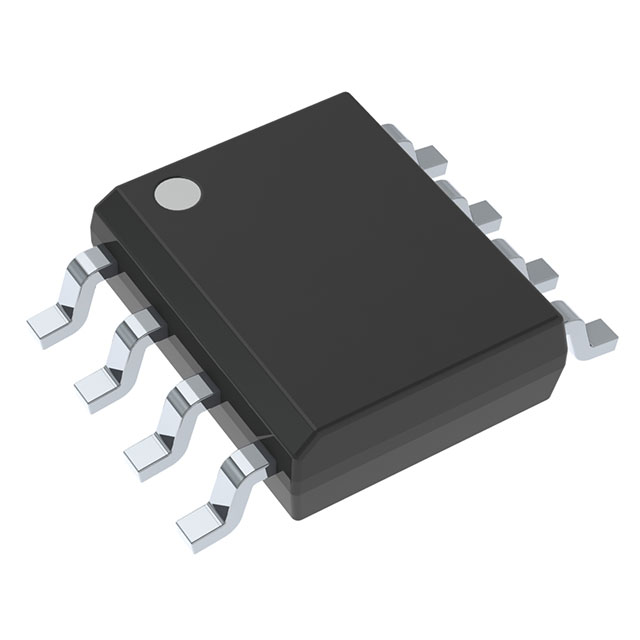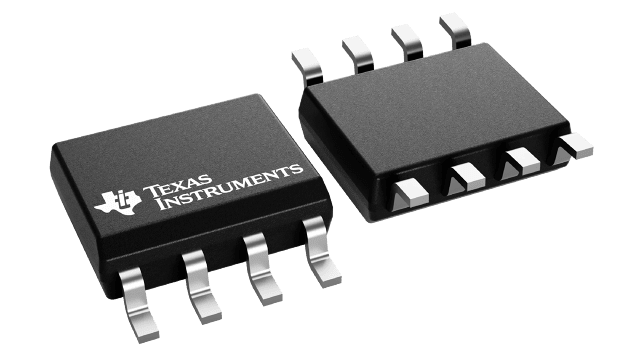
INA146UA
LTBHIGH-VOLTAGE, PROGRAMMABLE GAIN DIFFERENCE AMPLIFIER
Deep-Dive with AI
Search across all available documentation for this part.
INA146UA
LTBHIGH-VOLTAGE, PROGRAMMABLE GAIN DIFFERENCE AMPLIFIER
Technical Specifications
Parameters and characteristics for this part
| Specification | INA146UA |
|---|---|
| -3db Bandwidth | 550 kHz |
| Amplifier Type | Differential |
| Current - Input Bias | 50 nA |
| Current - Output / Channel | 15 mA |
| Current - Supply | 570 µA |
| Mounting Type | Surface Mount |
| Number of Circuits | 1 |
| Operating Temperature [Max] | 85 °C |
| Operating Temperature [Min] | -40 °C |
| Package / Case | 8-SOIC |
| Package / Case [x] | 0.154 in |
| Package / Case [y] | 3.9 mm |
| Slew Rate | 0.45 V/µs |
| Supplier Device Package | 8-SOIC |
| Voltage - Input Offset | 1 mV |
| Voltage - Supply Span (Max) [Max] | 36 V |
| Voltage - Supply Span (Min) [Min] | 4.5 V |
Pricing
Prices provided here are for design reference only. For realtime values and availability, please visit the distributors directly
| Distributor | Package | Quantity | $ | |
|---|---|---|---|---|
| Digikey | Tube | 1 | $ 7.76 | |
| 10 | $ 5.31 | |||
| 25 | $ 4.67 | |||
| 100 | $ 3.97 | |||
| Texas Instruments | TUBE | 1 | $ 4.99 | |
| 100 | $ 4.37 | |||
| 250 | $ 3.06 | |||
| 1000 | $ 2.47 | |||
Description
General part information
INA146 Series
The INA146 is a precision difference amplifier that can be used to accurately attenuate high differential voltages and reject high common-mode voltages for compatibility with common signal processing voltage levels. High-voltage capability also affords inherent input protection. The input common-mode range extends beyond both supply rails, making the INA146 an excellent choice for both single and dual supply applications.
On-chip precision resistors are laser-trimmed to achieve accurate gain and high common-mode rejection. Excellent TCR tracking of these resistors provides continued high precision over temperature.
A 10:1 difference amplifier provides 0.1 V/V gain when the output amplifier is used as a unity-gain buffer. In this configuration, input voltages up to ±100 V can be measured. Gains greater than 0.1 V/V can be set with an external resistor pair without affecting the common-mode input range.
Documents
Technical documentation and resources