Deep-Dive with AI
Search across all available documentation for this part.
Deep-Dive with AI
Technical Specifications
Parameters and characteristics for this part
| Specification | SN75107ADR |
|---|---|
| Mounting Type | Surface Mount |
| Number of Drivers/Receivers [custom] | 2 |
| Number of Drivers/Receivers [custom] | 0 |
| Operating Temperature [Max] | 70 °C |
| Operating Temperature [Min] | 0 °C |
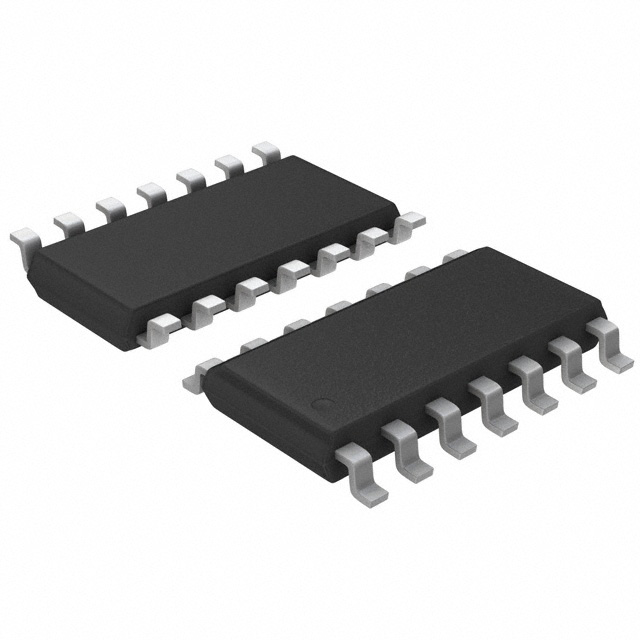
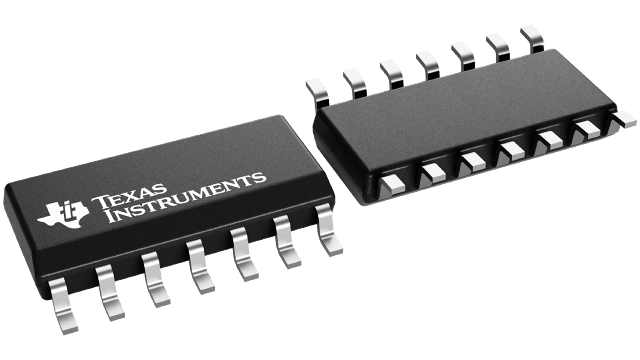
| Package / Case | 14-SOIC |
| Package / Case [x] | 0.154 in |
| Package / Case [y] | 3.9 mm |
| Type | Receiver |
| Voltage - Supply [Max] | 5.25 V |
| Voltage - Supply [Min] | -4.75 V |
Pricing
Prices provided here are for design reference only. For realtime values and availability, please visit the distributors directly
| Distributor | Package | Quantity | $ | |
|---|---|---|---|---|
| Texas Instruments | LARGE T&R | 1 | $ 2.29 | |
| 100 | $ 2.01 | |||
| 250 | $ 1.41 | |||
| 1000 | $ 1.13 | |||
Description
General part information
SN75107A Series
These circuits are TTL-compatible, high-speed line receivers. Each is a monolithic dual circuit featuring two independent channels. They are designed for general use, as well as for such specific applications as data comparators and balanced, unbalanced, and party-line transmission systems. These devices are unilaterally interchangeable with and are replacements for the SN55107, SN75107, and SN75108, but offer diode-clamped strobe inputs to simplify circuit design.
The essential difference between the A and B versions can be seen in the schematics. Input-protection diodes are in series with the collectors of the differential-input transistors of the B versions. These diodes are useful in certain party-line systems that have multiple VCC+power supplies and can be operated with some of the VCC+supplies turned off. In such a system, if a supply is turned off and allowed to go to ground, the equivalent input circuit connected to that supply would be as follows:
This would be a problem in specific systems that might have the transmission lines biased to some potential greater than 1.4 V.
Documents
Technical documentation and resources