Deep-Dive with AI
Search across all available documentation for this part.
Deep-Dive with AI
Technical Specifications
Parameters and characteristics for this part
| Specification | SN74F161ADR |
|---|---|
| Count Rate | 100 MHz |
| Direction | Up |
| Logic Type | Binary Counter |
| Mounting Type | Surface Mount |
| Number of Bits per Element | 4 |
| Number of Elements | 1 |
| Operating Temperature [Max] | 70 °C |
| Operating Temperature [Min] | 0 °C |
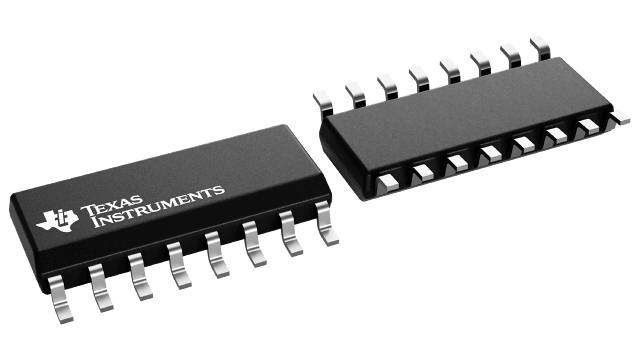
| Package / Case | 16-SOIC |
| Package / Case [x] | 0.154 in |
| Package / Case [y] | 3.9 mm |
| Reset | Asynchronous |
| Supplier Device Package | 16-SOIC |
| Timing | Synchronous |
| Trigger Type | Positive Edge |
| Voltage - Supply [Max] | 5.5 V |
| Voltage - Supply [Min] | 4.5 V |
Pricing
Prices provided here are for design reference only. For realtime values and availability, please visit the distributors directly
| Distributor | Package | Quantity | $ | |
|---|---|---|---|---|
| Digikey | Cut Tape (CT) | 1 | $ 0.68 | |
| 10 | $ 0.60 | |||
| 25 | $ 0.56 | |||
| 100 | $ 0.46 | |||
| 250 | $ 0.42 | |||
| 500 | $ 0.36 | |||
| 1000 | $ 0.29 | |||
| Digi-Reel® | 1 | $ 0.68 | ||
| 10 | $ 0.60 | |||
| 25 | $ 0.56 | |||
| 100 | $ 0.46 | |||
| 250 | $ 0.42 | |||
| 500 | $ 0.36 | |||
| 1000 | $ 0.29 | |||
| Tape & Reel (TR) | 2500 | $ 0.26 | ||
| 5000 | $ 0.24 | |||
| 12500 | $ 0.24 | |||
| 25000 | $ 0.23 | |||
| Texas Instruments | LARGE T&R | 1 | $ 0.56 | |
| 100 | $ 0.38 | |||
| 250 | $ 0.30 | |||
| 1000 | $ 0.20 | |||
Description
General part information
SN74F161A Series
This synchronous, presettable, 4-bit binary counter has internal carry look-ahead circuitry for use in high-speed counting designs. Synchronous operation is provided by having all flip-flops clocked simultaneously so that the outputs change coincident with each other when so instructed by the count-enable (ENP, ENT) inputs and internal gating. This mode of operation eliminates the output counting spikes that are normally associated with asynchronous (ripple-clock) counters. However, counting spikes can occur on the ripple-carry (RCO) output. A buffered clock (CLK) input triggers the four flip-flops on the rising (positive-going) edge of CLK.
This counter is fully programmable. That is, it can be preset to any number between 0 and 15. Because presetting is synchronous, a low logic level at the load (LOAD\) input disables the counter and causes the outputs to agree with the setup data after the next clock pulse, regardless of the levels of ENP and ENT.
The clear function is asynchronous, and a low logic level at the clear (CLR\) input sets all four of the flip-flop outputs to low, regardless of the levels of CLK, LOAD\, ENP, and ENT.
Documents
Technical documentation and resources