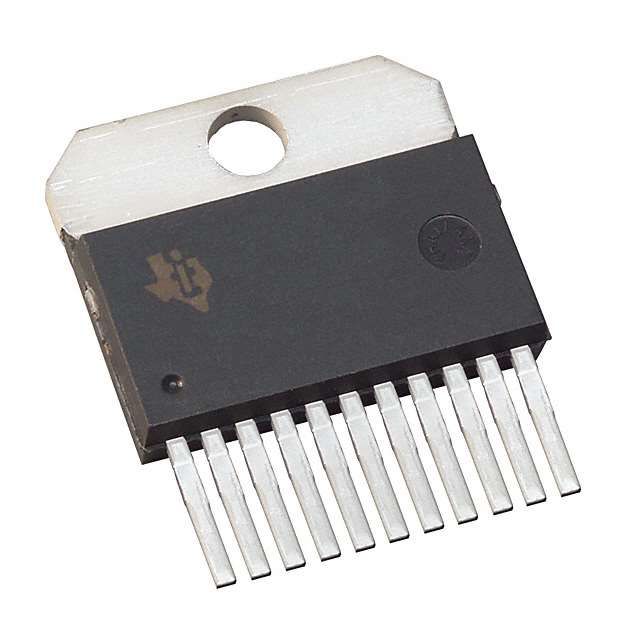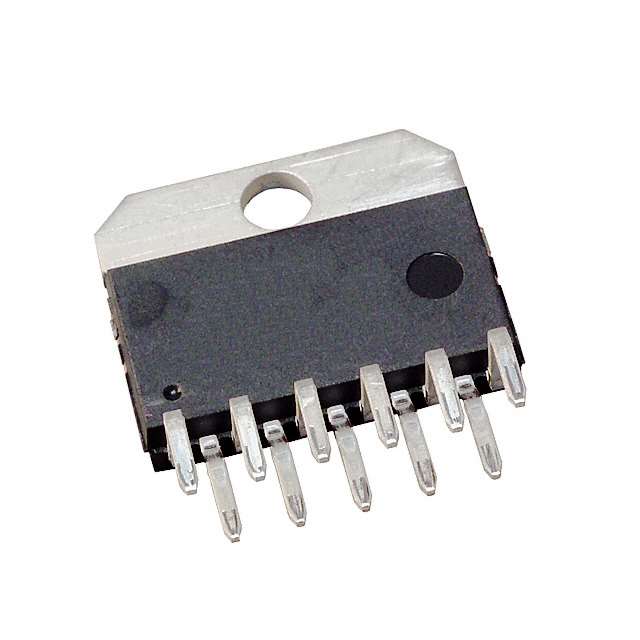
OPA549T
ActiveHIGH-VOLTAGE, HIGH-CURRENT OP AMP, EXCELLENT OUTPUT SWING
Deep-Dive with AI
Search across all available documentation for this part.
OPA549T
ActiveHIGH-VOLTAGE, HIGH-CURRENT OP AMP, EXCELLENT OUTPUT SWING
Technical Specifications
Parameters and characteristics for this part
| Specification | OPA549T |
|---|---|
| Amplifier Type | Power |
| Current - Input Bias | 100 nA |
| Current - Output / Channel | 10 A |
| Current - Supply | 26 mA |
| Gain Bandwidth Product | 900 kHz |
| Mounting Type | Through Hole |
| Number of Circuits | 1 |
| Operating Temperature [Max] | 85 °C |
| Operating Temperature [Min] | -40 °C |
| Package / Case | TO-220-11 (Formed Leads) |
| Slew Rate | 9 V/µs |
| Supplier Device Package | TO-220-11 |
| Voltage - Input Offset | 1 mV |
| Voltage - Supply Span (Min) [Min] | 8 V |
Pricing
Prices provided here are for design reference only. For realtime values and availability, please visit the distributors directly
| Distributor | Package | Quantity | $ | |
|---|---|---|---|---|
| Digikey | Tube | 1 | $ 25.47 | |
| 10 | $ 23.49 | |||
| 25 | $ 22.44 | |||
| 100 | $ 20.06 | |||
| 250 | $ 19.14 | |||
| 500 | $ 18.21 | |||
| Newark | Each | 1 | $ 38.61 | |
| 5 | $ 35.63 | |||
| 10 | $ 32.66 | |||
| 25 | $ 31.02 | |||
| 50 | $ 30.28 | |||
| 100 | $ 29.53 | |||
| Texas Instruments | TUBE | 1 | $ 21.69 | |
| 100 | $ 18.95 | |||
| 250 | $ 14.61 | |||
| 1000 | $ 13.07 | |||
Description
General part information
OPA549 Series
The OPA549 is a low-cost, high-voltage/high-current operational amplifier ideal for driving a wide variety of loads. This laser-trimmed monolithic integrated circuit provides excellent low-level signal accuracy and high output voltage and current.
The OPA549 operates from either single or dual supplies for design flexibility. The input common-mode range extends below the negative supply.
The OPA549 is internally protected against over-temperature conditions and current overloads. In addition, the OPA549 provides an accurate, user-selected current limit. Unlike other designs which use a "power" resistor in series with the output current path, the OPA549 senses the load indirectly. This allows the current limit to be adjusted from 0A to 10A with a resistor/potentiometer, or controlled digitally with a voltage-out or current-out Digital-to-Analog Converter (DAC).
Documents
Technical documentation and resources