


Deep-Dive with AI
Search across all available documentation for this part.
Deep-Dive with AI
Technical Specifications
Parameters and characteristics for this part
| Specification | SPUSB1BJT |
|---|---|
| Applications | USB |
| Mounting Type | Surface Mount |
| Number of Circuits | 1 |
| Package / Case | SOT-363, SC-88, 6-TSSOP |
| Supplier Device Package | SC-70-6 |
| Technology | Mixed Technology |
| Voltage - Clamping | 8 V |
Pricing
Prices provided here are for design reference only. For realtime values and availability, please visit the distributors directly
| Distributor | Package | Quantity | $ | |
|---|---|---|---|---|
| Digikey | N/A | 0 | $ 0.34 | |
Description
General part information
SPUSB1BJT Series
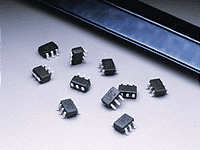
The SPUSB1CJT and SPUSB1BJT are single-channel USB upstream-port termination networks. The SPUSB1 Series integrates EMI/RFI filter components R1 and C1, as recommended by the USB specification. Because these are upstream USB devices, they are terminated with a single 1.5K pull-resistor (R2) to VBUS. There are three options for the value of the series resistor R1: The SPUSB1AJT has R1=15?Ù¬ the SPUSB1CJT has R1=33?Ùand the SPUSB1BJT has R1=22?Ù® This series resistance must be close to the USB cable??s characteristic impedance of 45?Ù(90?Ùbalanced) to minimize transmission line reflections. In addition, these parts provide a very high level of protection for sensitive electronic components that may be subjected to electrostatic discharge (ESD). The input and output pins are designed and characterized to safely dissipate ESD strikes of 15kV, well beyond the maximum requirements of the IEC 61000-4-2 international standard. The VBUS pin is designed and characterized to safely dissipate ESD strikes of 25kV, according to the IEC 61000-4-2 international standard. The VBUS pin has greater ESD protection because in a USB connector, the VBUS prong is longer than the D+ and D- connector prongs and is first to make contact. Using the MIL-STD-883D (Method 3015) specification for Human Body Model (HBM) ESD, all pins are protected for contact discharges to greater than 30kV.
Documents
Technical documentation and resources