


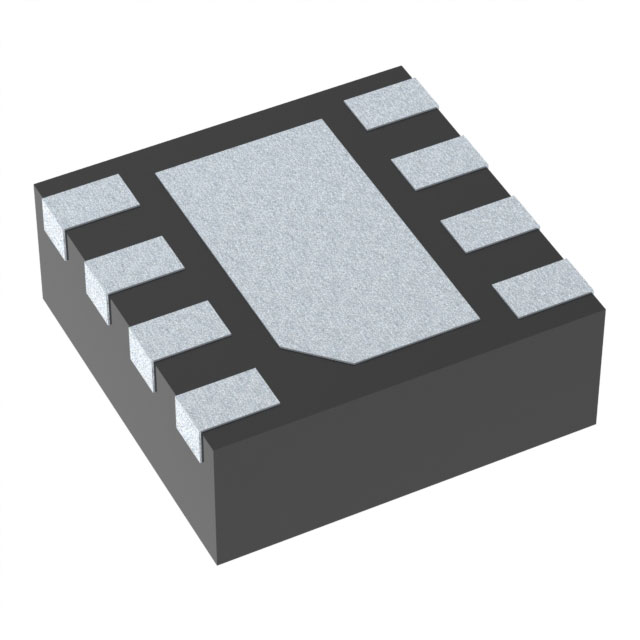
TRF37C73IDSGR
Active1 TO 6000 MHZ 18DB RF GAIN BLOCK AMPLIFIER WITH POWERDOWN PIN
Deep-Dive with AI
Search across all available documentation for this part.
TRF37C73IDSGR
Active1 TO 6000 MHZ 18DB RF GAIN BLOCK AMPLIFIER WITH POWERDOWN PIN
Deep-Dive with AI
Technical Specifications
Parameters and characteristics for this part
| Specification | TRF37C73IDSGR |
|---|---|
| Current - Supply | 55 mA |
| Frequency [Max] | 6 GHz |
| Frequency [Min] | 1 MHz |
| Gain | 17 dBi |
| Mounting Type | Surface Mount |
| Noise Figure | 3.5 dB |
| P1dB | 16.5 dB |
| Package / Case | 8-WFDFN Exposed Pad |
| Supplier Device Package | 8-WSON (2x2) |
| Voltage - Supply | 3.3 V |
Pricing
Prices provided here are for design reference only. For realtime values and availability, please visit the distributors directly
| Distributor | Package | Quantity | $ | |
|---|---|---|---|---|
| Digikey | Cut Tape (CT) | 1 | $ 1.52 | |
| 10 | $ 1.35 | |||
| 25 | $ 1.22 | |||
| 100 | $ 1.07 | |||
| 250 | $ 0.94 | |||
| 500 | $ 0.83 | |||
| 1000 | $ 0.65 | |||
| Digi-Reel® | 1 | $ 1.52 | ||
| 10 | $ 1.35 | |||
| 25 | $ 1.22 | |||
| 100 | $ 1.07 | |||
| 250 | $ 0.94 | |||
| 500 | $ 0.83 | |||
| 1000 | $ 0.65 | |||
| N/A | 0 | $ 1.54 | ||
| 1153 | $ 1.54 | |||
| Tape & Reel (TR) | 3000 | $ 0.61 | ||
| 6000 | $ 0.58 | |||
| 15000 | $ 0.56 | |||
| Texas Instruments | LARGE T&R | 1 | $ 1.06 | |
| 100 | $ 0.82 | |||
| 250 | $ 0.60 | |||
| 1000 | $ 0.43 | |||
Description
General part information
TRF37C73 Series
The TRF37C73 is packaged in a 2.00mm × 2.00mm WSON with a power down pin feature making it ideal for applications where space and low power modes are critical.
The TRF37C73 is designed for ease of use. For maximum flexibility, this family of parts uses a common 3.3 V supply and consumes 55 mA. In addition, this family was designed with an active bias circuit that provides a stable and predictable bias current over process, temperature and voltage variations. For gain and linearity budgets the device was designed to provide a flat gain response and excellent OIP3 out to 6000 MHz. For space constrained applications, this family is internally matched to 50 Ω, which simplifies ease of use and minimizes needed PCB area.
The TRF37C73 is packaged in a 2.00mm × 2.00mm WSON with a power down pin feature making it ideal for applications where space and low power modes are critical.
Documents
Technical documentation and resources