


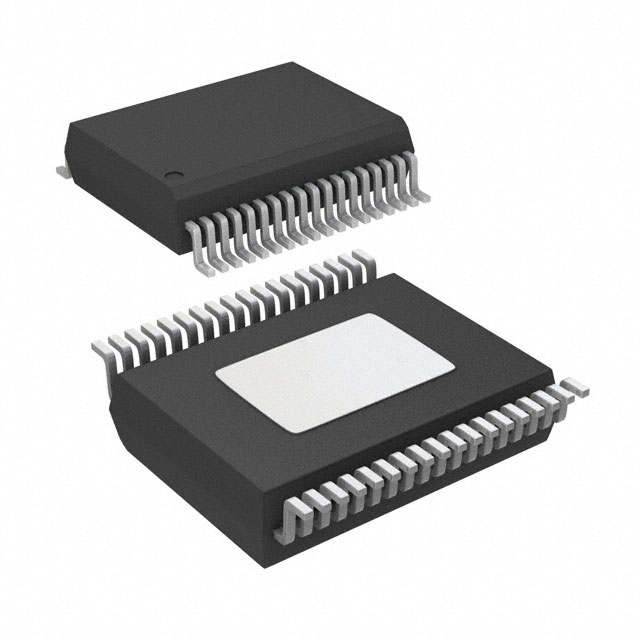
NCV78663DQ0R2G
ObsoleteDUAL LED DRIVER AND POWER BALLAST, FOR AUTOMOTIVE FRONT LIGHTING
Deep-Dive with AI
Search across all available documentation for this part.
NCV78663DQ0R2G
ObsoleteDUAL LED DRIVER AND POWER BALLAST, FOR AUTOMOTIVE FRONT LIGHTING
Deep-Dive with AI
Technical Specifications
Parameters and characteristics for this part
| Specification | NCV78663DQ0R2G |
|---|---|
| Current - Output / Channel [custom] | 1.2 A |
| Dimming | PWM |
| Grade | Automotive |
| Internal Switch(s) | True |
| Mounting Type | Surface Mount |
| Number of Outputs | 2 |
| Operating Temperature [Max] | 125 °C |
| Operating Temperature [Min] | -40 °C |
| Package / Case | 36-BFSOP |
| Package / Case [custom] | 7.5 mm |
| Package / Case [custom] | 0.295 " |
| Supplier Device Package | 36-SSOP-EP |
| Topology | Step-Down (Buck), Step-Up (Boost) |
| Type | DC DC Regulator |
| Voltage - Supply (Max) [Max] | 40 V |
| Voltage - Supply (Min) [Min] | 5 V |
Pricing
Prices provided here are for design reference only. For realtime values and availability, please visit the distributors directly
| Distributor | Package | Quantity | $ | |
|---|---|---|---|---|
Description
General part information
NCV78663 Series
The NCV78663 is a single-chip and high efficient smart Power ballast and Dual LED Driver designed for automotive front lighting applications like high beam, low beam, daytime running light (DRL), turn indicator, fog light, static cornering, and so on.The NCV78663 is a best fit for high current LEDs and provides a complete solution to drive two strings up to 60 V, by means of two internal independent buck switch channels, with a minimum of external components.For each channel, the output current and voltage can be customized according to the application requirements. Diagnostic feature for automotive front lighting is provided on-chip.The device integrates a voltage booster controller, realizing a unique input current filter with a limited number of externals.The NCV78663 can be used in stand-alone mode or together with a companion microcontroller allowing maximum flexibility. Depending on the voltage and current of the connected LED string, the LED ballast parameters can be adapted by writing the SPI settings in the device, as such that no hardware changes are required.
Documents
Technical documentation and resources