TPA2005D1DGNRQ1
ActiveAUTOMOTIVE, 1.4-W, MONO, ANALOG INPUT CLASS-D AUDIO AMPLIFIER
Deep-Dive with AI
Search across all available documentation for this part.
TPA2005D1DGNRQ1
ActiveAUTOMOTIVE, 1.4-W, MONO, ANALOG INPUT CLASS-D AUDIO AMPLIFIER
Technical Specifications
Parameters and characteristics for this part
| Specification | TPA2005D1DGNRQ1 |
|---|---|
| Features | Short-Circuit and Thermal Protection, Differential Inputs, Shutdown |
| Grade | Automotive |
| Max Output Power x Channels @ Load | 1.45 W |
| Max Output Power x Channels @ Load [custom] | 1 |
| Mounting Type | Surface Mount |
| Operating Temperature [Max] | 85 °C |
| Operating Temperature [Min] | -40 °C |
| Output Type | 1-Channel (Mono) |
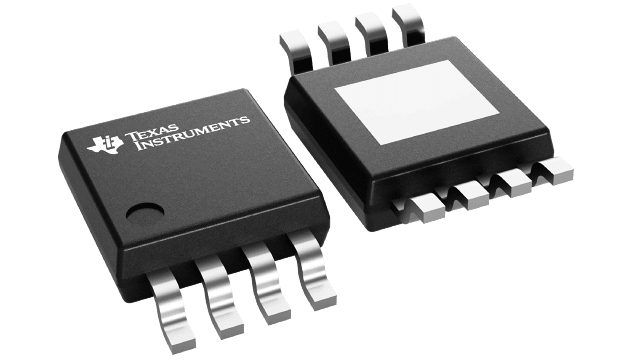
| Package / Case | Exposed Pad, 8-TSSOP, 8-MSOP |
| Package / Case [custom] | 0.118 in, 3 mm |
| Qualification | AEC-Q100 |
| Supplier Device Package | 8-HVSSOP |
| Type | Class D |
| Voltage - Supply [Max] | 5.5 V |
| Voltage - Supply [Min] | 2.5 V |
Pricing
Prices provided here are for design reference only. For realtime values and availability, please visit the distributors directly
| Distributor | Package | Quantity | $ | |
|---|---|---|---|---|
| Digikey | Cut Tape (CT) | 1 | $ 1.63 | |
| 10 | $ 1.46 | |||
| 25 | $ 1.38 | |||
| 100 | $ 1.14 | |||
| 250 | $ 1.06 | |||
| 500 | $ 0.94 | |||
| 1000 | $ 0.74 | |||
| Digi-Reel® | 1 | $ 1.63 | ||
| 10 | $ 1.46 | |||
| 25 | $ 1.38 | |||
| 100 | $ 1.14 | |||
| 250 | $ 1.06 | |||
| 500 | $ 0.94 | |||
| 1000 | $ 0.74 | |||
| Tape & Reel (TR) | 2500 | $ 0.69 | ||
| 5000 | $ 0.66 | |||
| 12500 | $ 0.63 | |||
| Texas Instruments | LARGE T&R | 1 | $ 1.03 | |
| 100 | $ 0.79 | |||
| 250 | $ 0.58 | |||
| 1000 | $ 0.42 | |||
Description
General part information
TPA2005D1-Q1 Series
The TPA2005D1 is a 1.4-W high efficiency filter-free class-D audio power amplifier in a MicroStar Junior™ BGA, QFN, or MSOP package that requires only three external components.
Features like 84% efficiency, –71-dB PSRRat 217 Hz, improved RF-rectification immunity, and15 mm2total PCB area make the TPA2005D1 ideal for cellular handsets. A fast start-up time of 9 ms with minimal pop makes the TPA2005D1 ideal for PDA applications.
In cellular handsets, the earpiece, speaker phone, and melody ringer can each be driven by the TPA2005D1. The device allows independent gain control by summing the signals from each function while minimizing noise to only 48 μVRMS.
Documents
Technical documentation and resources