


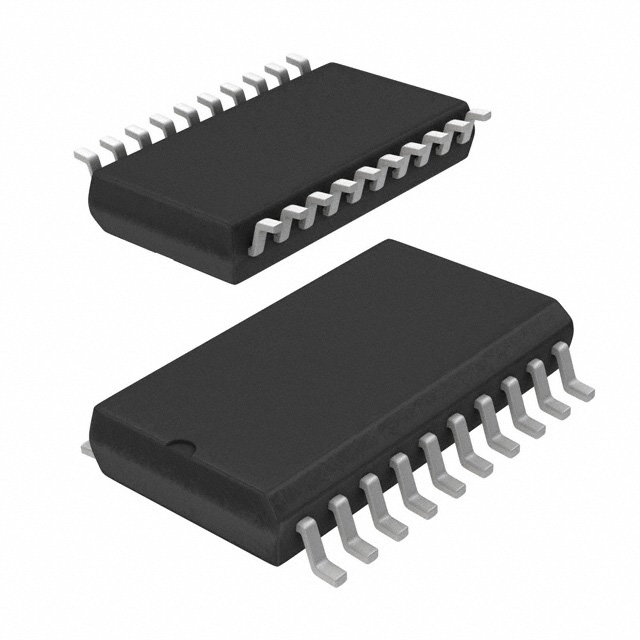
AMIS42770ICAW1RG
ObsoleteDUAL CAN TRANSCEIVER, HIGH SPEED, FOR LONG NETWORKS
AMIS42770ICAW1RG
ObsoleteDUAL CAN TRANSCEIVER, HIGH SPEED, FOR LONG NETWORKS
Technical Specifications
Parameters and characteristics for this part
| Specification | AMIS42770ICAW1RG |
|---|---|
| Duplex | Half |
| Mounting Type | Surface Mount |
| Number of Drivers/Receivers [custom] | 2 |
| Number of Drivers/Receivers [custom] | 2 |
| Operating Temperature [Max] | 125 °C |
| Operating Temperature [Min] | -40 °C |
| Package / Case | 20-SOIC |
| Package / Case [y] | 0.295 in |
| Package / Case [y] | 7.5 mm |
| Protocol | CANbus |
| Receiver Hysteresis | 70 mV |
| Supplier Device Package | 20-SOIC |
| Type | Transceiver |
| Voltage - Supply [Max] | 5.25 V |
| Voltage - Supply [Min] | 4.75 V |
Pricing
Prices provided here are for design reference only. For realtime values and availability, please visit the distributors directly
| Distributor | Package | Quantity | $ | |
|---|---|---|---|---|
Description
General part information
AMIS-42770 Series
Controller Area Network (CAN) is a serial communication protocol, which supports distributed real time control and multiplexing with high safety level. Typical applications of CAN-based networks can be found in automotive and industrial environments.The AMIS-42770 dual CAN transceiver is the interface between up to two physical bus lines and the protocol controller and will be used for serial data interchange between different electronic units at more than one bus line. It can be used for both 12 V and 24 V systems.The circuit consists of following blocks:- Two differential line transmitters- Two differential line receivers- Interface to the CAN protocol handler- Interface to expand the number of CAN busses- Logic block including repeater function and the feedback suppression- Thermal shutdown circuit (TSD)Due to the wide common mode voltage range of the receiver inputs, the AMIS-42770 is able to reach outstanding levels of electromagnetic susceptibility (EMS). Similarly, extremely low electromagnetic emission (EME) is achieved by the excellent matching of the output signals.
Documents
Technical documentation and resources