


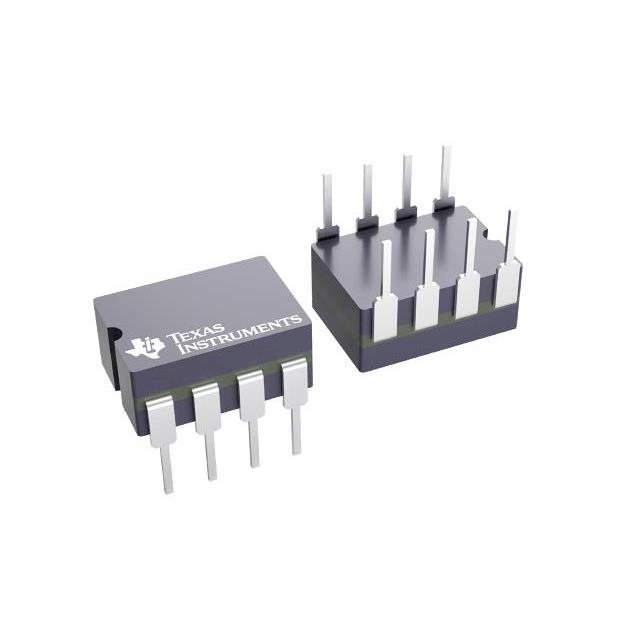
DS16F95W/883
ActiveEIA-485/EIA-422A DIFFERENTIAL BUS TRANSCEIVERS
Deep-Dive with AI
Search across all available documentation for this part.
DS16F95W/883
ActiveEIA-485/EIA-422A DIFFERENTIAL BUS TRANSCEIVERS
Technical Specifications
Parameters and characteristics for this part
| Specification | DS16F95W/883 |
|---|---|
| Data Rate | 10 Mbps |
| Duplex | Half |
| Mounting Type | Surface Mount |
| Operating Temperature [Max] | 125 °C |
| Operating Temperature [Min] | -55 °C |
| Package / Case | 10-CFlatPack |
| Protocol | RS422, RS485 |
| Receiver Hysteresis | 50 mV |
| Supplier Device Package | 10-CFP |
| Type | Transceiver |
| Voltage - Supply [Max] | 5.5 V |
| Voltage - Supply [Min] | 4.5 V |
Pricing
Prices provided here are for design reference only. For realtime values and availability, please visit the distributors directly
| Distributor | Package | Quantity | $ | |
|---|---|---|---|---|
| Texas Instruments | TUBE | 1 | $ 93.63 | |
| 100 | $ 83.22 | |||
| 250 | $ 68.42 | |||
| 1000 | $ 61.19 | |||
Description
General part information
DS16F95QML Series
The DS16F95 Differential Bus Transceiver is a monolithic integrated circuit designed for bidirectional data communication on balanced multipoint bus transmission lines. The transceiver meets EIA standard RS-485 as well as RS-422A.
The DS16F95 offers improved performance due to the use of state-of-the-art L-FAST bipolar technology. The L-FAST technology allows for higher speeds and lower currents by utilizing extremely short gate delay times. Thus, the DS16F95QML features lower power, extended temperature range and improved specifications.
The DS16F95 combines a TRI-STATE differential line driver and a differential input line receiver, both of which operate from a single 5.0V power supply. The driver and receiver have an active Enable that can be externally connected to function as a direction control. The driver differential outputs and the receiver differential inputs are internally connected to form differential input/output (I/O) bus ports that are designed to offer minimum loading to the bus whenever the driver is disabled or when VCC= 0V. These ports feature wide positive and negative common mode voltage ranges, making the device suitable for multipoint applications in noisy environments.
Documents
Technical documentation and resources
