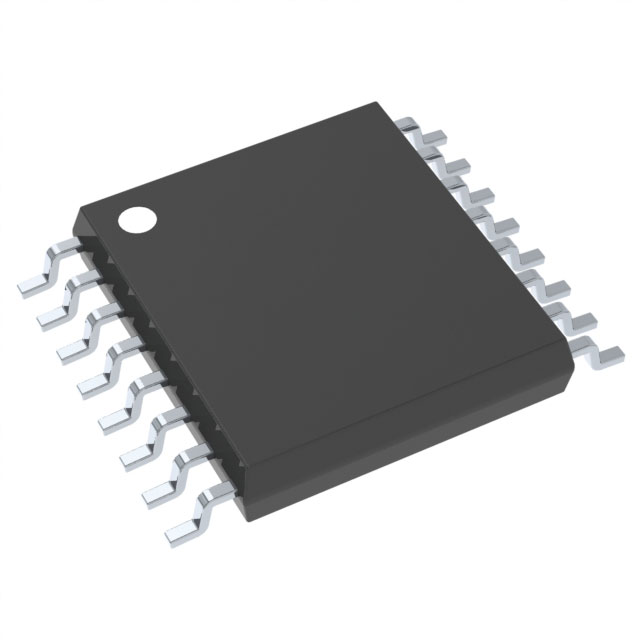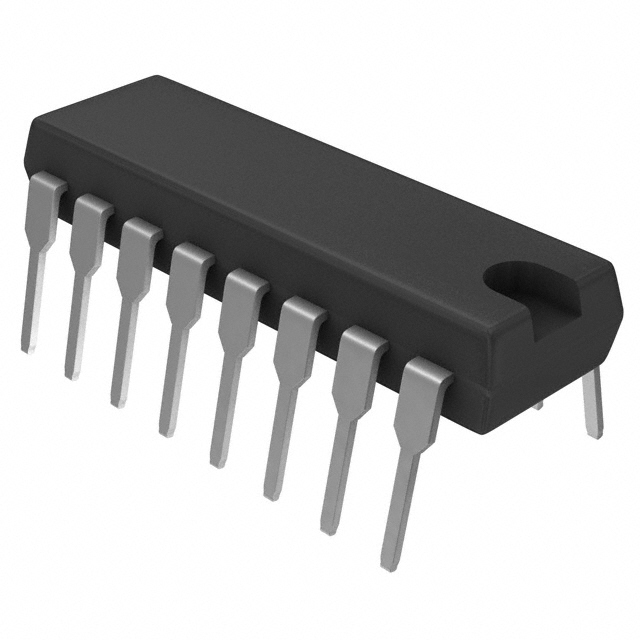
Deep-Dive with AI
Search across all available documentation for this part.
Deep-Dive with AI
Technical Specifications
Parameters and characteristics for this part
| Specification | CD4089BEG4 |
|---|---|
| Logic Type | Binary Rate Multiplier |
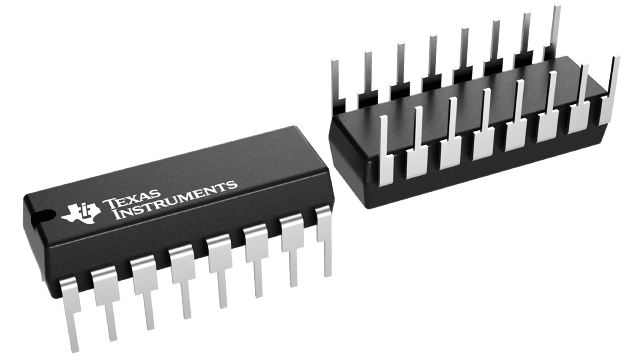
| Mounting Type | Through Hole |
| Number of Bits | 4 |
| Operating Temperature [Max] | 125 °C |
| Operating Temperature [Min] | -55 °C |
| Package / Case | 0.3 in |
| Package / Case | 16-DIP |
| Package / Case | 7.62 mm |
| Supplier Device Package | 16-PDIP |
| Supply Voltage [Max] | 18 V |
| Supply Voltage [Min] | 3 V |
Pricing
Prices provided here are for design reference only. For realtime values and availability, please visit the distributors directly
| Distributor | Package | Quantity | $ | |
|---|---|---|---|---|
| Digikey | Tube | 1450 | $ 0.28 | |
Description
General part information
CD4089B Series
CD4089B is a low-power 4-bit digital rate multiplier that provides an output pulse rate that is the clock-input-pulse rate multiplied by 1/16 times the binary input. For example, when the binary input number is 13, there will be 13 output pulses for every 16 input pulses. This device may be used in conjunction with an up/down counter and control logic used to perform arithmetic operations (adds, subtract, divide, raise to a power), solve algebraic and differential equations, generate natural logarithms and trigometric functions, A/D and D/A conversions, and frequency division.
For words of more than 4-bits, CD4089B devices may be cascaded in two different mode: an Add mode and a Multiply mode (see Figs. 14 and 15). In the Add mode some of the gaps left by the more significant unit at the count of 15 are filled in by the less significant units. For example, when two units are cascaded in the Add mode and programmed to 11 and 13, respectively, the more significant unit will have 11 output pulses for every 16 input pulses and the other unit will have 13 output pulses for every 256 input pulses for a total of
In the Multiply mode the fraction programmed into the first rate multipliers multiplied by the fraction programmed into the second multiplier. Thus the output rate will be
Documents
Technical documentation and resources
No documents available